

If your skin gets red from a basic facial, reacts to new skincare, or heals unpredictably after cosmetic treatments, traditional microblading can be a risky choice. For many clients, the search for a microblading alternative for sensitive skin starts after they realize that more strokes and more skin trauma do not automatically create a better brow. In fact, for delicate, reactive, mature, or compromised skin, the opposite is often true.
Microblading became popular because it promised hair-like brows with a natural finish. What it did not do was work equally well for every skin type. Sensitive skin tends to be less forgiving. It can become inflamed more easily, hold pigment less predictably, and show healing issues that affect both comfort and final results. When brows are on your face every day, subtle mistakes are not subtle at all.
Why sensitive skin often struggles with microblading
Microblading uses a manual blade to create small incisions in the skin while depositing pigment. On paper, that sounds precise. In practice, it is still controlled trauma. For clients with sensitive skin, rosacea tendencies, thin skin, allergy concerns, post-inflammatory hyperpigmentation risk, or a history of irritation, that repeated cutting action can be the problem.
The immediate concern is reactivity. Some skin types swell quickly, become tender, or develop prolonged redness. The longer-term concern is healing quality. Sensitive skin may not retain crisp strokes well, especially if the area becomes inflamed during recovery. What begins as fine detail can soften, blur, or heal unevenly. That is one reason some clients end up with brows that look less natural over time than they expected.
There is also the issue of pigment behavior. When skin is easily irritated, healing can become less consistent, and color can shift in ways that are difficult to predict. This matters even more for clients who want refined, understated results rather than obvious cosmetic tattooing.
The best microblading alternative for sensitive skin
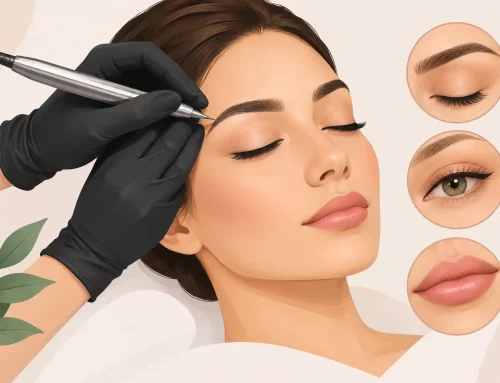
The best microblading alternative for sensitive skin is typically a machine-based brow enhancement method that implants pigment with far less trauma than a manual blade. Instead of slicing into the skin to mimic individual hairs, advanced digital techniques place pigment with controlled precision, allowing the artist to build shape, density, and softness without the aggressive impact associated with microblading.
This distinction matters. Sensitive skin usually responds better to procedures that minimize disruption. Less trauma can mean less redness, less scabbing, a more comfortable healing process, and a more stable healed result. For clients who have avoided permanent makeup because they fear damage, discoloration, or a harsh finish, this is often the difference between a procedure worth considering and one worth avoiding.
Not every machine-based brow service is equal, though. Equipment quality, pigment formulation, depth control, skin analysis, and artistic restraint all determine the final outcome. A luxury clinical provider should be evaluating your skin first, then designing the technique around your skin behavior, brow goals, and long-term healing profile.
Why machine methods are often gentler
With an advanced machine method, the device can be calibrated for speed, depth, and pigment placement in a way that is far more consistent than hand pressure alone. That consistency is especially valuable on sensitive skin, where overworking the area can lead to prolonged healing and compromised results.
A gentler approach also gives more flexibility in design. Some clients need soft definition and subtle fullness rather than imitation hair strokes. Others want to correct asymmetry, fill sparse tails, or create a more polished structure that still reads as believable in natural light. Sensitive skin does not always need more detail. Often, it needs smarter technique.
What to look for if your skin is reactive
If you are evaluating a brow procedure and you know your skin is reactive, ask better questions than, “Will it hurt?” The more important question is how the skin is treated during the procedure and how it typically heals after.
Look for a provider who can explain why their method is appropriate for sensitive skin, not just claim that it is. They should be able to discuss healing patterns, pigment choices, and how they avoid overworking fragile or inflammation-prone skin. If the consultation feels generic, the service probably is.
Pigment quality also matters. For reactive clients, custom-blended mineral-based pigments are often preferable to formulas that heal too cool, too dark, or too aggressively. A premium result depends on both the implantation method and the color science behind it.
You should also pay attention to how natural the healed work appears, not just the immediate after photos. Sensitive skin can make fresh results look impressive while healed results tell a different story. Real expertise shows up months later, when the brows still look soft, balanced, and appropriate for the face.
Who should be especially cautious with microblading
Sensitive skin is a broad category, but some clients should be particularly careful before choosing a bladed brow procedure. This includes people with rosacea-prone skin, very thin or mature skin, a history of keloids or hyperpigmentation, frequent facial treatments, active skin irritation near the brows, or previous permanent makeup that healed poorly.
Clients using strong exfoliating products or prescription skincare also need thoughtful evaluation. Skin that is routinely resurfaced can be more vulnerable and less predictable during healing. The same applies to clients managing autoimmune-related skin sensitivity or conditions that affect skin recovery.
For these clients, the right answer is not always no. Often, it is a different method, a more advanced provider, and a treatment plan built around preservation of the skin rather than forceful pigment implantation.
Natural-looking brows without the microblading drawbacks
The biggest misconception in this category is that a natural brow requires hair strokes at any cost. It does not. Truly natural-looking semi-permanent brows come from proportion, color matching, edge softness, and placement that complements your features. Sensitive skin often performs better with techniques that create an illusion of fullness rather than trying to etch every hair into the skin.
That is where premium technology changes the conversation. Instead of accepting bruising, scabbing, or difficult color changes as normal, a more advanced method can focus on cleaner implantation and better healed aesthetics. Clients who want sophistication, not trend-driven brows, usually recognize the difference immediately.
At the highest level of the category, the goal is not to make your brows look tattooed more delicately. It is to make them look naturally complete, polished, and believable up close.
Correction matters too
Many people searching for a microblading alternative for sensitive skin are not first-time clients. They are trying to fix old work that healed gray, too dense, uneven, or simply wrong for their skin. In these cases, sensitivity can be even more important because the brow area has already been through trauma.
A corrective approach should be conservative, strategic, and customized. Sometimes that means adjusting shape and color with a gentler method. Sometimes it means waiting until the skin is ready. A provider focused on outcomes will tell you when the timing is right and when it is not.
What a premium consultation should tell you
A serious brow consultation should feel less like a beauty appointment and more like a specialist evaluation. Your provider should ask about skin history, allergies, prior procedures, medications, skincare routine, pigment history, and your actual tolerance for downtime. If they are not interested in those details, they are not truly assessing sensitive skin.
You should also expect a realistic conversation about trade-offs. Sensitive skin may require a softer finish, a staged approach, or maintenance based on how your skin retains color. That is not a flaw in the procedure. It is what responsible customization looks like.
At MicroArt, this category has evolved far beyond traditional permanent makeup and microblading because clients now expect precision, comfort, and results that do not announce themselves. For sensitive skin, that evolution is not cosmetic. It is essential.
The smarter standard for sensitive skin
If your skin is reactive, choosing a brow procedure should never be about following the most familiar trend. It should be about selecting the method that respects your skin, heals elegantly, and delivers a result you can live with every day. The right alternative is not just gentler. It is more refined.
Sensitive skin deserves a higher standard – one built on technology, customization, and restraint. When the method is truly advanced, your brows do not have to fight your skin to look beautiful.