

A beautiful brow result is not defined by how dramatic it looks on the day of treatment. It is defined by how naturally it settles into the skin, how gracefully it heals, and whether it still looks refined months later. That is where MicroArt vs microblading results become meaningfully different for clients who want enhancement without the obvious look of cosmetic tattooing.
Microblading remains widely known, but recognition is not the same as refinement. It creates individual hair-like marks with a handheld blade, while MicroArt uses a proprietary precision approach developed for soft, customized, natural-looking enhancement. The difference can affect the skin experience, pigment behavior, and the realism of the final result.
MicroArt vs Microblading Results at a Glance
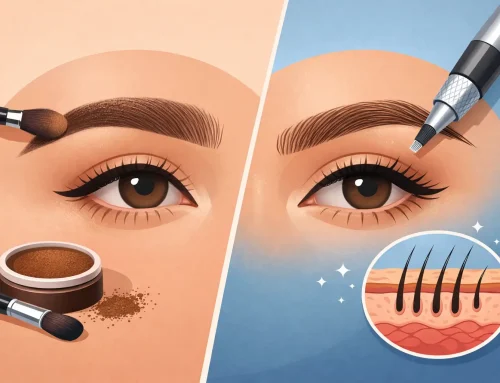
Both treatments can create the appearance of fuller brows, but they take different paths to get there. Microblading uses fine needles arranged in a blade to create shallow strokes in the skin. Those strokes are intended to resemble brow hairs. On the right skin, with a highly skilled artist and careful aftercare, they can initially appear crisp and hair-like.
The limitation is that real skin is not paper. It has pores, texture, oil production, movement, and its own healing response. As microbladed strokes heal, they may soften, blur, expand, or fade unevenly. This is especially common on oily, mature, sensitive, or highly textured skin. A brow that looked sharp immediately after treatment may no longer read as individual hairs once it has fully settled.
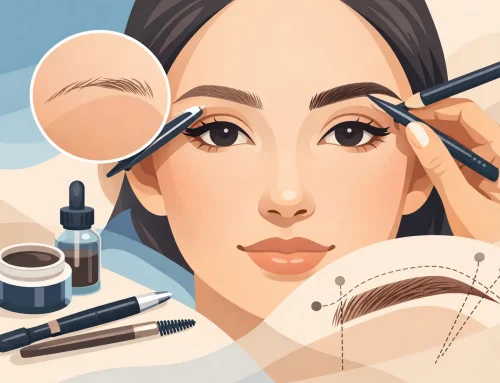
MicroArt is designed around a more controlled, skin-conscious result. Rather than relying on cut-like strokes, the technique uses advanced equipment and custom-blended mineral-based pigments to build soft definition with exceptional precision. The goal is not to create brows that announce themselves. It is to restore balance, shape, and density in a way that appears believable at conversational distance and close up.
The Difference You Can See in the Skin
The most noticeable difference is often texture. Microblading works by creating manual incisions, which can place more stress on the skin than a precision-driven cosmetic tattoo technique. Some clients experience redness, tenderness, scabbing, or a healing period that requires them to plan around social events and workouts.
MicroArt is known for a gentler treatment experience with no traditional downtime. Clients are often drawn to the approach because it is designed to avoid the bruising, scabbing, and harsh healing appearance associated with many conventional brow procedures. For a Beverly Hills client, a business traveler, or someone attending a wedding or event, that practical distinction matters as much as the aesthetic one.
Skin preservation also matters over time. Repeated microblading on the same area can be challenging when old strokes have spread, changed color, or created unwanted saturation. Not every client will have this experience, but it is a real consideration for anyone planning to maintain brows for years rather than months.
Why healed results matter more than fresh results
Fresh microblading photos can be misleading because the pigment has not settled and the skin has not completed its healing process. The same is true of any cosmetic tattoo procedure: the immediate result is not the final result.
A sophisticated brow treatment should be judged by healed work. Look for softness at the front of the brow, believable color through the body, clean but not overly graphic shaping, and pigment that complements the client’s natural hair and skin tone. The best result does not look like a trend. It looks like the client was born with better brows.
Pigment Stability and Color Evolution
Color is one of the most sensitive issues in semi-permanent makeup. Traditional permanent makeup has earned a reputation for fading to gray, blue, red, or orange in some cases. Microblading pigments can also shift or fade inconsistently depending on pigment formulation, depth, sun exposure, skincare products, skin type, and the client’s individual metabolism.
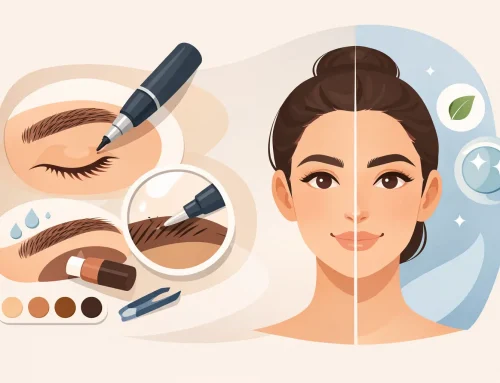
MicroArt takes a color-customization approach, using mineral-based pigments blended for the individual rather than relying on a one-shade-fits-all brow formula. This is especially valuable for clients with blond, red, gray, or salt-and-pepper hair, as well as clients with deeper skin tones who need thoughtful pigment selection to avoid an ashy or artificial cast.
No semi-permanent pigment is completely immune to change. Sun, exfoliating acids, retinoids, lasers, and natural skin turnover all influence longevity. The advantage of a precision treatment is not a promise that color will never soften. It is the ability to create a more controlled fade that remains elegant rather than distracting.
Naturalness Is More Than Hair Strokes
Many people assume hair strokes are automatically the most natural option. That is not always true. Natural brows have variation, but they also have softness, density, shadows, and an imperfect relationship with the skin beneath them. When every simulated hair is too dark, too uniform, or too sharply etched, the result can look more artificial than a softly layered enhancement.
Microblading may be appropriate for a client with dry, resilient skin, sparse but existing brow hair, and realistic expectations about maintenance. A younger client with little oil production may retain sharper strokes than someone with mature or oily skin. Even then, success depends heavily on the technician’s skill, pigment choices, and willingness to avoid overworking the area.
MicroArt is particularly compelling for clients who prioritize a refined, makeup-free appearance over a trendy stroke pattern. It can create the impression of density without forcing the skin to carry a grid of visible lines. This makes it a strong choice for clients who have had disappointing permanent makeup, want a discreet solution for alopecia, or simply prefer brows that do not look tattooed.
Precision Changes the Shape, Not Just the Color
A brow treatment should never begin with pigment. It should begin with proportion. The right arch height, tail length, front placement, and density depend on facial structure, age, natural growth pattern, and personal style. A brow that flatters one face can overpower another.
At MicroArt, the consultation process is built around customization rather than a standard brow template. The objective is to create symmetry without making the brows look stamped on. Faces are naturally asymmetrical, and a skilled specialist works with that reality rather than chasing a rigid, artificial mirror image.
This level of planning is also valuable for men. Most male clients do not want visibly “done” brows. They want gaps softened, sparse areas balanced, and their natural character preserved. A subtle enhancement can make the face look more rested and structured without inviting questions about what changed.
Maintenance, Longevity, and Correctability
Neither microblading nor MicroArt should be viewed as a one-time, permanent decision. Semi-permanent makeup fades by design, and maintenance is part of protecting a polished result. The exact schedule varies by skin type, lifestyle, pigment selection, and how soft or defined the client prefers the brows to remain.
Microblading often requires touch-ups after the initial sessions, and clients may need ongoing refresh appointments as strokes soften. With repeated sessions, it becomes increasingly important to assess whether the skin still has room for more pigment. Adding more strokes over blurred old strokes does not always improve the result.
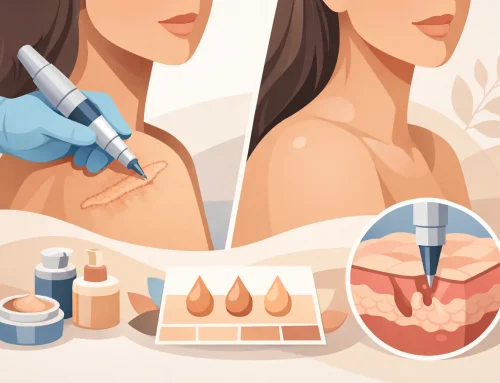
A precision-based MicroArt approach gives the specialist more flexibility to refine the appearance over time without locking the client into a harsh brow shape or saturated color. For clients seeking correction, that restraint is essential. The first priority is often neutralizing an unwanted result and restoring a believable brow foundation, not adding more pigment too quickly.
Which Result Is Right for You?
Choose based on your skin, your lifestyle, and the result you want to live with after healing. If you are drawn to the look of distinct hair strokes and have skin that tends to heal predictably, microblading may be a reasonable option. If your priorities are soft realism, minimal disruption, customized color, and a more sophisticated finish, MicroArt offers a markedly different standard.
The best choice is rarely the least expensive or the most familiar. It is the treatment that respects your skin and produces a result that still feels like you when the appointment is a distant memory. A private consultation with a qualified specialist can turn that decision from a guess into a carefully tailored plan.