
A nude liner that disappears by lunch, lipstick settling into fine lines, or a lip border that no longer looks as crisp as it once did – these are color and definition concerns, not always volume concerns. That distinction is the starting point in the lip blush versus lip filler decision. Both treatments can create a more polished mouth, but they work in entirely different ways, address different anatomy, and produce very different kinds of change.
The most natural result comes from choosing the treatment that solves the actual concern. Adding volume to lips that primarily need color can look overdone. Adding pigment to lips that need structural support can leave a client wondering why their lips still appear flat. A precise consultation should separate what is missing from what is merely being noticed.
Lip Blush Versus Lip Filler: The Core Difference
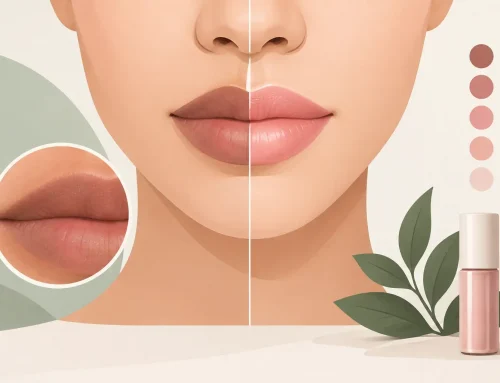
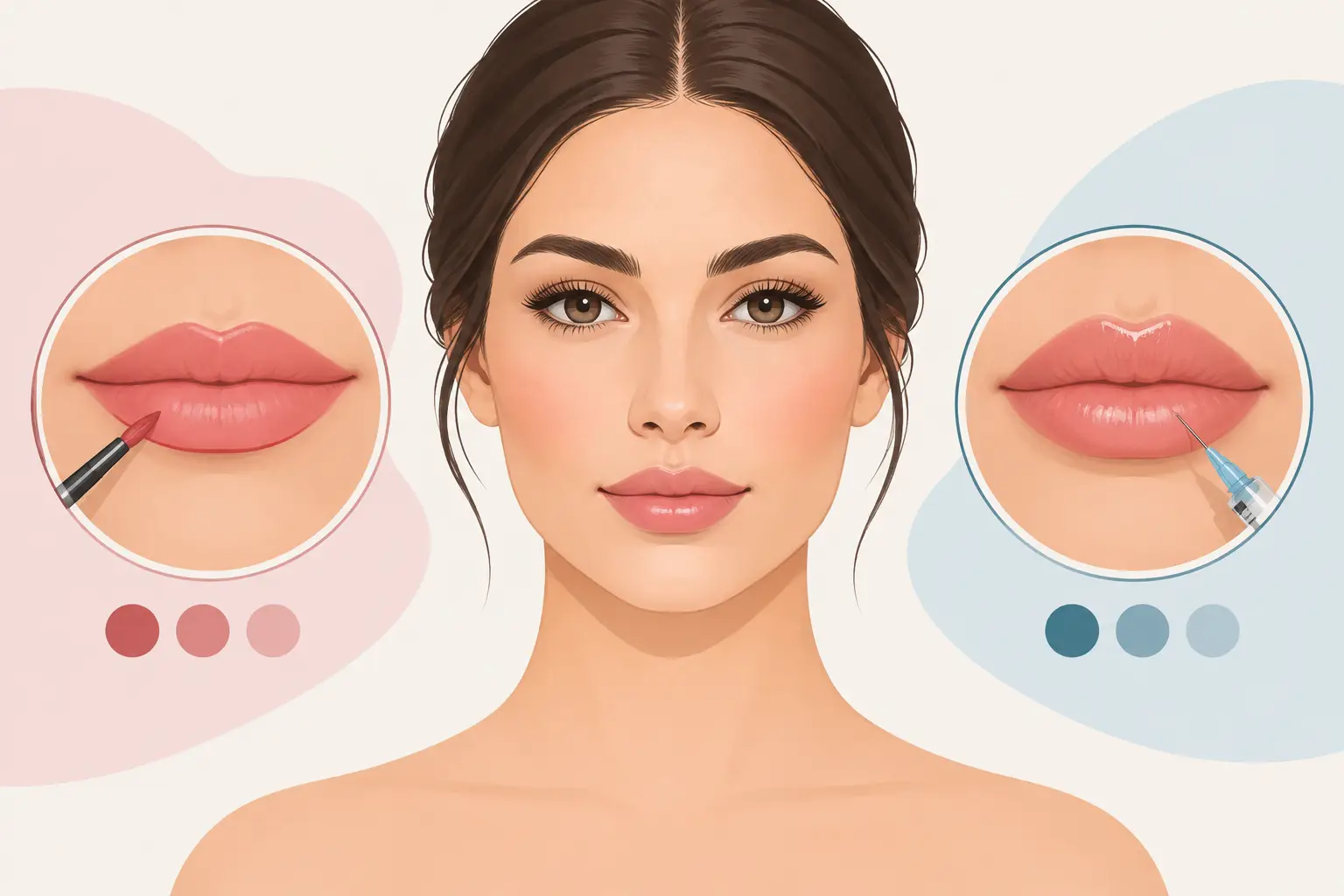
Lip blush is a semi-permanent cosmetic tattooing treatment designed to refine the appearance of lip color, border, symmetry, and visual fullness. Using custom-blended pigment, a specialist deposits a soft wash of color into the lips. The goal is not a heavy lipstick effect or a hard, drawn-on outline. Done with advanced technique, lip blush restores the look of naturally even, healthy-looking lips – just more defined and consistently balanced.
Lip filler is an injectable treatment, most commonly made with hyaluronic acid, that physically adds or redistributes volume. It can enhance projection, soften certain lines, support the corners of the mouth, and improve structural asymmetry. Filler changes the lip’s shape and dimension. It does not replace the appearance of natural color, and it will not create the softly tinted, blended finish associated with lip blush.
In simple terms, lip blush improves what the eye sees on the surface. Lip filler changes the architecture beneath it. Many clients need one, not both.
What Each Treatment Can – and Cannot – Do
A refined lip blush treatment can make pale lips appear more alive, correct the visual imbalance of an uneven vermilion border, and reduce dependence on daily liner or lipstick. It can also create the illusion of subtle fullness because a clearer lip edge reads as more youthful and proportionate. That optical enhancement is often exactly what a client wants.
It cannot create true volume. If the upper lip has lost projection, the lips have become noticeably thinner with age, or there is a significant structural imbalance, pigment alone will not rebuild that tissue. Trying to compensate with an overly dark border is not sophisticated correction. It can make lips look smaller, harsher, and visibly tattooed.
Filler is effective when there is a genuine volume or shape issue. A conservative amount can restore hydration-like softness, enhance the cupid’s bow, or bring the upper and lower lip into better proportion. It cannot correct gray, brown, uneven, or faded lip tone in the same way pigmentation can. Filler may make the lips look fuller, but it does not make a bare lip look naturally flushed.
The most elevated approach is restraint. A treatment should look like a better version of the client’s own lips, not like an obvious procedure.
Color, Shape, and Dimension: How Results Read in Real Life
Lip blush results are most noticeable when a client is barefaced. The lips look more even, the border appears cleaner, and the face retains a fresh, finished quality without visible makeup. Colors can be selected to complement undertones and personal style, from a neutral rose to a warmer pink-beige or a richer soft berry. The right shade should harmonize with the client’s natural lip tissue, not compete with it.
Because the pigment is placed with a sheer, layered approach, the healed result is softer than the color seen immediately after a session. This is particularly important for clients who have been discouraged by dated permanent makeup techniques, where harsh outlines or unexpected color shifts were common. Advanced pigment selection and controlled placement are essential, especially for deeper skin tones and lips with natural melanin variation.
Lip filler reads differently. Its effect is visible in side profile, facial proportion, and the way light catches the lips. It may be ideal for a client who feels that their lipstick looks fine but their lips disappear in photographs or have lost support over time. However, more filler is not automatically a better result. Excess product, poorly placed product, or frequent overfilling can blur the lip border and create a look that is difficult to disguise.
For some clients, combining treatments can be appropriate. Filler may first establish subtle structure, followed by lip blush once the lips are settled, to perfect color and definition. The order and timing should be determined by qualified providers, not by a social media trend.
Longevity and Recovery Are Not the Same
Lip blush is semi-permanent. While longevity varies by skin, lifestyle, metabolism, sun exposure, and color selection, clients typically maintain their result with periodic color refreshes. The color softens gradually rather than remaining permanently fixed. That is a benefit for clients who want flexibility as their style, skin, and coloring evolve.
Traditional lip tattooing can involve substantial healing concerns, including scabbing, uneven retention, and color that heals too cool, warm, or saturated. A modern, highly controlled technique is designed to minimize trauma and support a smoother healing experience. At MicroArt, proprietary equipment and custom mineral-based pigments are selected to create a soft, natural finish without the harsh look associated with conventional permanent makeup.
Filler generally offers an immediate visible change, though swelling and bruising can temporarily obscure the final result. Hyaluronic acid fillers are metabolized over time, and maintenance timing varies widely based on the product used, treatment area, and individual metabolism. Unlike lip blush, filler does not fade in color. It gradually loses volumizing effect.
Neither option should be scheduled casually before a major event. Give yourself time for the treatment to settle, heal, and reveal its intended result. A specialist will advise on appropriate timing based on your history and desired outcome.
Who Is Usually Better Suited to Lip Blush?
Lip blush is often the more intelligent choice for clients who want to wake up looking rested and put together, but do not want noticeably larger lips. It is particularly well suited to people with pale or uneven lip color, a faded border, mild visual asymmetry, or a daily habit of applying liner just to make their mouth look defined.
It can also be an excellent option for clients who want discretion. The finished result should not announce that cosmetic tattooing was performed. It should simply make people think the client has naturally balanced, healthy-looking lips.
Filler may be the stronger option for someone whose central concern is deflation, pronounced thinning, loss of upper-lip support, or a desire for more projection. A client who wants a more sculpted profile may need filler, even if lip blush is later used to enhance the final appearance.
A useful question is this: when you apply your favorite lipstick, do your lips look proportionate enough? If the answer is yes, but you dislike the effort or the way your natural lips look without it, lip blush may be the better fit. If lipstick does not address the concern because the lips still lack shape or fullness, filler may be worth discussing.
Safety, Expertise, and the Cost of Choosing by Trend
Both procedures require specialized judgment. Lip blush should be performed only after a careful assessment of natural lip tone, symmetry, skin characteristics, healing history, and the client’s expectations. Cold sores, certain medications, active skin conditions, pregnancy, and medical history may affect candidacy or preparation. Clients with a history of cold sores should discuss preventive antiviral medication with their medical provider before any lip procedure.
Filler is a medical injectable treatment and should be performed by an appropriately licensed, experienced injector. Although uncommon, vascular complications are serious and require immediate recognition and treatment. This is not a category for bargain shopping or copy-and-paste treatment plans.
The same principle applies to cosmetic tattooing. An inexperienced artist may select the wrong pigment, push color too deeply, create an overly sharp outline, or fail to account for how a color will heal on an individual client. Correcting poorly executed lip work can take far more time, expense, and emotional energy than choosing an expert from the beginning.
The Right Choice Should Feel Like You
The best lip enhancement is rarely the one that looks most dramatic immediately after treatment. It is the one that makes your face look balanced in daylight, in photographs, and without makeup. Whether that means restoring a believable veil of color with lip blush or adding measured structural support with filler, the decision should begin with your anatomy and end with a result that still feels unmistakably yours.
A detailed consultation is where that clarity happens. Bring reference images, but also be prepared to describe what you notice when you look in the mirror without makeup. The most refined result often starts with a smaller correction than you expected.