
A scar can be fully healed and still command attention every time you look in the mirror. The concern is not always texture. Often, it is the color difference between scar tissue and the surrounding skin. A precision scar camouflage treatment is designed to reduce that contrast, helping a scar blend more naturally into the skin around it without changing who you are.
This is not standard tattooing, and it should never be approached as a one-color cover-up. Successful scar camouflage depends on pigment science, skin assessment, meticulous placement, and the ability to recognize when a scar is ready for treatment. The goal is refinement, not a heavy cosmetic effect.
What Scar Camouflage Treatment Actually Does
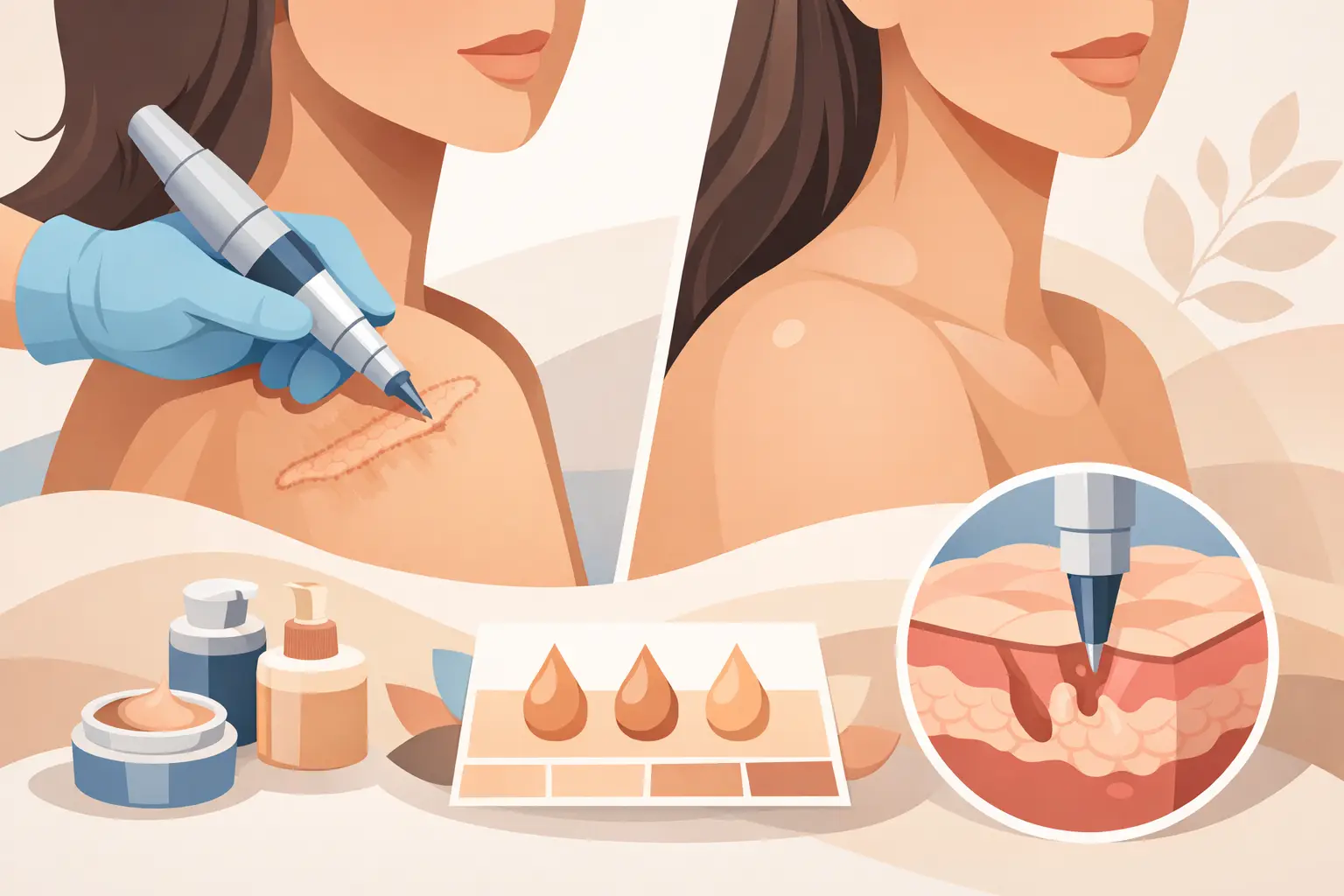
Scar camouflage treatment uses carefully selected cosmetic pigments to visually balance areas of discoloration caused by a healed scar. The pigments are implanted with controlled, superficial precision to bring the scar closer to the tone and undertone of the surrounding skin.
It can be considered for scars from surgery, injury, burns, cosmetic procedures, or skin grafts, among other causes. Clients frequently seek camouflage for scars on the face, body, breasts, abdomen, arms, legs, and scalp. The right candidate is not defined by where the scar is located, but by the scar’s condition, color, stability, and texture.
Camouflage improves color contrast. It does not remove scar tissue, flatten raised tissue, restore pores, or erase a scar completely. That distinction matters. A refined result makes the area less visually obvious at conversational distance and in everyday lighting, while still respecting the skin’s natural variation.
The First Requirement: A Fully Healed, Stable Scar
Timing is one of the most important parts of the process. A scar must be fully healed, mature, and stable before pigment camouflage is considered. Fresh scars are still changing in color, circulation, and texture. Treating them too early can compromise both the healing process and the final appearance.
In many cases, a scar needs at least 12 months to mature, though some scars require more time. Surgical history, skin type, scar behavior, medications, and the location of the scar all affect readiness. A professional consultation should assess whether the skin is calm, closed, stable in color, and no longer actively remodeling.
Raised, hypertrophic, keloid-prone, inflamed, or unstable scars require additional caution and may not be suitable for cosmetic pigmentation. The most responsible answer is sometimes to wait, seek medical clearance, or explore another corrective approach first. Premium care begins with knowing when not to proceed.
Why Custom Color Matching Changes the Result
Skin is not one flat shade. It contains undertones, warmth, coolness, translucency, and subtle changes across different areas of the body. That is why a generic beige pigment or a preselected tattoo ink can make a scar more noticeable instead of less.
Sophisticated scar camouflage treatment begins with custom pigment blending. The selected color must account for the surrounding skin today, as well as how the pigment is likely to settle during the healing period. A scar may be lighter, darker, pink, red, purple, or missing pigment altogether. Each presentation calls for a different strategy.
Lighter scars are often among the most requested concerns because they can appear especially noticeable against deeper or sun-kissed skin. Yet even with a strong visual difference, the objective is not to force an exact, opaque match in one appointment. Layered, nuanced pigment work usually creates a more believable result than trying to cover everything at once.
At MicroArt, this level of customization is central to the approach. Mineral-based pigments and precision equipment are selected to support a natural-looking finish rather than the dense, flat effect associated with conventional body tattooing.
Texture, Sun Exposure, and Other Real-World Variables
A smooth, flat scar generally offers the most predictable camouflage canvas. Textured scars can still be improved in some cases, but pigment cannot make uneven tissue feel smooth. Under close inspection, texture may remain visible even when the color difference has been softened.
Sun exposure also changes the equation. Surrounding skin can tan while a scar remains lighter, causing the contrast to shift seasonally. Pigment itself may appear different under bright daylight, indoor lighting, or after a change in skin tone. For this reason, treatment planning should be based on your natural baseline rather than an unusually deep tan.
Skin undertone, scar location, lifestyle, and medical history also influence expectations. A scar on the chest may heal and hold pigment differently than one on the face or leg. Clients with deeper skin tones deserve especially thoughtful color formulation, because matching undertones is every bit as important as matching depth of color.
What the Appointment Experience Should Feel Like
A proper consultation is not a formality. It is where the practitioner reviews the scar, discusses your goals, evaluates suitability, and explains what can reasonably be achieved. Clear photographs in natural light can help begin the conversation, but an in-person assessment may be necessary for final treatment planning.
During the procedure, pigment is deposited gradually with controlled technique. The experience varies by scar location and individual sensitivity, but the process should be measured rather than aggressive. The aim is to build an undetectable effect with precise placement, not to traumatize already compromised tissue.
One session may create a visible improvement, but multiple sessions are common. The skin needs time to heal and reveal how the pigment has settled before additional refinement is performed. This staged approach is a benefit, not a limitation: it allows the color to be adjusted thoughtfully instead of overcorrected.
Healing and Maintenance: What to Expect
Immediately after treatment, the area may look more saturated than the healed result. As the skin recovers, the pigment softens and settles. Following aftercare instructions is essential, particularly around moisture, friction, heat, exercise, sun exposure, and products that may irritate the treated area.
Results are semi-permanent, not static. Skin naturally renews itself, and factors such as UV exposure, skincare habits, hormonal changes, and individual metabolism can affect longevity. A maintenance plan may be appropriate when the camouflage begins to fade or when the surrounding skin tone changes over time.
The trade-off for a softer, more skin-like result is that it may require periodic refreshment. Dense tattoo ink can appear more permanent, but permanence is not automatically desirable when skin tones shift, pigment changes, or a result needs correction. In corrective cosmetic work, flexibility is valuable.
Choosing a Specialist Matters More Than Choosing a Trend
Scar camouflage belongs at the intersection of cosmetic artistry and corrective skin work. It requires a practitioner who understands color theory, scar maturity, pigment behavior, and the discipline of restraint. A result should not look painted on, overly warm, gray, or noticeably different from the surrounding skin.
Ask to see healed examples, not only immediate after photos. Look for results across a range of skin tones and scar types. Ask how pigment is customized, how readiness is assessed, what aftercare involves, and whether a treatment plan includes the possibility of additional sessions. A reputable provider will be specific about limitations and will never promise to erase a scar.
The most successful scar camouflage treatment is often the one people do not notice. When color contrast is softened with care, a scar can become less of the first thing you see and more simply one part of your skin’s story.