
A brow procedure should make people notice your eyes, not your eyebrow tattoo. That is why the decision between powder brows vs nanoblading deserves more than a quick look at before-and-after photos. Both techniques can create beautiful semi-permanent enhancement, but they produce distinctly different finishes, heal differently, and suit different skin types, lifestyles, and expectations.
For clients who value a polished yet believable result, the right choice comes down to how you want your brows to read in real life: softly defined, individually textured, makeup-ready, or nearly undetectable.
Powder Brows vs Nanoblading: The Core Difference
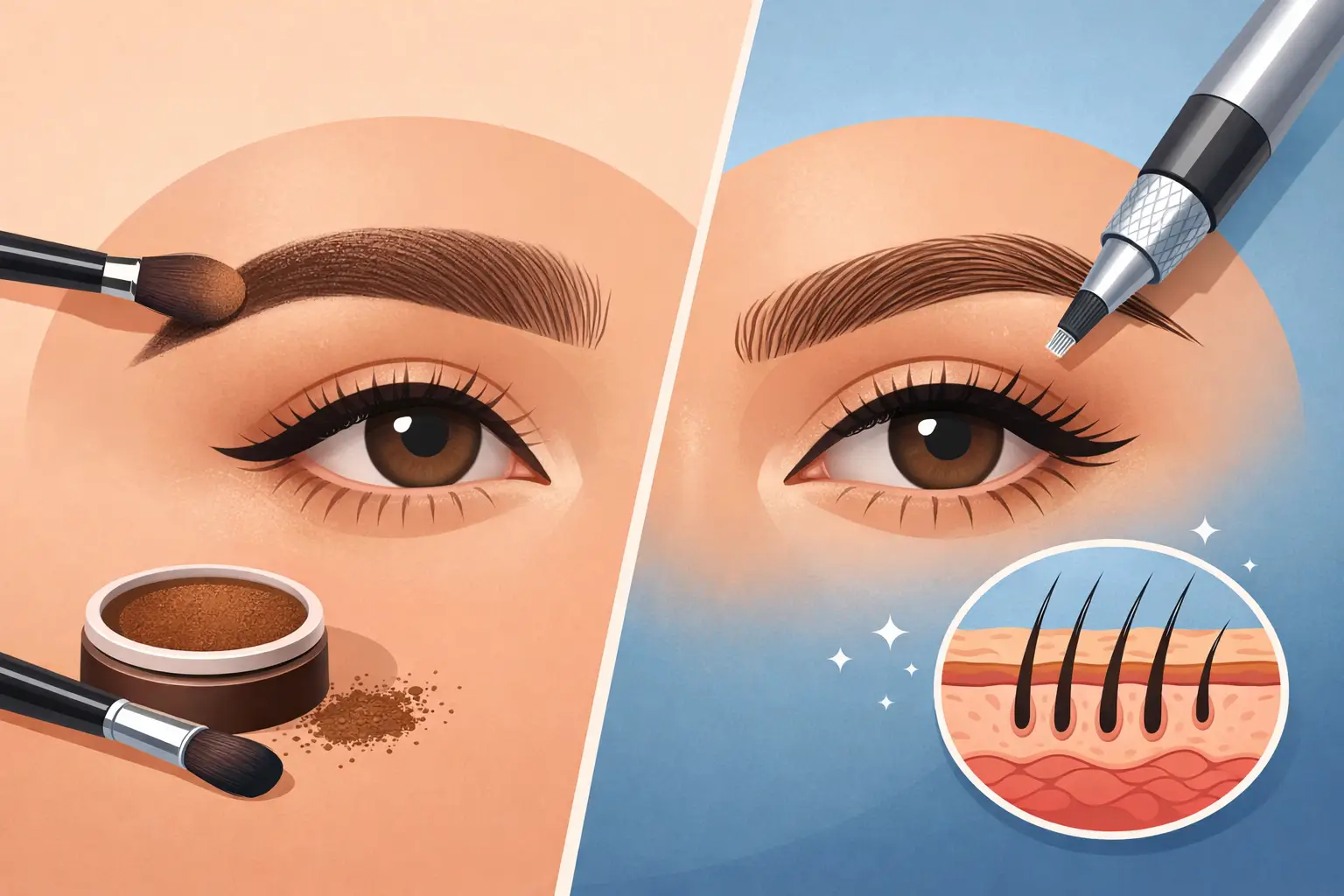
Powder brows create a soft, shaded effect that resembles expertly applied brow makeup. Rather than placing individual hair strokes, the artist deposits tiny layers of pigment to build a gradient, often lighter at the front and more defined through the arch and tail. The final look can range from a sheer, airy wash of color to a more structured soft-powder finish.
Nanoblading, often called nano brows or nano hairstrokes, uses a machine-driven needle configuration to create fine strokes that imitate natural brow hairs. Unlike traditional microblading, which uses a handheld blade to make manual incisions in the skin, nanoblading is performed with a device. The goal is dimensional, hair-like detail rather than a shaded makeup effect.
Neither approach is automatically more natural. A powder brow can look exceptionally subtle when the shape, density, and pigment are customized with restraint. Nano strokes can look extraordinarily realistic when they follow the client’s existing growth pattern and are placed in skin that can retain fine detail well. The difference is visual language: powder brows create softness and definition, while nanoblading creates texture.
The Finish You See Every Day
Powder brows are often the preferred choice for clients who already fill in their brows with pencil, powder, or pomade. They give the face a more finished appearance from morning through evening without requiring daily makeup. A skilled artist can keep the front delicate and avoid the blocky, overly saturated brow look associated with outdated permanent makeup.
Nanoblading is especially appealing to clients with sparse areas who want the illusion of individual hairs. It can add movement to an existing brow, refine an uneven shape, or help restore the appearance of density without looking like conventional brow makeup. On bare skin, properly executed nano strokes may be harder to detect at conversational distance.
The trade-off is that ultra-fine strokes are not always the best long-term aesthetic choice for every client. Over time, skin naturally changes, pigment softens, and individual strokes may lose some crispness. A subtle powder technique can often age more uniformly because its design is built around diffusion rather than sharp line work.
For fuller brows versus sparse brows
If you have naturally full brows but want cleaner symmetry, deeper color, or a more defined arch, powder brows can enhance what is already there without competing with natural hair. If your primary concern is gaps, a thin tail, or a lack of visible hair at the front, nanoblading may offer the detail you are looking for.
Clients with very little natural brow hair should be especially thoughtful. Nano strokes can create an elegant hair-like effect, but the treatment plan must account for the skin beneath, facial structure, and the way the result will soften over time. In some cases, a combination of hairstrokes and soft shading offers a more convincing, balanced outcome than either technique alone.
Skin Type Matters More Than Most Clients Expect
The best brow procedure is not chosen from a trend board. It is chosen from an assessment of your skin, natural hair pattern, desired maintenance, and how much definition you want after healing.
Oily skin can be challenging for detailed hairstroke work. Increased oil production may cause fine strokes to heal softer or blur more quickly than expected. Powder brows are frequently a more dependable option for clients with oily or combination skin because the shaded technique is designed to heal as a soft, blended field of color.
Dry to normal skin may retain nano strokes more predictably, particularly when the skin is healthy and not overly thin or sensitized. Even then, retention varies. Age, skincare habits, sun exposure, medications, prior brow tattooing, and individual healing all influence the final result.
Mature skin also requires a highly experienced approach. Fine lines, texture changes, and reduced elasticity can make overly elaborate hairstrokes less stable. A feather-light powder brow may provide a more flattering and elegant enhancement, although some clients remain good candidates for carefully placed nano detail.
Healing, Downtime, and Maintenance
Both powder brows and nanoblading involve a healing process. Expect the color to appear stronger initially, then soften as the skin recovers. Temporary dryness, flaking, and uneven-looking pigment can occur, which is why judging the result too early is a common mistake.
Traditional powder brow and nanoblading techniques may require clients to avoid intense workouts, swimming, excess moisture, and certain skincare products during the early healing period. Your provider should give precise aftercare instructions based on the technique used and your skin’s needs. Picking or prematurely removing flaking skin can interfere with pigment retention.
In terms of longevity, powder brows often fade gradually and evenly, typically making maintenance more straightforward. Nanoblading may also last well, but the individual-stroke effect can require more careful refreshes to preserve clarity. Neither should be treated as a permanent, one-and-done procedure. Refined semi-permanent brows are designed to evolve with the face and be maintained before the color becomes overly faded or the shape needs a major correction.
At MicroArt, the focus is not on forcing a client into a popular technique. A proprietary approach to cosmetic tattooing emphasizes customized pigment, controlled placement, and a natural finish designed around the individual rather than a one-style-fits-all brow trend.
Cost Is Only One Part of the Decision
Pricing varies by artist experience, geographic location, technique, correction needs, and whether a perfecting session is included. It can be tempting to compare appointments by their initial price alone, but brows sit at the center of the face. A discounted procedure that heals too dark, too warm, too cool, or too heavily shaped can become far more expensive to correct than a carefully planned treatment from the beginning.
For premium clients, the value is in the assessment and the artistry. You are paying for someone to understand facial proportions, undertones, pigment behavior, skin response, and the discipline to keep the result refined. The best work is rarely the most dramatic work. It is the work that still feels like you when you see it in daylight, without makeup, months later.
How to Choose Between Powder Brows and Nanoblading
Start with your daily habits. If you prefer a soft makeup effect and want consistently defined brows without filling them in, powder brows may be the stronger match. If you rarely wear brow makeup and want to replicate the appearance of hair in sparse areas, nanoblading may be more aligned with your goal.
Then consider your skin honestly. Oily, textured, or highly mature skin may benefit from the stability of a powder technique. Normal to dry skin with enough natural hair for a realistic pattern can be well suited to nano hairstrokes. If you want both texture and gentle definition, ask whether a hybrid approach is appropriate.
Finally, choose your provider with the healed result in mind. Ask to see healed work across different skin types, not only freshly completed photos. Discuss pigment selection, correction experience, maintenance expectations, and how the artist will prevent the brows from looking too heavy. A consultation should feel precise, not rushed.
Your brows do not need to announce that you had a procedure. The right technique should simply make your face look more balanced, your morning routine easier, and your reflection more like the version of yourself you intended to see.