

A scar can be completely flat and still command attention. It may be lighter, darker, redder, or shinier than the surrounding skin, making it difficult to conceal with makeup and impossible to forget in certain lighting. The real question behind scar camouflage vs laser is not which treatment is better in every case. It is which treatment addresses the feature of your scar that bothers you most.
Laser procedures and cosmetic scar camouflage work in fundamentally different ways. One is designed to influence the scar tissue itself. The other is designed to visually blend a stable scar into the skin around it. Knowing that distinction protects you from investing in a treatment that cannot deliver the outcome you actually want.
Scar Camouflage vs Laser: The Fundamental Difference
Laser treatments use controlled light energy to target specific characteristics in the skin. Depending on the device and the scar, laser treatment may be recommended to reduce redness, soften certain textural irregularities, improve pigment concerns, or support collagen remodeling. Results can be meaningful for the right scar, but they are gradual and vary by scar type, skin tone, device, provider expertise, and healing response.
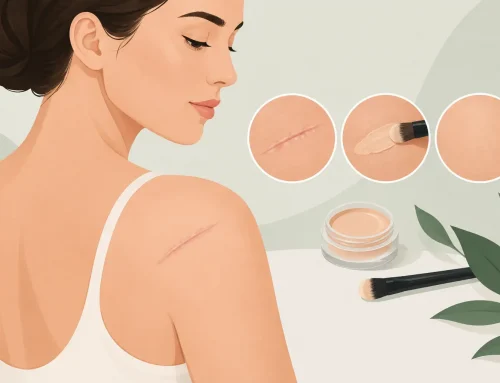
Scar camouflage is a highly specialized form of cosmetic tattooing. Custom-blended mineral pigments are implanted into the upper layers of the skin to reduce the contrast between a healed scar and its surrounding skin. It does not remove the scar, flatten raised tissue, erase a depression, or change a scar’s texture. Its purpose is visual correction: creating a more even, natural-looking field of color so the scar becomes far less noticeable at conversational distance.
That distinction matters. If your scar is red, raised, thick, itchy, indented, or still actively changing, laser treatment or another medical intervention may be the more appropriate first conversation. If the scar is smooth, fully healed, and primarily visible because it is white, pale, dark, or unevenly pigmented, camouflage may offer the more direct cosmetic solution.
What Laser Can and Cannot Address
Laser treatment is often the stronger option when color and texture are both part of the problem. Vascular lasers may help with persistent redness. Resurfacing lasers can be used in an effort to improve the appearance of certain acne scars, surgical scars, or traumatic scars by encouraging skin remodeling over a series of sessions. Pigment-focused lasers may be considered for some forms of discoloration.
The trade-off is that laser is not a universal reset button. Multiple treatments are common, and recovery can range from mild temporary redness to more noticeable healing depending on the technology and treatment intensity. Clients with deeper skin tones should be especially thoughtful about provider selection, since inflammation can trigger post-inflammatory hyperpigmentation or hypopigmentation when treatment settings and aftercare are not expertly managed.
Laser also has limits with mature white scars. A scar that has lost pigment may have little melanin for a pigment-targeting laser to work with. Resurfacing can sometimes improve texture, but it cannot reliably restore the exact skin color that was lost. This is where clients can spend months pursuing improvement only to find that the remaining issue is still contrast.
A laser consultation should be clinical, specific, and realistic. Ask what characteristic is being treated, how many sessions are likely, what downtime to expect, and what the provider considers a successful result for your skin type. A credible answer will include limitations, not just promises.
When Scar Camouflage Is the More Precise Choice
Cosmetic camouflage excels when a scar is medically stable but visually conspicuous. Common examples include pale surgical scars, tummy tuck scars, breast lift or augmentation scars, scars following trauma, healed self-harm scars, and certain scars after reconstructive procedures. It can also be considered for select mature stretch marks when they meet candidacy requirements.
The artistry is not simply choosing a beige pigment. Skin is never one flat color. It contains warmth, coolness, depth, translucency, and variation that changes from one area of the body to another. High-level scar camouflage requires an individualized pigment formulation, careful placement, and a controlled technique that respects the altered nature of scar tissue.
At MicroArt, the objective is not to make a scar look tattooed over. It is to create a refined, skin-like result that reduces contrast without an obvious border or artificial cast. This is particularly important for clients who want their correction to remain discreet in daylight, photography, swimwear, and intimate settings.
Camouflage is also not the same as traditional body tattooing. Traditional tattoo inks and methods can produce color shifts, harsh coverage, and excess trauma in delicate or irregular scar tissue. A premium semi-permanent approach uses custom-blended mineral pigments and precision equipment to build color gradually. The process is designed around natural-looking integration, not heavy opacity.
The Non-Negotiable Requirement: A Mature, Stable Scar
Neither impatience nor a special occasion should determine timing. A scar must be fully healed and stable before cosmetic camouflage is considered. In many cases, that means waiting at least 12 months after surgery or injury, although healing timelines vary. The scar should no longer be changing in color, thickness, or shape, and there should be no open skin, active inflammation, infection, or tendency toward problematic scarring that has not been medically evaluated.
Raised keloids, hypertrophic scars, and scars that remain red or itchy deserve medical attention before any cosmetic procedure. Camouflage over unstable tissue may lead to unpredictable pigment retention and does nothing to resolve the underlying scar activity.
This is also why an experienced provider will sometimes recommend waiting or pursuing laser first. A consultation that rules you out for now can be more valuable than a procedure that is premature.
Can You Combine Laser and Scar Camouflage?
Often, yes – but sequence is everything. When a scar has both textural concerns and a color mismatch, it can be sensible to address texture or redness with a qualified laser provider first. Once the scar has completed its healing response and is stable, cosmetic camouflage can address the residual contrast that laser could not fully correct.
Camouflage should generally be the finishing treatment, not the first step in a plan that includes aggressive resurfacing. Laser energy can alter implanted pigment, create uneven fading, or make a carefully matched result less predictable. If future laser treatments may be necessary, disclose that before beginning camouflage.
A coordinated plan is especially valuable after surgery, burns, acne scarring, or procedures that leave large areas of uneven pigment. The goal is not to chase perfection. It is to choose the right intervention at the right stage and achieve the greatest visible improvement with the least unnecessary disruption to the skin.
Recovery, Longevity, and Expectations
Laser recovery depends heavily on the laser used. Some treatments allow a quick return to normal activity, while others require several days of visible redness, peeling, or strict sun avoidance. Treatment plans may require several appointments spaced weeks apart.
Scar camouflage is typically chosen by clients who value a low-downtime cosmetic correction. Mild temporary sensitivity or redness can occur, but the process is designed to avoid the bruising, scabbing, and dramatic healing often associated with more aggressive procedures. Pigment also settles as the area heals, and more than one session may be needed to achieve balanced coverage because scar tissue can retain color differently from healthy skin.
No responsible provider should promise that a scar will disappear completely. The strongest result is one that makes the scar far less visually distinct while preserving a believable skin appearance. Texture, close-up visibility, and changes in tanning can still reveal that a scar exists. The difference is that it no longer has to be the first thing you see.
Choosing the Right Starting Point
Choose a laser consultation first when your scar is still red, raised, uneven in texture, or medically active. Consider scar camouflage when the scar is mature, flat or relatively smooth, and its color contrast is the central concern. If both are true, build a staged plan rather than forcing one treatment to do the other’s job.
The most valuable consultation is not the one that sells the fastest procedure. It is the one that evaluates your scar in person or through clear photos, considers your skin tone and healing history, and explains what can realistically change. A beautifully executed result begins with that level of precision – and with the decision to treat the scar you have, not the scar you wish a single device could erase.