
A perfectly defined lash line can make every morning easier, but the eyelid is not an area for casual shortcuts. Is permanent eyeliner safe? It can be when the procedure is performed by a properly trained specialist using appropriate pigments, sterile technique, and an individualized plan. It is not risk-free, and the difference between a refined enhancement and a regrettable result often comes down to who performs it, what is placed in the skin, and whether your eyes are a suitable candidate.
For clients who value an undetectable, polished result, the goal should never be a heavy tattooed stripe. The most sophisticated eyeliner enhancement is designed to create the appearance of fuller lashes and clearer eyes while respecting your anatomy, skin tone, lifestyle, and long-term preferences.
Is Permanent Eyeliner Safe for the Eye Area?
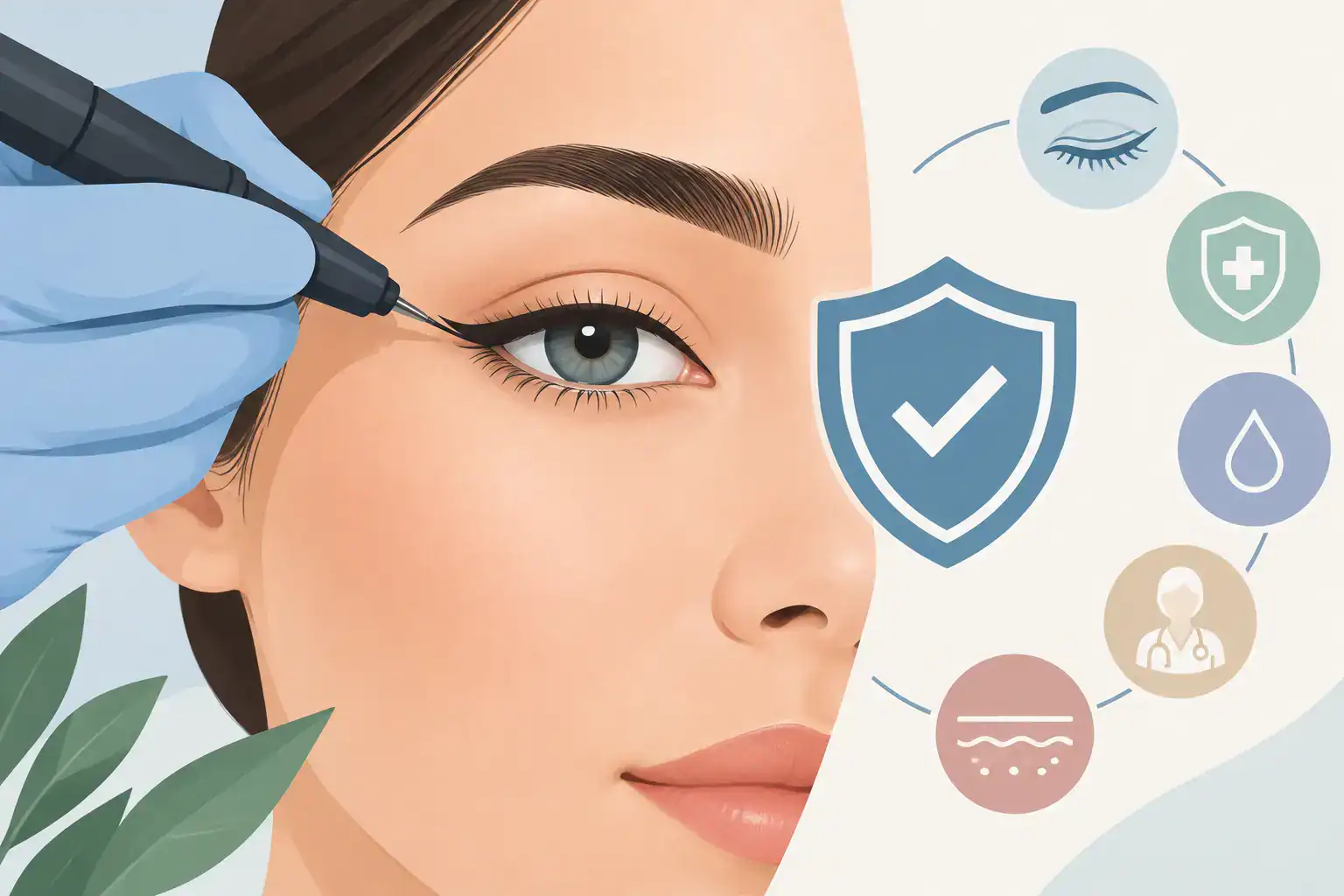
Permanent eyeliner is a form of cosmetic tattooing. A specialist deposits pigment into the upper layers of skin along the lash line using a precision device. Because this work is performed beside the eye, safety standards must be higher than they would be for a conventional body tattoo.
The primary risks include infection, allergic or inflammatory reactions, swelling, uneven pigment retention, scarring, and an aesthetic result that heals darker, cooler, or more prominent than intended. Poor placement can also make eyes appear smaller or asymmetrical. In rare cases, products or poor sanitation practices can contribute to more serious complications.
A qualified provider reduces these risks through a detailed health review, careful pigment selection, single-use sterile supplies, meticulous workspace protocols, conservative placement, and clear aftercare. No ethical specialist should describe cosmetic eyeliner as completely risk-free. The right question is whether the risk is being actively managed with clinical discipline and expert judgment.
Why Traditional Permanent Makeup Has Earned Caution
Many concerns around permanent eyeliner come from older techniques and inconsistent industry standards. Traditional cosmetic tattooing may use deeper implantation, machine settings that are too aggressive for thin eyelid skin, or pigment formulas prone to shifting in color over time. A black liner that heals blue-gray, a sharp wing that no longer suits the face, or visible scarring at the lash line can be difficult and costly to correct.
Depth matters. Skin around the eyes is delicate, and excessive trauma can increase swelling, prolong healing, and compromise the final appearance. Pigment matters as well. A formula should be selected for stability and compatibility, not simply for the darkest immediate result.
This is also why price alone is a poor way to choose a provider. A lower initial cost can become far more expensive when correction, removal, or camouflage is needed. Eyeliner is a high-visibility procedure. It deserves a specialist whose work remains soft, balanced, and believable after healing, not only in freshly treated photographs.
The Safety Factors That Matter Most
A consultation that goes beyond color selection
A proper consultation should include more than choosing between brown and black. Your specialist should ask about previous eyeliner tattooing, eye surgery, skin conditions, medications, allergies, immune concerns, and your usual eye makeup routine. They should assess eyelid shape, natural asymmetry, lash density, and whether your desired style can age gracefully.
Be direct about a history of keloid scarring, chronic dry eye, blepharitis, glaucoma, eczema near the eyes, frequent styes, or reactions to cosmetics. Pregnancy, breastfeeding, active infection, uncontrolled diabetes, blood-thinning medication, and certain medical treatments can affect candidacy or timing. Medical clearance may be appropriate in some cases.
A responsible provider may postpone treatment. That is not a missed opportunity. It is evidence that safety is being placed ahead of the appointment calendar.
Sterile technique and eye-specific standards
The treatment environment should be immaculate, but visual cleanliness alone is not enough. Pigments, needles, cartridges, protective barriers, and consumables should be handled to prevent cross-contamination. Single-use components and proper disinfection protocols are fundamental, especially for a service performed at the eye line.
Clients should also be given preparation instructions. Contact lenses are generally removed for the procedure, and eye makeup, lash extensions, and some lash-growth products may need to be paused according to the provider’s protocol. Arriving with irritated eyes, active redness, or a developing stye is a reason to reschedule, not push forward.
Precision equipment and controlled depth
Fine eyeliner work is not about forcing pigment into the skin. It is about controlled, precise implantation at an appropriate depth. A skilled specialist works with the natural direction of lash growth and avoids overworking the tissue. This supports a cleaner healed result and helps limit unnecessary trauma.
At MicroArt, proprietary precision techniques and custom-blended mineral-based pigments are central to achieving soft, natural-looking definition without the harsh, solid appearance associated with conventional cosmetic tattooing. For the client, the practical standard is simple: ask how the provider controls depth, customizes the design, and approaches healing on thin eyelid skin.
Pigment quality and realistic color planning
The right pigment is not necessarily jet black. Depending on skin tone, natural lashes, and desired effect, a softened black, espresso, or deep brown may create a more elegant result. A specialist should explain that fresh pigment often appears more intense before it settles.
Color planning also means understanding that no pigment behaves identically in every client. Skin chemistry, sun exposure, skincare, immune response, and previous tattoo work can affect retention. A conservative first session gives the specialist room to refine rather than correct an overly bold line.
Choosing a Safe Design, Not Just a Trend
A dense upper lash enhancement is often the most timeless choice because it adds definition without looking like obvious makeup. It can make lashes appear fuller while remaining appropriate at the gym, in daylight, and years from now. A dramatic wing or thick liner may be possible for some candidates, but it requires more restraint and long-range thinking.
Your eyelids change with age, and your makeup preferences may change even faster. The safest aesthetic choice is usually one that enhances your existing features instead of competing with them. If a provider promises to copy a filtered social-media look exactly, pause. Real eyes move, blink, crease, and heal differently.
Lower-lash-line tattooing deserves particular caution. It can be beautiful in highly selective cases, but it may look heavy or reduce the openness of the eye if the design is too dark or broad. A specialist should be comfortable recommending against it when it does not serve your features.
Healing Is Part of the Safety Plan
Mild tenderness, puffiness, and temporary darkening can occur after eyeliner tattooing. Healing is individual, but clients should follow their provider’s aftercare instructions precisely. That typically means keeping the area clean, avoiding rubbing or picking, and temporarily avoiding swimming, steam, heavy sweating, eye makeup, and products not approved for the healing period.
Do not judge the final result in the first few days. Initial intensity, minor flaking, and uneven-looking retention can be part of the normal settling process. A planned refinement appointment is common because the skin may retain pigment differently across the eyelid.
However, worsening redness, significant pain, heat, discharge, vision changes, severe swelling, or signs of an allergic reaction are not normal healing concerns to ignore. Contact a medical professional promptly, and notify your provider. A credible clinic welcomes this communication and does not minimize symptoms that need medical attention.
Questions Worth Asking Before You Book
Before committing, ask to see healed eyeliner results in clients with a range of ages, skin tones, and eye shapes. Fresh results can look impressive while revealing little about color stability or healed softness. Ask who will perform the procedure, what their eyeliner-specific training includes, how they handle previous tattoo work, and what happens if your skin retains pigment unevenly.
You should also understand the maintenance plan. The phrase permanent eyeliner can be misleading because cosmetic pigment generally softens over time, though longevity varies significantly. Maintenance may preserve a polished result, while removal or correction can be more complex than the original procedure. Choose a design and provider with that future in mind.
The best eyeliner treatment should leave you feeling more like yourself, not permanently committed to a makeup trend. Give the decision the same care you would give any procedure near your eyes: seek expertise, ask precise questions, and choose subtlety over a result you may outgrow.