
A successful result is not just about restoring color. It is about restoring proportion, symmetry, softness, and the confidence that comes from looking in the mirror and seeing something that feels whole again. That is why choosing an areola reconstruction tattoo specialist should never be treated like booking a standard cosmetic tattoo appointment.
This procedure sits at the intersection of medical restoration and aesthetic precision. Clients often arrive after mastectomy, breast reconstruction, reduction, lift surgery, or other corrective procedures, and the emotional weight is real. The best work does not call attention to itself. It disappears into the body naturally, with color, shape, and dimension that read as authentic rather than obviously tattooed.
What an areola reconstruction tattoo specialist actually does
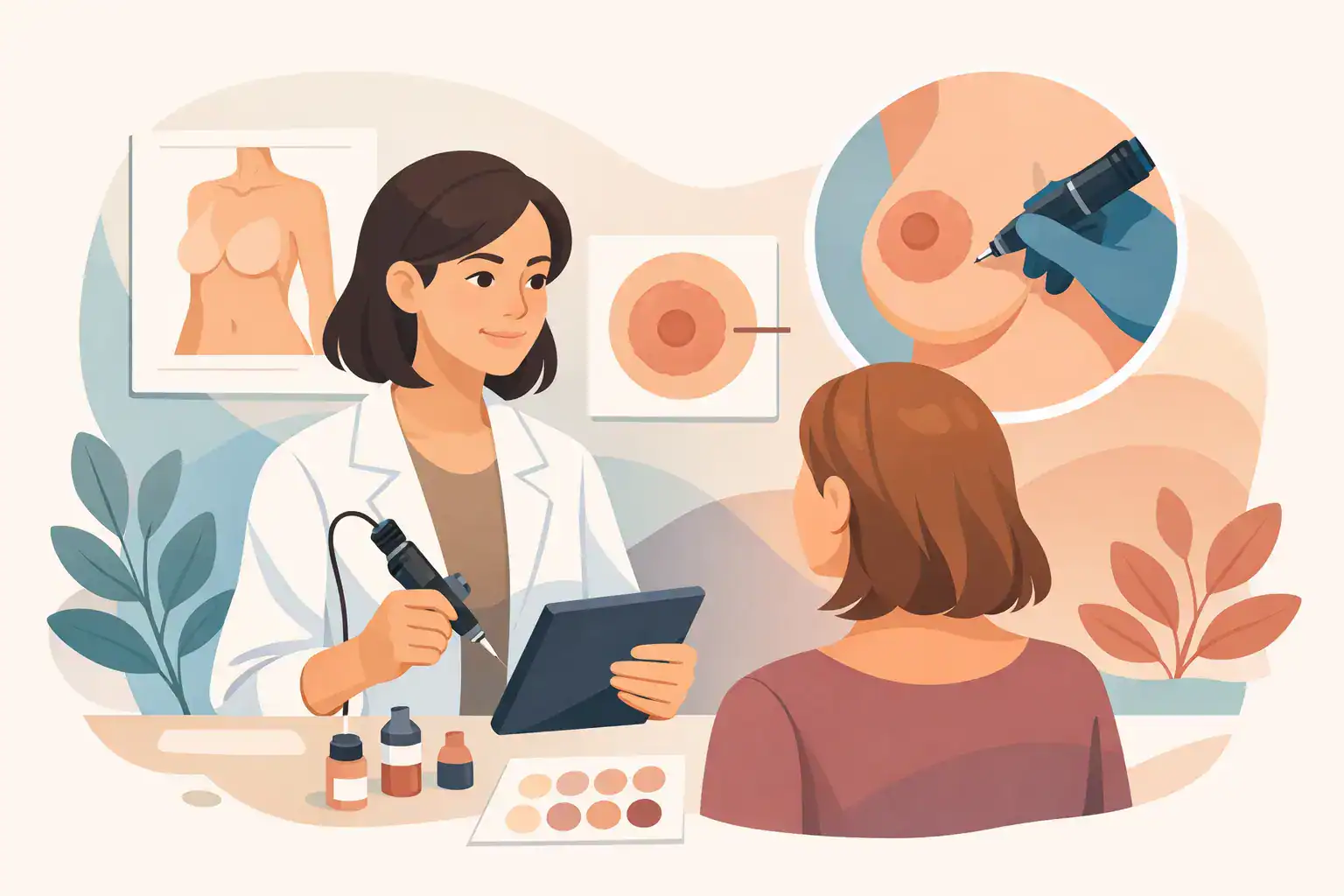
An areola reconstruction tattoo specialist is not simply adding pigment to the skin. The role requires advanced control over tone, translucency, placement, and visual depth. In many cases, the specialist is creating the appearance of a realistic areola and nipple complex where definition has been lost or removed. In other cases, the goal is refinement – softening scar visibility, correcting asymmetry, balancing color, or improving the appearance after a previous tattoo that looks flat or artificial.
This is why the term specialist matters. Areola restoration is a highly specific category. It demands an understanding of healed surgical skin, scar behavior, skin undertones, pigment retention, and the difference between a medically sensitive result and a decorative one. A provider may be excellent at brows or eyeliner and still not be the right fit for this type of work.
The visual objective is subtle realism. That often means layered color rather than one uniform shade, careful border diffusion instead of hard outlines, and dimension that creates a natural optical effect. The result should suit the client’s skin tone, anatomy, and surgical history. There is no one-size-fits-all formula.
Why provider selection matters more here than in standard cosmetic tattooing
With areola work, technical mistakes are harder to hide. If the shape is off, if the color is too warm or too cool, or if the design sits incorrectly on the breast mound, the result can feel more distressing than restorative. This is not a treatment where clients want to look tattooed. They want to look natural.
That is also why cheaper or more generalized services carry real trade-offs. Traditional permanent makeup methods can be too aggressive for delicate or surgically altered skin. Some techniques create excess trauma, followed by scabbing, uneven healing, or pigment that settles harshly. Others rely on premixed colors that fail to reflect the complexity of natural areola tones across different skin depths and undertones.
A premium specialist approach is typically defined by finer equipment, more precise pigment customization, and a treatment style designed to minimize skin disruption. Those details affect comfort, healing, and the final realism of the result. In a category this personal, precision is not a luxury add-on. It is the standard that protects the outcome.
How to evaluate an areola reconstruction tattoo specialist
The first thing to study is not marketing language. It is visual evidence. Look for healed results, not just fresh appointments. Fresh work can appear more saturated, smoother, and more dramatic than what remains after the skin settles. Healed results tell you whether the artist understands restraint, layering, and long-term color behavior.
You should also look for range. A qualified specialist should show work across different skin tones, scar patterns, and breast shapes. If every example looks identical, that is a concern. Real expertise shows adaptability. The areola for one client may need soft neutral browns with translucent borders, while another may need richer rose-beige tones, asymmetry correction, or nuanced scar blending.
Ask how pigments are selected. Custom blending matters because natural areola color is rarely flat. It can contain warmth, muted pink, brown, taupe, or subtle plum undertones depending on the individual. A specialist who understands this will discuss color in a tailored way rather than choosing from a generic menu.
Technique matters just as much. The provider should be able to explain how they create realism, how they work with scar tissue, what healing generally looks like, and when a second session may be appropriate. A confident expert can explain the process clearly without oversimplifying it.
The difference between realistic and obvious results
The most common fear clients have is ending up with something that looks stamped on. That fear is valid. Flat circles, overly dark outlines, and uniform color fields are what make areola tattoos look artificial.
Natural-looking work depends on controlled variation. Real areolas are not perfect discs with one solid tone. They have softness at the perimeter, subtle irregularity, and visual depth. Depending on the case, realistic nipple illusion may be created through advanced shading rather than raised texture. When done well, the result reads naturally in normal lighting and at conversational distance.
This is where artistry and clinical judgment meet. Too much softness and the shape can disappear. Too much definition and the tattoo looks cosmetic. The right balance depends on skin texture, scar density, breast contour, and the client’s own aesthetic preference. Some clients want maximum realism. Others want gentle refinement that feels understated. A true specialist knows how to calibrate both.
Scar tissue changes the procedure
Not all breast skin behaves the same, and scar tissue is one of the main reasons experience matters. Skin that has been reconstructed, irradiated, lifted, or revised may hold pigment differently from untreated skin. Some scar areas are denser, shinier, or less receptive. Others may blur color or heal unevenly.
That does not mean beautiful results are out of reach. It means planning must be individualized. In some cases, the specialist may need a softer build over multiple sessions rather than one aggressive pass. In others, shape placement becomes especially important because the visual center of the breast has shifted after surgery.
Clients often assume the tattoo itself is the whole service. In reality, the consultation and design phase are just as important. That is where proportion, placement, tone selection, and expected healing are assessed with a clinical eye.
What premium technology and pigment control change
The equipment and pigment system behind the procedure have a direct effect on the final result. Traditional tattoo methods can deposit color too heavily or inconsistently, especially in delicate restoration cases. That increases the risk of harsh edges, excess trauma, and a result that looks more like body art than anatomical restoration.
A more advanced approach prioritizes precision, controlled implantation, and pigments chosen for softness and realism. Mineral-based custom blending can be especially valuable when the goal is to mimic skin rather than create obvious cosmetic definition. The less the skin is traumatized, the more refined the healing process tends to be.
For clients who are already navigating surgical recovery or body confidence concerns, that matters. The experience should feel measured, not aggressive. Beverly Hills clientele and destination patients are rarely looking for the fastest or cheapest option. They are looking for the provider most capable of delivering a result that does not need explaining.
Questions worth asking before you book
You do not need to interrogate the provider, but you should ask informed questions. Ask whether they regularly perform areola restoration, how they approach scar tissue, whether they show healed results, and how many sessions may be needed in your case. Ask how they customize color and what they do to keep the outcome natural rather than overly saturated.
It is also reasonable to ask about comfort, healing expectations, maintenance over time, and whether previous tattooing can be corrected. If you have had prior areola tattooing that healed too dark, too pink, too flat, or asymmetrical, correction may be possible, but the strategy will depend on what is already in the skin.
At a clinic like MicroArt, this level of nuance is not treated as optional. It is the basis of the service.
Who is a strong candidate
Many clients pursue areola restoration after mastectomy and breast reconstruction, but that is not the only indication. Others seek treatment after breast lift or reduction surgery, after implant revision, or after previous areola tattooing that produced an unnatural result. Some simply want to restore definition that has faded over time.
The right timing depends on healing and medical clearance. Fully healed skin generally provides a better foundation than tissue that is still changing. A specialist should be direct about whether you are ready now or whether waiting would improve the result.
This is one of those cases where patience protects quality. Rushing the appointment may feel emotionally appealing, but the better decision is the one that supports symmetry, pigment retention, and stable healing.
Choosing the right specialist is ultimately about trust earned through evidence, technique, and judgment. When the work is done at a high level, it does more than restore appearance. It gives the body back a detail that feels quietly, convincingly its own.