
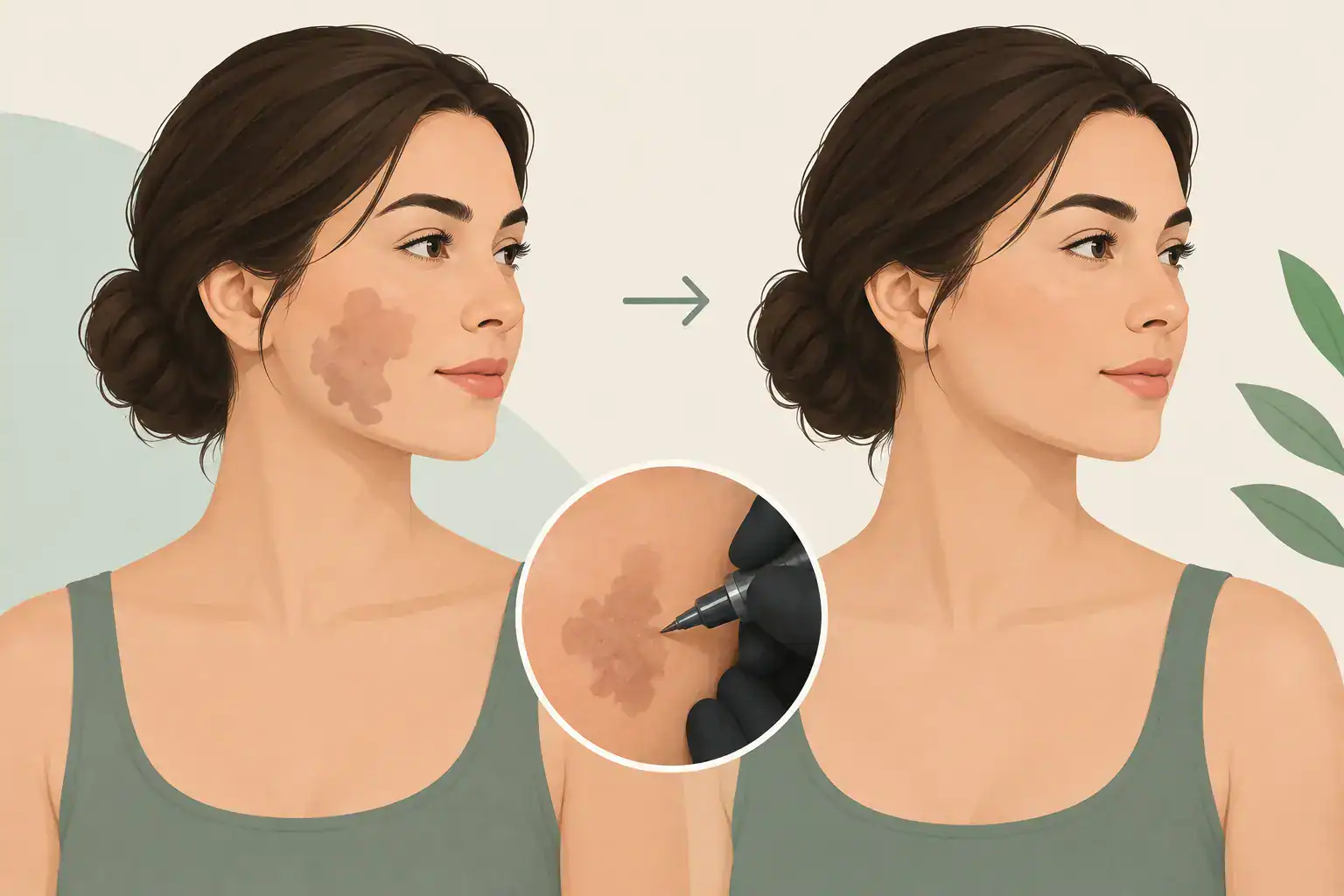
A birthmark can be something you barely notice until a close-up photo, a sleeveless dress, or a glance in a bright mirror makes it feel like the only thing anyone sees. A birthmark camouflage tattoo is designed to change that experience – not by covering skin with obvious makeup, but by carefully blending the area toward the surrounding skin tone for a more balanced, less noticeable appearance.
This is highly specialized cosmetic camouflage. The goal is never to make skin look painted over. It is to create a soft, natural-looking diffusion of color that respects the skin’s real texture, undertones, and movement. For the right candidate, the result can make daily concealer feel unnecessary and bring back confidence in clothing, photos, and bare skin.
What a Birthmark Camouflage Tattoo Actually Does
A camouflage procedure deposits custom-blended pigment into the skin to reduce the visual contrast between a birthmark and the skin around it. It does not remove the birthmark, alter its texture, or treat an underlying medical condition. Instead, it focuses on the color difference that makes the area stand out.
That distinction matters. A flat, stable brown or lighter patch may respond beautifully to camouflage because color is the primary concern. A raised birthmark, a vascular mark with red or purple tones, or an area with a significant textural difference requires a more cautious evaluation. Pigment cannot flatten a raised surface, and it cannot reliably neutralize every type of discoloration.
The strongest outcomes tend to look understated. From a normal conversational distance, the eye is drawn less to the birthmark because the contrast has been softened. Up close, skin remains skin. That is the standard a premium corrective treatment should meet.
Not Every Birthmark Should Be Camouflaged
The first step is not selecting a pigment. It is determining whether the area is appropriate for treatment. Any birthmark that is new, changing in size, shape, color, border, or sensation should be evaluated by a dermatologist before cosmetic work is considered. Camouflage should never obscure a lesion that needs medical observation.
A qualified specialist will also assess whether the birthmark is flat and stable, whether the skin has healed fully from any previous treatment, and whether there is active inflammation, irritation, or sensitivity in the area. Recent tanning, sunburn, acne activity, eczema flares, and certain skin treatments can all affect timing and pigment retention.
There are situations where waiting is the most refined decision. Skin that is still changing will not provide a reliable canvas. The same applies to a birthmark that has been recently lasered or surgically treated. Rushing into pigment implantation can compromise both healing and the eventual color match.
The challenge with red, purple, and textured marks
Brown or lighter birthmarks are not the only concerns clients bring in, but they are often more straightforward to camouflage. Red, purple, or blue-toned marks can reflect blood vessels beneath the skin rather than surface pigment alone. Their appearance may fluctuate with temperature, circulation, exercise, and emotion.
Textured areas introduce another variable. A skilled artist can reduce color contrast, but no tattooing method can recreate perfectly smooth skin over a raised or indented surface. A transparent consultation about this trade-off protects the quality of the result and the client’s expectations.
Color Matching Is the Entire Procedure
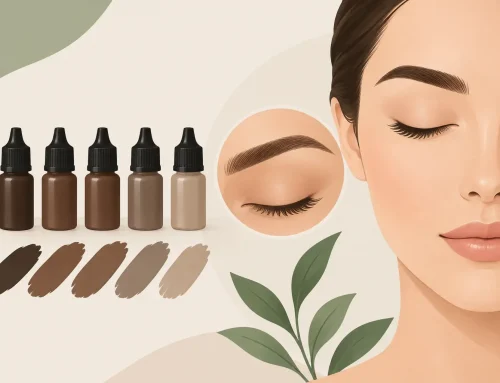
Skin tone is not one color. It is a layered combination of depth, warmth, coolness, surface redness, natural melanin, and the way light hits the body. That is why using a stock “beige” pigment on a birthmark is not camouflage. It is guesswork.
A high-level procedure begins with observing the surrounding skin in its natural state, not just the birthmark itself. The specialist considers whether the area has golden, olive, peach, rosy, or neutral undertones, as well as how it compares to adjacent skin. Skin on the chest, shoulder, face, arm, and leg can each carry very different color characteristics on the same person.
Custom mineral-based pigments are then blended to create a tone that integrates with the skin rather than sitting on top of it visually. The color may be built gradually over more than one session because freshly implanted pigment and healed pigment do not look identical. Patience is part of precision.
Sun exposure is another reason perfection should never be promised. Surrounding skin can tan, while a camouflaged area may respond differently. Seasonal changes, hormonal shifts, and natural skin turnover can also influence how the match appears over time. The objective is a beautifully blended result in your normal, untanned skin state, with an individualized plan for maintenance if needed.
Why Technique Matters More Than Coverage
Traditional tattoo approaches can be too aggressive for corrective skin work. Depth, pressure, pigment density, and device control all affect how color heals. Implanting pigment too deeply or too heavily can create an opaque patch, unwanted color shift, or a result that looks more visible than the original concern.
MicroArt approaches cosmetic camouflage with proprietary precision equipment and a semi-permanent philosophy. Rather than treating the skin like a conventional tattoo canvas, the focus is controlled, gradual color placement and an exceptionally natural finish. This is particularly valuable for clients who want a correction that remains discreet in daylight, flash photography, and close proximity.
A refined birthmark camouflage treatment also avoids the temptation to overcorrect. The aim is not to force every inch of skin into a single flat shade. Small variations are normal and believable. Overly dense coverage can make the treated area appear artificial, especially as the rest of the skin changes with the seasons.
What to Expect During Treatment
A consultation should be detailed and visual. Expect an assessment of the birthmark’s color, texture, location, age, and stability, along with a review of your skin history and desired level of improvement. Clear photos in natural lighting can help determine whether an in-person evaluation is appropriate, particularly for clients traveling to Beverly Hills.
At the appointment, the skin is cleansed and the pigment blend is refined. The treatment itself is methodical rather than rushed. A specialist may work in thin layers, continually checking how the tone reads against neighboring skin. Comfort measures and the exact duration depend on the location and size of the area.
With an advanced semi-permanent method, the goal is a low-disruption experience without the bruising, scabbing, or harsh healing often associated with traditional permanent makeup. Still, every person’s skin responds differently. Mild temporary redness is possible, and aftercare instructions should be followed closely to protect the developing color.
The treated area can look slightly different while it settles. Healing reveals the true character of the pigment, which is why a follow-up session may be recommended. That appointment is not a sign that something went wrong. It is often where the final adjustment creates the softest, most convincing blend.
Preparing for a Better Color Match
Your role before treatment is simple but significant. Arrive with the area free of self-tanner, body makeup, and heavy skincare products. Avoid intentional sun exposure beforehand, because tanned surrounding skin makes it harder to match your true baseline tone. If you use prescription topicals or have had recent procedures near the area, disclose them before your appointment.
After treatment, protect the area from sun exposure as directed and resist testing the result with makeup, exfoliation, or friction too soon. Corrective camouflage is an investment in subtlety. Giving pigment time to settle is part of protecting that investment.
Is a Birthmark Camouflage Tattoo Worth It?
For someone who spends time every morning blending concealer over a stable, flat birthmark, the appeal is obvious: more freedom, less maintenance, and a result that does not transfer onto clothing or disappear after swimming. For someone with a complex vascular, raised, or medically changing mark, the right answer may be a medical referral, a different treatment, or simply waiting.
The value is not in having a tattoo. It is in working with a specialist who knows when pigment can create a meaningful improvement and when it cannot. The most elegant result is one that feels like your own skin on an ordinary day – only with less effort spent hiding it.
If a birthmark has become a source of hesitation, begin with a professional assessment rather than a promise of total erasure. The right plan will put skin safety, realistic color matching, and a natural result ahead of a quick cover-up.