

Losing eyebrow hair changes the entire balance of the face. For many people with alopecia, the issue is not simply cosmetic – it is the daily frustration of drawing brows on, trying to make them match, and worrying they will disappear halfway through the day. An alopecia eyebrow tattoo offers a more refined solution, but the quality of that solution depends entirely on the technique, pigment strategy, and artistic restraint behind it.
This is where the conversation needs to become more precise. Not every brow tattoo is appropriate for alopecia, and not every provider understands the difference between creating visible makeup and recreating the appearance of real eyebrows. For clients dealing with partial brow thinning, total brow loss, or inconsistent regrowth, the goal is usually not dramatic definition. It is believable restoration.
What an alopecia eyebrow tattoo is really designed to do
An alopecia eyebrow tattoo is a semi-permanent cosmetic tattoo procedure created to restore the look of eyebrows when natural hair is sparse or absent. In the best hands, it does not look stamped on, overly warm, or sharply outlined. It is designed to mimic soft brow density, shape, and dimension in a way that sits naturally on the face.
That distinction matters. Clients with alopecia often have little room for error because there may be no existing brow hair to soften or disguise poor work. If the shape is too heavy, the color is too flat, or the strokes heal oddly, the result can look artificial very quickly. Techniques that may seem acceptable on a client with full brow hair can become obvious on bare skin.
For that reason, a sophisticated approach usually favors subtle layering, careful pigment placement, and custom color work over trend-driven brows. The objective is not to tattoo makeup onto the face. It is to restore facial harmony with as little visual evidence of tattooing as possible.
Why traditional brow tattoo methods often fall short
Many people begin researching this procedure assuming microblading is the natural answer. For alopecia, that is not always true. In fact, clients with hair loss often need a more advanced option than standard manual blading.
Microblading can create crisp strokes initially, but the technique has limitations, especially on sensitive, thin, mature, or repeatedly treated skin. Over time, strokes can blur, fade unevenly, or shift in tone. On completely bare skin, those changes are easier to see. When there is no natural brow hair in front of the tattoo, every line has to hold up on its own.
Traditional permanent makeup has its own issues. Older methods often deposit pigment too deeply, creating dense shapes, color migration, harsh healing, and long-term discoloration. That is exactly what many alopecia clients want to avoid. They are not looking for a hard brow block that announces itself from across the room.
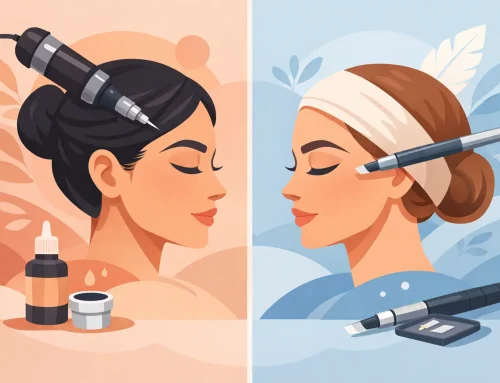
A more advanced cosmetic tattoo method is usually better suited for this category because it allows for greater precision, softer healed results, and a finish that reads more like real brow texture than obvious makeup.
Who is a good candidate for an alopecia eyebrow tattoo
The right candidate is not defined only by diagnosis. Alopecia presents in different ways, and the treatment plan should reflect that.
Some clients have alopecia areata with patchy loss. Others have alopecia universalis or totalis and no eyebrow hair at all. Some have thinning from autoimmune conditions, overplucking, hormonal shifts, thyroid changes, or medical treatment. The common thread is that they want dependable brows that look elegant, not overdone.
Good candidates usually want to reduce the burden of daily brow makeup, improve symmetry, and restore a polished appearance in a way that remains discreet. They also understand that natural-looking results require customization. The best outcome is rarely a one-size-fits-all brow shape copied from a stencil or trend reference.
A consultation is especially important for clients with active skin sensitivity, prior permanent makeup, scar tissue in the brow area, or a history of color retention issues. These details affect both technique and pigment selection.
Alopecia eyebrow tattoo results depend on design, not just pigment
The most overlooked part of brow restoration is facial design. When someone has little or no natural brow hair left, shape selection becomes critical because the tattoo is creating the visual architecture from scratch.
That means the provider must consider bone structure, muscle movement, eye spacing, forehead proportions, and the client’s preferred level of softness or definition. A brow that looks good in a close-up photo may not look correct in motion or at conversational distance. Luxury-level results come from understanding that the eyebrow is not an isolated feature. It frames the entire upper face.
Color is just as important. Alopecia eyebrow tattoo work should not rely on generic brown pigment. Brow restoration requires custom blending based on skin tone, undertone, and the desired healed finish. If the color is too ashy, too red, too dark, or too opaque, the result loses realism.
This is one reason premium clinics emphasize mineral-based pigments and precision equipment. Better tools and better pigment systems create more control, and control is what natural results require.
What the procedure feels like and how healing works
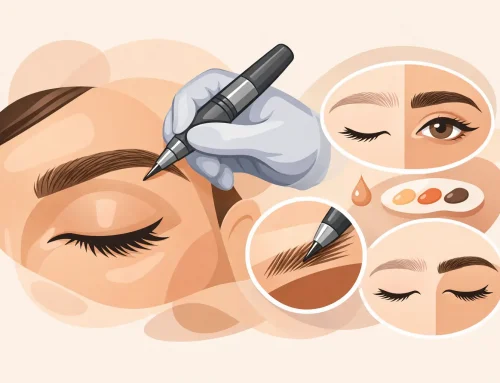
Most clients are surprised by how manageable the process feels when it is performed with refined technique. The appointment typically begins with detailed mapping and design approval, followed by pigment implantation in controlled layers. The experience should feel methodical, not rushed.
Healing varies by skin type and technique, but advanced methods are designed to minimize the visible side effects people often associate with older permanent makeup. Heavy scabbing, significant bruising, and downtime are not hallmarks of a high-level modern procedure. The brow area may appear more defined at first, then soften as the skin settles and the pigment heals.
That softer healed result is usually the goal. Brows that look perfect on day one because they are very dark or sharply drawn often heal into something less elegant than expected. With alopecia clients, restraint matters. It is better to build a believable brow than force intensity too early.
A follow-up session is commonly needed to refine detail, reinforce balance, and address how the skin has retained color. That is normal, not a sign that something went wrong.
The trade-off: subtle and natural versus bold and obvious
This is where expectation-setting matters. The most natural alopecia eyebrow tattoo will usually look softer than dramatic makeup brows seen on social media. That is not a compromise in quality. It is often a sign of better judgment.
Clients who want their brows to read as real from a normal speaking distance typically benefit from a more nuanced result. Clients who prefer a stronger cosmetic effect may still achieve that, but the brow can become more visibly tattooed, especially without natural hair to diffuse it. Neither choice is automatically wrong. It depends on your priorities.
For most alopecia clients, the priority is freedom. They want to wake up looking polished, travel without packing brow pencils, exercise without checking a mirror, and be seen without feeling unfinished. That kind of confidence usually comes from realism rather than intensity.
Choosing the right provider for alopecia eyebrow tattoo work
Alopecia brow restoration is a specialist procedure. It should not be treated as a standard add-on service by someone who mainly performs trend brows.
The provider should demonstrate healed results, not just fresh ones. They should understand color theory, skin behavior, asymmetry correction, and the specific demands of creating brows on skin with little or no hair. They should also be able to explain why their method differs from conventional microblading or old-style permanent makeup.
If a clinic positions every client toward the same brow pattern, the same pigment family, or the same technique, that is a warning sign. Alopecia cases require customization. Precision matters more here because there is nowhere to hide poor design.
This is one reason clients often travel to a specialist clinic such as MicroArt. When the goal is exceptionally natural brow restoration, experience with corrective and camouflage-based tattooing matters. The standard should be higher than simply having brows. The standard should be having brows that do not look tattooed.
Is it worth it?
For the right client, yes. Not because it creates trendy brows, but because it restores something daily life quietly depends on – structure, symmetry, and ease. The value is not just in how the brows look in a mirror. It is in no longer having to think about them every morning.
The best alopecia eyebrow tattoo work does not ask people to notice your brows. It allows them to notice you again. If that is the result you want, choose artistry with clinical discipline, not just a tattoo service marketed as beauty.