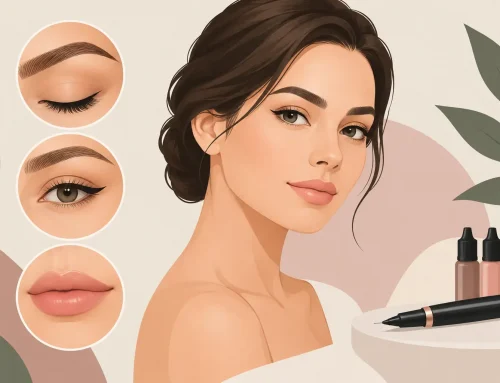

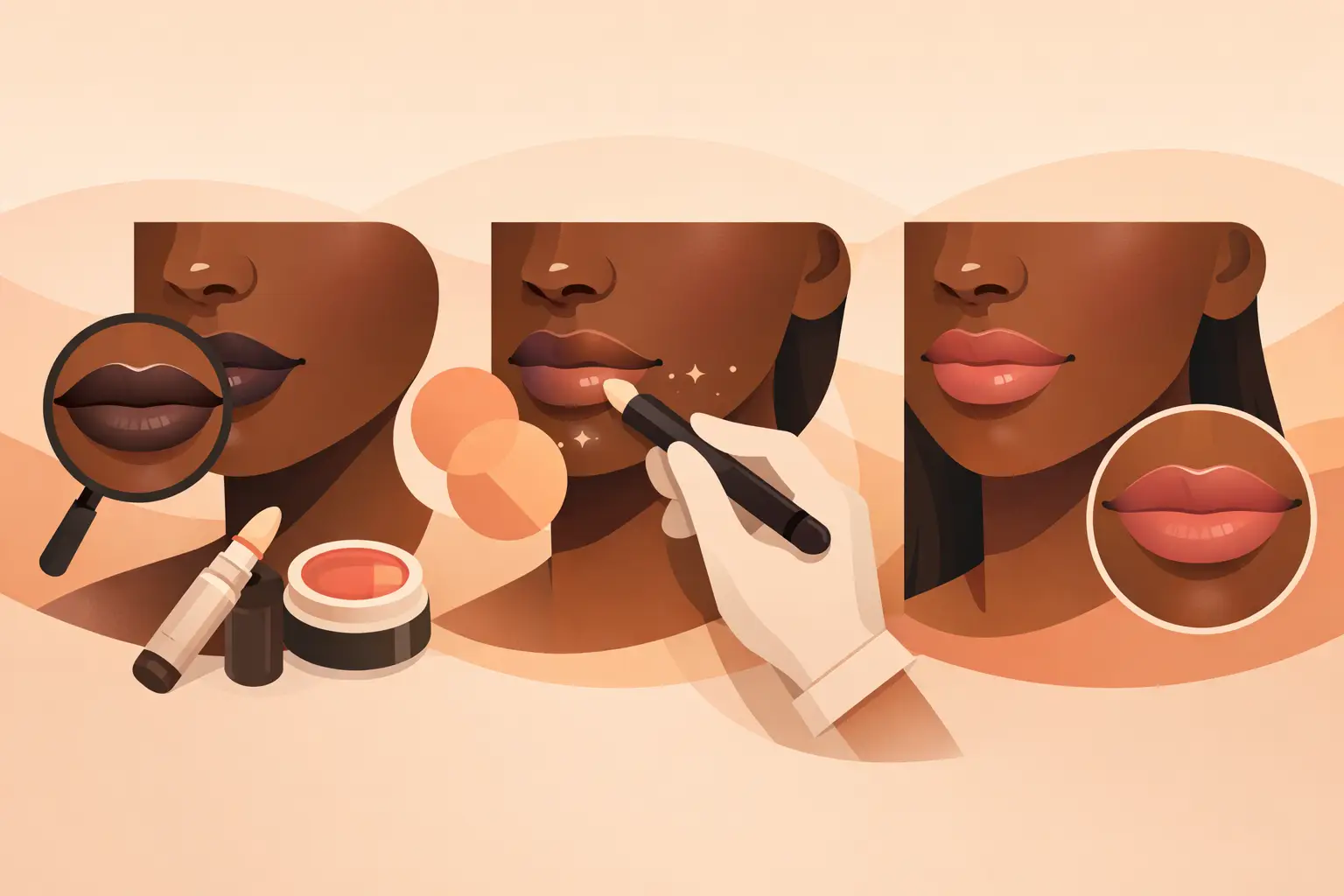
Not every dark lip tone needs to be changed. That is the first distinction sophisticated clients should hear when discussing dark skin lip neutralization. Naturally deeper lips can be beautiful, balanced, and completely appropriate for the face. Neutralization is not about erasing melanin or forcing a pink result. It is a corrective color process designed for lips that appear cool, uneven, ashy, purple, brown-gray, or patchy when the goal is a more even and healthier-looking tone.
For clients with medium-deep to deep skin tones, this procedure requires a far higher level of judgment than standard lip blush. The difference is not branding. It is color theory, skin behavior, pigment selection, and technical restraint. When those factors are mishandled, the lips can heal too bright, too warm, or simply uneven. When they are handled correctly, the result looks refined, believable, and tailored to the client rather than painted onto them.
What dark skin lip neutralization actually does
Dark skin lip neutralization is a color-correction treatment for lips with significant cool or hyperpigmented tones. The purpose is to rebalance the existing lip color before, or sometimes instead of, adding a soft target shade. In practical terms, that means using carefully chosen warm corrective pigments to offset unwanted blue, violet, gray, or deep brown undertones.
This is where many clients get conflicting information. Some are told they can go from dark purple lips to light pink in one session. Others are told darker lips should never be treated at all. Neither extreme reflects expert practice. The truth sits in the middle. Darker lips can often be improved beautifully, but only with an approach that respects the natural depth of the tissue and the limitations of safe pigment work.
A successful neutralization does not look chalky or artificially light. It looks more even, softer, and healthier. Depending on the starting tone and the client’s goals, the healed result may remain naturally rosy-brown, warm nude, muted mauve, or another understated variation that suits deeper skin.
Why darker lips require a different strategy
Lips on darker skin tones do not all present the same way. Some clients have genetically darker vermilion borders and centers. Others develop pigmentation from sun exposure, smoking history, lip biting, hormonal changes, friction, inflammation, or prior cosmetic tattooing. Men and women can both present with unevenness, and in many cases the concern is not darkness alone but inconsistency across the lip.
That matters because technique should be guided by cause and pattern, not by a one-size-fits-all color chart. If the lips are naturally and uniformly deep, an aggressive attempt to lighten them can produce an unnatural result. If the lips are patchy with cool areas, neutralization may be highly effective, but only when the artist maps the zones carefully and avoids overloading the tissue.
This is also why traditional permanent makeup methods can be risky in this category. Heavy implantation, generic pigments, and poor undertone analysis often create harsh healed color shifts. Clients may see orange in one area, gray in another, and fading that looks more obvious than the original issue. Dark skin lip neutralization should never be treated as a basic lip tattoo. It is corrective work, and corrective work is less forgiving.
The consultation matters more than clients expect
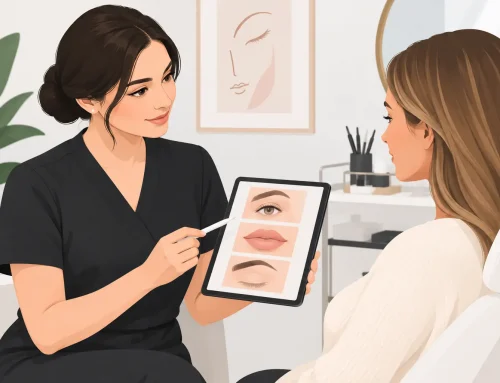
The most important part of the process often happens before the first pass of pigment. A proper consultation evaluates the natural lip tone, degree of asymmetry in color, history of cold sores, previous lip tattooing, scarring, skin reactivity, and the client’s actual end goal. Those details shape whether someone is a strong candidate, a limited candidate, or better suited to a different plan.
This is where expectations must become precise. If a client wants a dramatic pastel lip on a deeply pigmented base, that is usually not a realistic or elegant objective. If the goal is to reduce coolness, improve uniformity, and create a polished lip tone that still belongs on their face, the procedure becomes far more predictable.
High-level providers also distinguish between what can be corrected and what should be preserved. Some depth can add dimension and beauty. Removing every trace of richness is not the mark of expertise. Knowing when to stop is.
How the color correction process works
The treatment itself is a layering process, not a paint-over. Corrective warmth is implanted strategically to counterbalance the existing coolness in the lips. The selected pigment is based on undertone, density of pigmentation, and the client’s skin depth. A nuanced provider does not simply use “orange” on every darker lip. The formula must be calibrated, often custom blended, and applied with restraint.
Healing is part of the color journey. Immediately after treatment, lips can appear stronger or warmer than the final result. As they heal, the intensity softens and the tone settles. Some clients need additional sessions because darker or more resistant areas may not neutralize evenly in one appointment. That is not a flaw in the process. It is often the safer and more sophisticated path.
In premium clinical settings, the goal is controlled correction with minimal trauma. That matters because excess trauma can increase inflammation, disrupt color retention, and compromise the natural finish. The best work looks expensive because it does not announce itself.
What results should look like
The healed result should not read as lipstick. It should read as better lips. More balanced tone. Less cool cast. Improved harmony between the upper and lower lip. A fresher appearance without a hard cosmetic edge.
For some clients, that means a noticeable reduction in purple or brown-gray areas. For others, it means creating a more consistent base so that a future lip blush session can be considered. It depends on how dark the starting tone is, whether the pigmentation is diffuse or patchy, and how the lips respond during healing.
This is one of the biggest misconceptions in the market. Clients often judge the process by the first session alone. In reality, dark skin lip neutralization is frequently cumulative. One expertly conservative session may be far more valuable than one aggressive session that heals bright, uneven, or scarred.
Who is a good candidate and who should be cautious
Good candidates usually have uneven, cool, or hyperpigmented lips and want a natural-looking refinement rather than an artificial color change. They value discretion, understand that multiple sessions may be appropriate, and prefer believable enhancement over trend-driven results.
Clients should be more cautious if they have active irritation, uncontrolled cold sores, significant scar tissue, or a history of poor healing with cosmetic tattoo procedures. Prior lip tattooing also complicates the plan. Old pigment can shift unpredictably, and correction may need to be staged carefully.
Skin tone alone does not determine candidacy. Lip condition, undertone pattern, treatment history, and desired outcome do.
Why experience matters so much in darker skin tones
Darker skin tones deserve technical sophistication, not hesitation. Yet many providers either oversimplify the procedure or avoid it because they lack confidence with melanin-rich skin. Both approaches fail the client.
True expertise shows up in subtle decisions: how deeply to work, where to place warmth, where not to place it, how to prevent a too-orange heal, how to anticipate residual coolness, and when a client’s goal needs to be redirected toward a more realistic finish. This is not just artistry. It is disciplined corrective judgment.
At the highest level, dark skin lip neutralization should be approached as precision cosmetic correction. That means advanced equipment, controlled application, thoughtful pigment chemistry, and a result built around the client’s face rather than a generic before-and-after formula. That distinction is exactly why discerning clients travel for the right specialist, including those who choose MicroArt for highly natural corrective work.
The right goal is not lighter – it is better balanced
Clients who are happiest with this procedure usually start from a mature goal. They are not asking for someone else’s lip color. They want their lips to look healthier, more even, and more refined without daily concealer, liner, or lipstick correction.
That is the real value of dark skin lip neutralization. It can restore confidence in a feature that sits at the center of the face, but only when it is performed with respect for tone, anatomy, and restraint. The best outcome is not a dramatic transformation for the sake of drama. It is the quiet luxury of waking up with lips that already look composed.