

A surgical scar can be medically successful and still feel visually unfinished. Whether it sits on the breast, abdomen, face, knee, or another visible area, the concern is rarely vanity alone. It is about feeling comfortable in your skin again. Learning how to camouflage surgical scars starts with one essential distinction: temporary makeup can conceal color for the day, while advanced cosmetic camouflage can help soften the scar’s appearance over time.
The right approach depends on the scar’s age, texture, color, location, and how your skin heals. The most refined result does not come from covering a scar with the most product. It comes from making it visually recede into the surrounding skin.
Start With a Fully Healed, Stable Scar
Camouflage should never be the first step after surgery. A scar needs time to close, settle, and mature before cosmetic products or pigment-based procedures are considered. The exact timeline varies by procedure, skin type, and your surgeon’s guidance, but many scars continue changing for months.
A scar is generally a better candidate for camouflage when it is fully closed, no longer inflamed, and stable in color and texture. Redness, persistent tenderness, raised tissue, drainage, or active irritation are reasons to pause and speak with your medical provider. Applying pigment or heavy coverage too early can interfere with healing and may make an evolving scar harder to assess.
This is particularly relevant after breast surgery, tummy tucks, facelifts, orthopedic procedures, and C-sections, where incision lines may mature at different rates. A high-quality cosmetic consultation should always begin with the condition of the skin, not a promise of immediate coverage.
Temporary Makeup for Surgical Scar Coverage
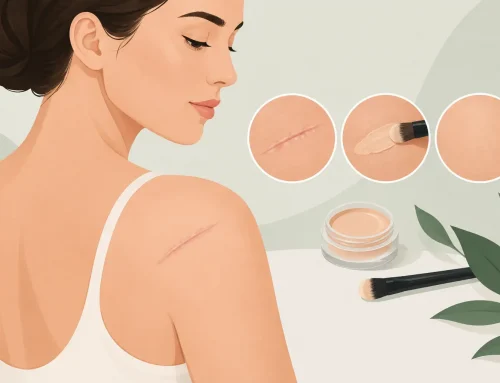
For occasions, photographs, vacations, or everyday confidence, body makeup can create meaningful short-term coverage. The goal is not to use a single concealer shade over the entire area. Surgical scars often have undertones that require correction before skin-tone makeup is applied.
A pink or red scar may benefit from a soft yellow or green-toned corrector, depending on the surrounding complexion. Purple or blue-toned discoloration may need a warmer peach or orange corrector. Very pale scars can require subtle warmth before a flesh-tone product is layered over them. Use a light hand. Thick product emphasizes texture, catches light, and can make the scar more noticeable than it was before.
Choose a flexible, high-pigment cream product designed for the face or body, then press it into the skin with a small sponge or brush. Rather than drawing attention to the exact border of the scar, feather the product gradually into the surrounding area. Set with a fine translucent powder only if needed, then test the finish in natural daylight. Indoor bathroom lighting can be misleading.
For scars in areas that move frequently, such as the abdomen, chest, or knee, a transfer-resistant formula matters more than maximum coverage. Clothing friction, sweat, and sunscreen can break down makeup quickly. Build thin layers, let each layer dry, and avoid rubbing the area once it is set.
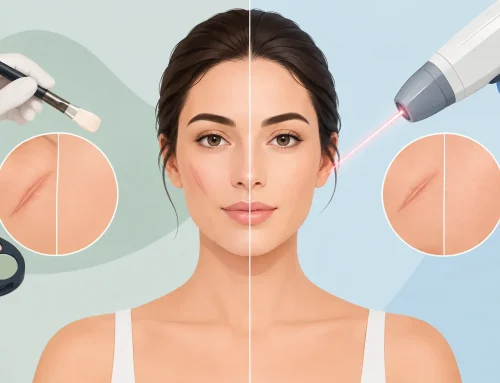
Temporary makeup is valuable, but it has limits. It does not change scar texture, it may transfer onto clothing, and it requires repeat application. For clients who want to spend less time managing a visible scar every morning, cosmetic scar camouflage may be a more lasting choice.
How to Camouflage Surgical Scars With Cosmetic Pigment
Scar camouflage, sometimes called skin camouflage tattooing, uses carefully selected pigment to reduce the contrast between a healed scar and the healthy skin around it. Unlike decorative tattooing, the objective is discretion. The result should not look like makeup or a tattoo. It should simply make the area less visually distinct.
This treatment is especially useful for flat, light-colored scars that no longer match the surrounding skin. It may also help with certain surgical scars after breast reconstruction, body contouring, or trauma-related procedures. In skilled hands, custom-blended pigment is layered gradually to create a more natural transition rather than a flat block of color.
The word “custom” is not a luxury detail here. Skin is not one color. It contains warmth, coolness, depth, translucency, freckles, and tonal variation that change by body area and season. A scar on the abdomen may require a different blend from skin on the chest or face. The pigment also needs to be selected with an understanding of how it will settle during the healing process.
At MicroArt, scar camouflage is approached as precision cosmetic correction, using proprietary techniques and mineral-based pigment blends designed for exceptionally natural-looking results. The treatment is intended to soften contrast, not create an obvious covered patch.
What Scar Camouflage Can and Cannot Correct
The best candidates are often mature scars that are flat or close to flat, stable, and lighter than the surrounding skin. Camouflage can visually improve the color difference so the eye is not immediately drawn to the scar. For many clients, that change has a significant effect on how comfortable they feel in swimwear, intimate settings, fitted clothing, or without daily makeup.
Still, professional guidance should be candid. Pigment cannot erase a scar, restore normal skin texture, or flatten raised scar tissue. It cannot reliably disguise a scar that is actively red, darkening, thickening, or changing. Deep indentations, shiny scar tissue, and uneven texture can continue to reflect light differently from surrounding skin, even when color is improved.
Keloid-prone skin and hypertrophic scars require particular caution. These scars may respond unpredictably to any form of skin trauma, including cosmetic tattooing. A provider should assess your personal history of keloids, skin sensitivities, medications, medical conditions, and prior procedures before recommending treatment. When appropriate, collaboration with a dermatologist or plastic surgeon may be the most responsible path.
Why Skin Matching Requires More Than One Appointment
A believable scar camouflage result is usually built gradually. Freshly placed pigment can appear stronger or warmer than it will once healed, and scar tissue does not always retain color exactly like unscarred skin. This is why a conservative, layered approach is more sophisticated than trying to achieve full coverage in one aggressive session.
Follow-up appointments allow the practitioner to evaluate how your skin retained the pigment and make measured refinements. The goal is not to chase a perfectly uniform surface under every lighting condition. Natural skin itself varies. The goal is to reduce the obvious contrast in real life, from a normal conversational distance.
Sun exposure is another factor. If the surrounding skin tans while the scar remains pale, the contrast can return. Daily sun protection helps preserve a more even appearance and protects the quality of both the scar and any cosmetic camouflage work. A maintenance plan may also be appropriate as skin tone, lifestyle, and pigment retention change over time.
Choosing a Provider for Scar Camouflage
Surgical scar camouflage sits at the intersection of aesthetics, skin behavior, and precision pigment work. It should not be treated as a standard tattoo appointment or a quick beauty add-on. Look for a specialist who evaluates scar maturity, discusses realistic outcomes, understands color theory across diverse skin tones, and can show healed work rather than only immediate after photos.
Ask direct questions about the pigments used, the expected healing process, the number of sessions that may be needed, and whether your scar is an appropriate candidate at all. A credible provider will be comfortable saying that a treatment should wait, needs medical clearance, or may not be the best option for your specific scar.
Photos can be useful for an initial assessment, but an in-person evaluation offers the clearest understanding of texture, tone, and healing status. For destination clients, a detailed pre-consultation can help establish whether travel is appropriate before appointments are scheduled.
A surgical scar is part of your history, but it does not have to dominate your reflection. When the skin is fully healed and the technique is chosen for your specific scar rather than a generic formula, camouflage can offer a quieter, more natural way to move forward.