

A white patch on the hand, jawline, chest, or around the eyes can make getting dressed or leaving the house feel far more complicated than it should. The best camouflage options for vitiligo are not about hiding who you are. They are about giving you control over how visible color contrast is on any given day – with a finish that looks like skin, not makeup.
The right choice depends on the location of your vitiligo, your skin tone, whether the condition is stable, and how much daily maintenance you are willing to accept. A product that works beautifully on the neck may crease on the eyelids. A long-wear solution that is ideal for a stable patch may not be appropriate when depigmentation is still changing. Precision matters.
What Makes Vitiligo Camouflage Look Convincing?
Natural-looking camouflage is not simply a matter of choosing a darker shade. Vitiligo creates contrast because the skin has lost pigment, while the surrounding skin retains its own undertones, depth, and variation. Covering that difference successfully requires a custom color match that considers warmth, coolness, surface texture, and how the skin shifts in different lighting.
The most convincing result is usually slightly layered rather than opaque. Skin is not flat in color, so a thick single-tone application can make the treated area look more noticeable, particularly in sunlight or flash photography. The goal is to soften the boundary between depigmented and pigmented skin while preserving a realistic skin-like finish.
Camouflage is cosmetic. It does not treat vitiligo, stop pigment loss, or replace medical care. If patches are new, spreading, inflamed, or changing rapidly, begin with a board-certified dermatologist. Stabilizing the condition and understanding its activity are essential before considering a longer-lasting approach.
Best Camouflage Options for Vitiligo: Daily Coverage
High-pigment body makeup
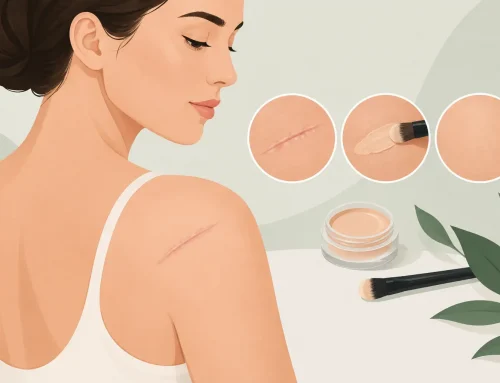
Professional-grade body makeup is often the most flexible starting point. These formulas provide more coverage than standard foundation and can be blended across the face, hands, arms, legs, and torso. When color-matched carefully and set properly, they can hold up through a workday, special event, or photography session.
This option is especially useful for people whose vitiligo changes over time, because the shade and placement can be adjusted whenever needed. It is also the most reversible choice. The trade-off is time: applying, blending, setting, and removing body makeup can become a daily routine, and transfer resistance varies by formula, skin type, humidity, and clothing.
For a refined result, start with thin layers. Match the surrounding skin rather than trying to overcorrect the white area in one pass. A warm or cool color adjuster may be necessary because a foundation that looks correct on the cheek may look wrong over a depigmented patch.
Self-tanner and cosmetic bronzing products
Self-tanner can reduce contrast for some people, particularly when vitiligo appears on larger areas of the body. It is not a true pigment match and it develops differently on skin with and without melanin, so it requires careful testing. On some clients, the contrast can become more apparent as the tanner fades unevenly.
Wash-off bronzing products offer more control for short-term wear, but they may transfer and are rarely precise enough for facial patches or sharply defined areas. Think of tanning products as a possible supporting tool, not the most exact form of camouflage.
Color-correcting concealers
For small facial areas, color correction can be effective before applying a skin-toned concealer. The correct undertone depends on the surrounding complexion and the level of contrast. A professional makeup consultation can save considerable trial and error, particularly for deeper skin tones, where an incorrect formula can turn gray, orange, or ashy.
This approach works well for a single spot near the mouth, hairline, or under-eye area. It is less practical for larger areas or parts of the body exposed to friction, water, or frequent washing.
Semi-Permanent Vitiligo Camouflage for Stable Patches
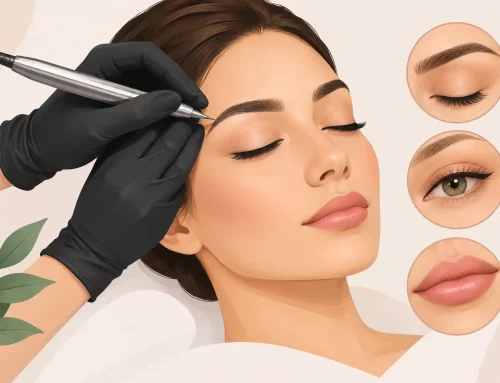
For clients who want freedom from daily makeup, semi-permanent cosmetic pigmentation can be a sophisticated option. Also called medical or paramedical tattoo camouflage, this technique places custom-blended pigment into the skin to visually reduce the contrast of a stable vitiligo patch.
The distinction between precision pigmentation and conventional tattooing is critical. Traditional tattoo methods, generic ink colors, and one-size-fits-all skin-tone formulas can heal too warm, too cool, too dark, or visibly unnatural. Skin tone is not one color. It needs to be analyzed, blended, and built with restraint.
At MicroArt, vitiligo camouflage is approached as a highly individualized color-matching procedure using custom mineral-based pigments and precision equipment designed for a soft, natural finish. The objective is not a heavy tattooed look. It is to create the appearance of more even skin tone without the harsh color shifts commonly associated with traditional permanent makeup.
Results depend on the site, the client’s natural tone, sun exposure, skin behavior, and the stability of the vitiligo. Areas such as the face, neck, and torso can respond differently than hands, fingers, ankles, or places exposed to constant movement and friction. More than one session may be needed to build color gradually and assess how the pigment settles.
Who is a candidate?
The best candidates generally have vitiligo that has remained stable, with no recent expansion or new depigmented patches. A dermatologist’s guidance is particularly valuable for anyone with active vitiligo, a history of skin trauma triggering new patches, or uncertainty about whether their condition is stable.
The Koebner phenomenon matters here. Some people with vitiligo can develop new depigmentation after skin trauma, including procedures that involve needles. That does not mean semi-permanent camouflage is automatically off the table, but it does mean candidacy must be assessed carefully, conservatively, and with full awareness of the risk.
Pregnancy, certain medications, active irritation, infection, and compromised skin barriers may also affect timing. A reputable provider should not rush past these questions. A premium outcome begins with knowing when not to proceed.
What to expect from the result
Semi-permanent pigment is not a promise of perfect invisibility in every light. The surrounding skin may tan, flush, age, or change with seasons, while implanted pigment changes at its own pace. The strongest outcomes soften contrast so effectively that the area is far less noticeable in everyday interaction, not necessarily indistinguishable under close inspection or direct sunlight.
Maintenance is part of the strategy. Periodic touch-ups can refine the match as your complexion changes. This is a benefit of a semi-permanent approach: color can be reassessed rather than committing to the permanence and unpredictability of a conventional tattoo.
Choosing Between Makeup and Semi-Permanent Pigment
Daily makeup is usually the right choice if your vitiligo is active, if you want complete reversibility, or if you only need coverage for certain occasions. It is also ideal for testing how you feel about reduced contrast before committing to a procedure.
Semi-permanent camouflage may be the better fit when patches are stable, the daily routine feels burdensome, and natural-looking consistency matters more than the lowest upfront cost. It can be particularly meaningful for visible areas where makeup transfers, fades, or becomes difficult to maintain throughout a long day.
Do not choose based on price alone. A poorly matched pigment can create a new contrast problem, while an inexperienced application may not account for undertones, healing behavior, or future maintenance. Ask to see healed results on skin tones similar to yours and discuss realistic expectations before treatment.
The Details That Protect a Natural Finish
Sun protection is non-negotiable with or without camouflage. Tanning surrounding skin can increase contrast and make any matched coverage less accurate. Broad-spectrum sunscreen, protective clothing, and mindful sun exposure help preserve both your skin health and the visual balance of your result.
Avoid aggressive exfoliation, unapproved acids, or friction over newly treated areas. For makeup camouflage, use gentle removal methods rather than scrubbing. For semi-permanent pigmentation, follow the aftercare protocol precisely and give the skin time to settle before judging the final color.
The most elegant camouflage does not announce itself. Whether you choose makeup for flexibility or precision semi-permanent pigment for longer-lasting confidence, the right approach should let your skin look like your skin – simply with less contrast competing for attention.