
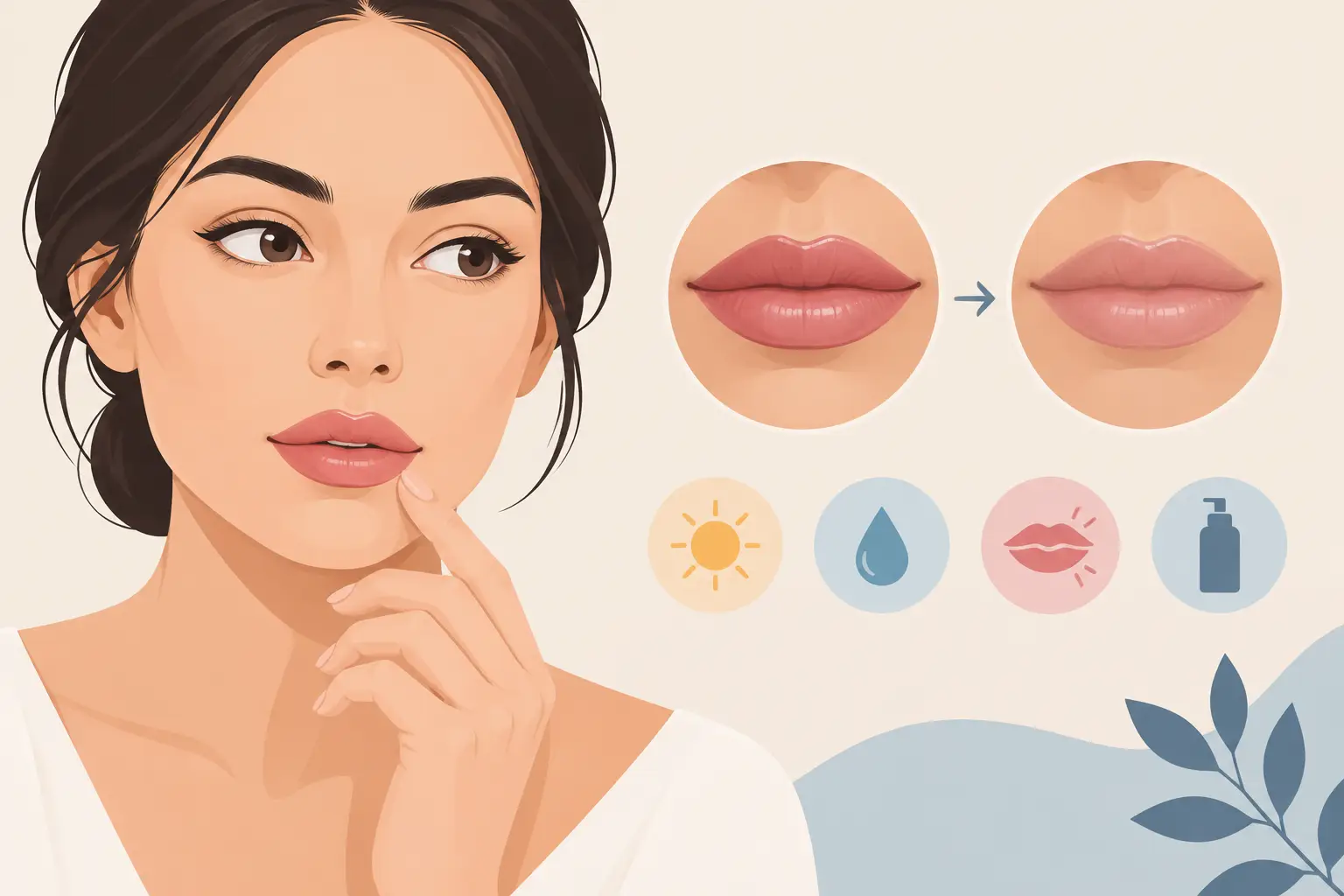
A beautifully healed lip enhancement should look like your lips on their best day – more even, softly defined, and never obviously tattooed. Yet many clients are surprised by how much color softens after treatment. So, why do lip tattoos fade? The answer is not one simple mistake or one inferior pigment. Lip color retention is shaped by the unique biology of the lips, the treatment technique, the pigment formula, healing, and how closely the original color is matched to your skin and natural lip tone.
The goal should not be an unnaturally dense, makeup-like stain that remains unchanged for years. That approach can age poorly as facial coloring, skin texture, and personal style evolve. The highest standard is a refined, semi-permanent result that fades gracefully and can be adjusted over time.
Why Do Lip Tattoos Fade Faster Than Other Cosmetic Tattoos?
The lips are a demanding surface for cosmetic tattooing. Unlike the skin on the brow area, lip tissue is thin, delicate, highly vascular, and constantly exposed to moisture, saliva, food, movement, and friction. You speak, drink, smile, eat, and touch your lips throughout the day. Each of those ordinary actions affects the healing environment and, over the long term, contributes to color softening.
Lips also renew themselves rapidly. The outer layer sheds more frequently than many areas of facial skin, which means pigment can appear to fade faster as the tissue cycles through its natural renewal process. This is normal physiology, not necessarily evidence that a procedure was done incorrectly.
A common source of confusion is the immediate post-treatment appearance. Freshly treated lips often look brighter, deeper, and more saturated because there is temporary swelling and surface color present during healing. Once the lips complete their healing cycle, the result may settle 30 to 50 percent lighter, depending on the individual. The true color is judged after healing, not on treatment day.
Pigment Depth Is a Delicate Balance
Long-lasting cosmetic work is not simply a matter of placing more pigment or working deeper. On the lips, that approach can create a result that is harder to control and less natural over time. Pigment placed too superficially may shed during healing. Pigment placed too deeply can heal cool, blur at the border, or shift in tone as it ages.
Precision matters because the target layer is narrow. An experienced specialist controls depth, pressure, needle movement, and pigment distribution across the entire lip surface. Different areas can retain color differently, too. The vermilion border, center of the lips, corners of the mouth, and areas with dryness or prior scar tissue may each respond in their own way.
This is why a thoughtful lip procedure is built in layers, not rushed into a single over-saturated appointment. A touch-up is not an admission of failure. It is often the stage where healed color is evaluated, uneven retention is refined, and the final shade is calibrated to look believable in natural light.
The Starting Lip Color Changes the Outcome
Your natural lip tone provides the canvas. A pale pink lip, a lip with cool or bluish undertones, and a deeply pigmented lip do not require the same color strategy. The more contrast there is between the starting tone and the desired result, the more nuanced the process becomes.
Clients with darker lips, melanin-rich skin, uneven pigmentation, or a history of smoking may need neutralization before a soft pink, peach, or rose-toned finish can be achieved. Attempting to place a light, warm cosmetic shade over a cool or dark base without proper correction can lead to disappointing retention or an unintended healed color. In certain cases, more than one session is the responsible path to a balanced result.
The pigment itself matters as much as its shade. Quality mineral-based pigments are selected for stability and customized to complement the client’s undertone, not chosen from a one-size-fits-all menu. A specialist should account for natural lip color, skin undertone, age, lifestyle, and the degree of definition the client wants. The best result may be far softer than the color a client initially imagines.
Healing and Aftercare Can Affect Color Retention
The early healing period has a direct effect on how evenly color settles. Lips can become dry, tight, flaky, or patchy as they recover. This phase can be alarming, particularly when color appears to disappear before it gradually returns and stabilizes beneath the surface. Picking, rubbing, exfoliating, or removing flakes prematurely can disrupt pigment that is still settling.
For the first stage of healing, clients should follow their provider’s exact instructions around hydration, cleansing, ointment use, food and drink precautions, and sun exposure. There is no universal aftercare formula, because appropriate care depends on the technique and products used. What remains universal is the need to keep healing lips protected from unnecessary irritation.
Several factors can make retention less predictable: frequent sun exposure, smoking, aggressive skincare around the mouth, exfoliating acids, retinoids, lip scrubs, chemical peels, and certain medications. Cold sores are another important consideration. Anyone with a history of them should disclose it before treatment, since a flare-up can interfere with healing and may require preventative guidance from a medical professional.
Technique Should Prioritize Natural Color, Not Density
Traditional lip blushing and permanent makeup can vary widely from provider to provider. Some methods are designed to implant a strong amount of color quickly, but dense saturation is not always the luxury result. It may create more trauma during treatment, increase the likelihood of uneven healing, and leave less room for subtle adjustment later.
A more advanced approach considers the lips as living tissue rather than a flat surface to fill. The work should create a translucent veil of color that respects natural highlights, lip texture, and the client’s existing shape. When executed well, the lips look healthier and more balanced without an obvious hard outline or opaque lipstick effect.
At MicroArt, this philosophy is central to creating semi-permanent lip color with a highly natural finish. The focus is controlled pigment placement, custom-blended color, and a polished result that complements the face rather than announces the procedure. For discerning clients, discretion is not a small detail. It is the result.
Not Every Faded Result Is a Problem
Some fading is expected and desirable. Semi-permanent color gives clients the freedom to refresh their lips as their preferences change, rather than committing them to a fixed shade or sharply defined border that may no longer suit them years later. The trade-off is maintenance.
How long lip color lasts varies substantially. Many clients enjoy visible enhancement for one to three years, with the shade slowly becoming softer rather than disappearing overnight. Skin type, metabolism, sun habits, immune response, skincare, smoking, and original lip color all influence the timeline. A client who wants an exceptionally sheer, barely-there finish should expect it to fade more subtly than someone who chooses a richer tone.
If color seems to vanish immediately after one session, wait until the full healing window has passed before judging the outcome. If it fades unusually quickly after complete healing, a skilled provider should assess whether the issue relates to pigment selection, lip condition, depth, aftercare, underlying pigmentation, or a medical and lifestyle factor affecting retention.
Choosing the Right Plan for Your Lips
The most successful lip tattoo is planned, not sold as a standard appointment. A proper consultation should examine your natural lips closely, discuss any prior cosmetic tattooing, identify cold sore history and sensitivities, and set realistic expectations for healing and maintenance. Bring reference photos, but remain open to a recommendation that accounts for your actual undertones and anatomy.
Ask to see healed work on clients with lip tones similar to yours. Fresh photos can be beautiful, but healed results reveal a provider’s true command of color, placement, and restraint. The right specialist will explain whether you are a candidate for a single-session enhancement, a neutralization process, or a gradual build toward your preferred tone.
Your lips do not need permanent, heavy color to look polished every morning. They need a carefully designed enhancement that fades with grace, can be maintained intelligently, and still looks unmistakably like you.