
A breast reconstruction may restore shape, but the final visual details can still feel unfinished. Medical areola tattooing is designed to restore the appearance of an areola and nipple complex with custom-blended pigment, dimensional artistry, and the discretion this deeply personal step deserves.
For many clients, this is not about adding makeup or creating a dramatic change. It is about seeing a more familiar reflection after mastectomy, reconstruction, reduction, revision surgery, or asymmetry. The standard is not simply coverage. The standard is a believable result that belongs to your skin.
What Medical Areola Tattooing Can Restore
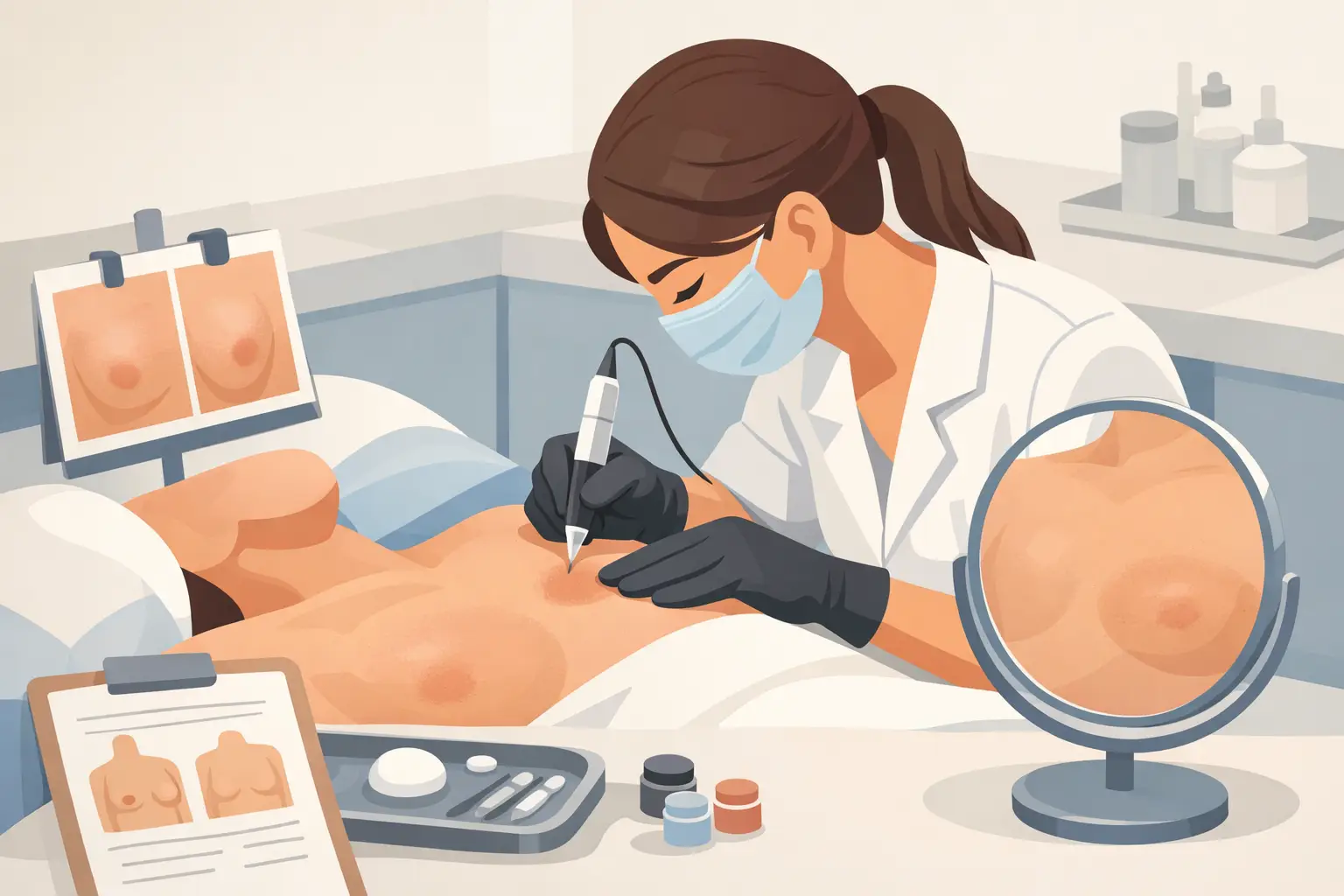
Medical areola tattooing, sometimes called areola restoration or 3D areola tattooing, uses cosmetic tattooing techniques to create the visual appearance of an areola. When appropriate, carefully placed highlights and shadows can also suggest the projection of a nipple on a flat surface.
The treatment can be an option after breast reconstruction, nipple-sparing procedures, breast reduction, implant surgery, or corrective surgery that altered pigment, shape, or symmetry. It may also help clients who naturally have faint areola color, uneven borders, or visible differences between sides.
A successful result is highly individual. One client may want to recreate a pre-surgery areola from photographs; another may prefer a softer, more refined appearance than what they had before. The right plan considers skin tone, undertone, scar texture, breast positioning, healing, and the amount of natural pigment still present.
Why Natural Results Depend on More Than Color
An areola is not a flat brown or pink circle. Natural anatomy contains translucency, gradual color variation, irregularity at the edge, and subtle tonal shifts that change across the skin. A single, uniform pigment can look stamped on. Too much contrast can make the tattoo draw attention rather than restore balance.
That is why advanced areola work begins with color theory and observation. Pigment must be blended for the client’s skin, not selected from a standard chart. On deeper skin tones, that process requires particular expertise: warmth, depth, and healed color behavior must be considered together. A shade that appears correct immediately after a procedure may heal cooler, warmer, lighter, or softer depending on the skin and pigment formula.
Placement matters just as much. Areolas that are technically symmetrical on a ruler may not look balanced when the body is standing, moving, or viewed in a mirror. An experienced specialist evaluates the full silhouette and makes design decisions that support visual harmony rather than chasing a rigid template.
The 3D Effect Is an Artistic Technique
When nipple reconstruction was not performed, a skilled technician can create a realistic 3D effect through controlled layering. The illusion comes from highlights, lowlights, edge diffusion, and strategic shadow placement. It should read as natural from a normal social distance, not as an obvious trompe l’oeil design.
Not every client wants or needs this dimensional effect. If a reconstructed nipple is present, tattooing may focus on pigment restoration and softening the transition between the areola, surrounding breast skin, and scar tissue. The consultation should clarify what will create the most convincing result for your anatomy and goals.
Timing After Breast Surgery Is Essential
The body needs time to heal before cosmetic areola restoration. Treatment is usually considered only after surgical sites have fully closed, swelling has resolved, scars have matured sufficiently, and the surgeon has cleared the client for tattooing. The timeline varies by procedure, healing response, radiation history, and any planned revisions.
Rushing this stage can compromise both comfort and outcome. Scar tissue often behaves differently from untouched skin: it may retain pigment unevenly, be less predictable in color, or require a gentler, staged approach. Radiation can add another layer of complexity by changing skin sensitivity and texture.
A responsible provider does not promise the same result for every scar or every reconstruction. Instead, they explain what is realistic, assess the skin in person or through clear photographs, and recommend whether one session, a touch-up, or a phased treatment plan is appropriate.
What the Appointment Experience Should Feel Like
This is a corrective aesthetic procedure, not a rushed cosmetic add-on. A quality appointment begins with a detailed discussion of medical history relevant to healing, prior surgeries, scar behavior, desired color, and your preferred level of definition. Bring photos if you have them, but do not feel obligated to recreate the past exactly. They are a reference, not a requirement.
Next comes design. Shape, placement, diameter, and pigment direction should be reviewed before treatment begins. This is where a high-touch clinic earns its reputation: the work should be tailored, not copied from a generic stencil.
During the procedure, pigment is implanted gradually using specialized equipment. The sensation varies with sensation changes following surgery, the condition of the skin, and individual sensitivity. Some reconstructed areas have reduced feeling; others remain sensitive. Your practitioner should be candid about comfort options, expected sensations, and aftercare before treatment starts.
At MicroArt, proprietary semi-permanent techniques are designed for exceptionally natural-looking cosmetic camouflage, with precision equipment and custom mineral-based pigment selection. The goal is refined restoration without the harsh, fixed color shifts often associated with traditional permanent tattooing.
Semi-Permanent vs. Traditional Tattooing
Traditional body tattoo ink is designed for permanence and saturation. That can be useful in certain medical settings, but it is not always aligned with the nuanced, skin-like finish many aesthetic clients want. Conventional tattooing may also carry a greater risk of a result that looks dense, fades unpredictably, or becomes visually disconnected from changing skin over time.
Semi-permanent cosmetic approaches are often preferred for their softness and adaptability. The trade-off is that maintenance may be needed as pigment fades. For a client seeking an ultra-natural result, that is often an advantage rather than a drawback. Skin changes with age, sun exposure, weight fluctuations, and surgical revisions. A treatment that can be refreshed allows color and definition to evolve more gracefully.
No method is universally best. The right choice depends on your medical history, the appearance you want, your tolerance for maintenance, and the level of artistry available from the provider. Be wary of anyone who presents a one-size-fits-all answer.
Healing, Aftercare, and Touch-Ups
Aftercare is part of the result. The treated area generally needs to stay clean, protected, and free from friction while the skin settles. Your provider will give specific instructions, which may include avoiding soaking, intense workouts, sun exposure, and products not approved for the healing period.
Color may appear more pronounced at first and then soften as the skin heals. This is expected, but healed results cannot be judged on the day of treatment. Scarred or radiated skin can be especially variable, and pigment retention may differ from one area to another.
A follow-up session may be recommended to refine color, adjust saturation, or address areas that healed more softly. That is not necessarily a sign that something went wrong. It is often the careful final step required to create nuanced, balanced restoration on complex skin.
Choosing an Areola Tattoo Specialist
The person performing your treatment should have a portfolio that demonstrates healed areola results, not only fresh procedure photos. Look closely at whether the work appears soft, dimensionally convincing, and appropriate across a range of skin tones, scars, and reconstruction types.
Ask how pigments are selected, how scar tissue is evaluated, what training informs the procedure, and what happens if the color heals differently than expected. You should also ask whether the clinic works in coordination with surgical clearance when needed. A premium experience is not just elegant surroundings. It is rigorous planning, technical restraint, privacy, and the confidence to say when treatment should wait.
The most meaningful result is rarely the one that announces itself. It is the one that lets you get dressed, look in the mirror, and feel that the final detail is finally yours again.