
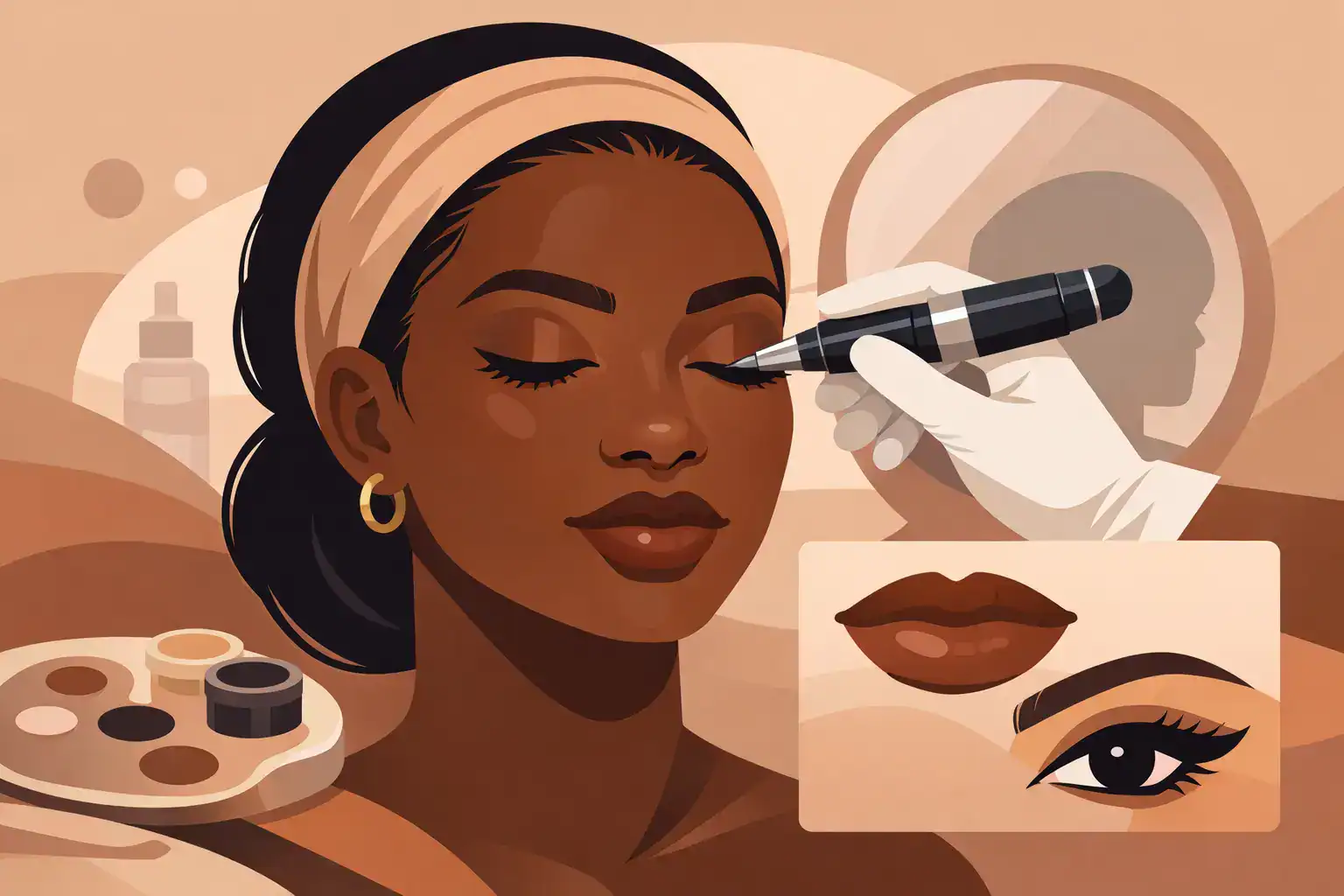
A beautiful result on deeper skin tones is never about using a standard formula and hoping for the best. Permanent makeup for dark skin requires a higher level of pigment knowledge, color theory, skin response awareness, and technical control. When any of those are missing, the result can look ashy, too cool, too dense, or simply unnatural.
That is why clients with medium-deep to richly melanated skin often need more than a typical permanent makeup approach. They need a method designed to respect undertone, heal cleanly, and preserve softness. The goal is not to make the feature look tattooed. The goal is to make it look refined, balanced, and believable in every light.
Why permanent makeup for dark skin requires a different standard
Deeper skin tones are not a single category. Two clients may appear similar at first glance and still heal very differently because of variations in melanin density, undertone, sensitivity, scar tendency, and prior cosmetic treatments. A technique that looks acceptable on lighter skin can heal muddy or overly cool on dark skin if pigment selection and depth are not exact.
This is where many standard providers fall short. They often rely on generic pigment families, oversimplified color charts, or techniques developed around lighter complexions. That can create avoidable problems such as gray brows, lip work that loses vibrancy unevenly, or eyeliner that heals too heavy.
For dark skin, precision matters at every stage. The consultation matters. The pigment blend matters. The device and implantation method matter. Even the decision of whether a client is a candidate for a specific look matters. A sophisticated provider does not force a trend onto the skin. They build a result around the skin.
The biggest risks with permanent makeup on deeper skin tones
The concern most clients share is simple – they do not want obvious permanent makeup. That fear is justified. Poorly performed work can become much more visible on deeper skin because contrast errors stand out quickly.
One common issue is ashiness. When pigment is chosen without proper warmth balance or implanted incorrectly, brows can heal with a gray cast instead of a natural brown. Another issue is over-saturation. If the artist works too densely, the result can read flat and harsh rather than dimensional.
There is also the question of skin trauma. Darker skin can be more vulnerable to post-inflammatory hyperpigmentation when treated aggressively. That does not mean deeper skin tones cannot have permanent makeup. It means technique must be controlled, conservative, and highly informed.
Previous work adds another layer. Many clients seeking correction already have brows, lips, or eyeliner that shifted color over time. Correcting older pigment in dark skin is not a basic service. It requires a clear understanding of how residual color interacts with the client’s current skin tone and desired outcome.
What natural-looking results actually depend on
The most natural result comes from restraint, not excess. That applies to shape, density, color, and placement.
For brows, the right shape should frame the face without looking stamped on. On dark skin, this often means avoiding pigment that is too flat or too dark at the front of the brow. A softer gradient tends to look more elegant and more believable. The right brown is also not always the darkest brown. Undertone makes the difference between rich and refined versus severe and artificial.
For lips, success depends on choosing shades that enhance the client’s natural lip tone instead of fighting it. Deeper lips often have multiple tones within the same lip, and that complexity should be respected. The result should bring harmony and definition, not a chalky or disconnected color.
For eyeliner, subtlety is usually the luxury choice. Lash enhancement and refined liner placement can create definition without making the eyes look overworked. Especially for clients who want a polished everyday appearance, less is often more.
Choosing the right technique for permanent makeup for dark skin
Technique should never be one-size-fits-all. That is particularly true for permanent makeup for dark skin, where the wrong method can create unnecessary trauma or unnatural saturation.
Traditional microblading is one of the most misunderstood options for deeper skin tones. While some clients may be candidates, many are not ideal candidates for aggressive manual strokes. On oily skin, textured skin, mature skin, or skin prone to hyperpigmentation, those strokes can blur, heal unevenly, or lose their intended realism. What looks crisp on day one may not stay that way.
A more advanced machine-based approach often gives greater control over depth, density, and pigment placement. That control matters because dark skin generally benefits from techniques that are softer, more precise, and less traumatic. The best work is not simply visible up close. It disappears into the client’s features.
This is where a proprietary clinical method can outperform conventional permanent makeup. At MicroArt, the emphasis is on highly controlled application, custom-blended mineral-based pigments, and results designed to remain natural rather than obvious. For clients who have avoided permanent makeup because they feared harsh color shifts or telltale scabbing, that distinction matters.
Pigment selection is everything
If there is one area where expertise cannot be faked, it is pigment selection. Deeper skin tones require customized color decisions based on undertone, existing pigmentation, treatment area, and healing behavior.
A provider should assess whether the skin carries golden, olive, red, neutral, or cool influence. They should also evaluate whether there is existing discoloration, melasma, scar tissue, or previous pigment under the skin. Those factors all affect how the final result reads.
The best pigment choice is not the one that looks darkest in the tray. It is the one that will heal into balance. That takes experience. It also takes the discipline to avoid overpromising a dramatic look when a softer build may produce the better long-term result.
This is especially important for corrective and camouflage work. Dark skin can be beautifully treated, but camouflage procedures require exceptional blending skill. A mismatch in color or texture is immediately obvious. Premium results come from layering expertise with patience.
What to ask before booking
If you are considering treatment, do not start by asking only about price. Start by asking how the provider approaches darker skin specifically. Ask what types of deeper complexions they treat regularly. Ask how they prevent ashiness, how they choose pigments, and how they adjust technique for sensitivity or hyperpigmentation risk.
You should also ask to see healed results, not just fresh results. Fresh work can look impressive for anyone. Healed work reveals the real quality of the method.
If you have previous permanent makeup, scar tissue, melasma, vitiligo, or any history of pigment irregularity, disclose it early. A credible specialist will not gloss over those details. They will treat them as central to the plan.
Who is the best candidate?
Many clients with dark skin are excellent candidates for permanent makeup, provided the treatment is customized correctly. The best candidates usually want enhancement rather than transformation. They want cleaner brows, more defined eyes, balanced lips, or cosmetic camouflage that looks like skin – not makeup that announces itself.
The strongest candidates also understand that premium work is often built in stages. Sometimes the safest and most refined result comes from a conservative first session followed by adjustments after healing. That is not a limitation. It is a sign that the provider is protecting the result.
There are cases where treatment should be postponed or modified. Active skin irritation, certain medications, unstable pigmentation disorders, and unrealistic expectations can all affect candidacy. A high-level consultation should make those boundaries clear.
The luxury standard is subtle
For sophisticated clients, the most impressive permanent makeup never looks like permanent makeup. It looks polished when you wake up, balanced on camera, and effortless in person. That standard is even more critical on deeper skin tones, where poor work can be harder to disguise and more difficult to correct.
Permanent makeup for dark skin should not be approached as a basic beauty service. It is a specialized treatment that depends on advanced technique, color intelligence, and a conservative eye. The difference between average and exceptional is not small. It is visible every day.
If you are going to place pigment in the skin, choose a provider whose method was built around precision rather than volume. Dark skin deserves expertise that sees nuance, respects healing behavior, and delivers a result that looks naturally yours years after the appointment. That is the standard worth waiting for.