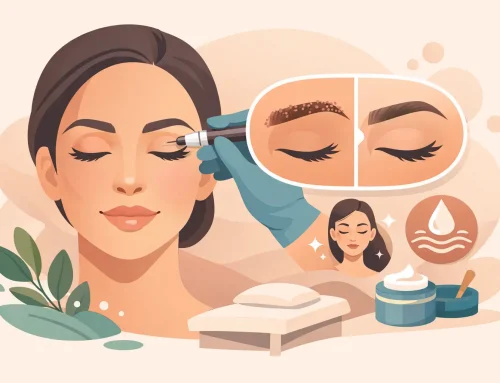

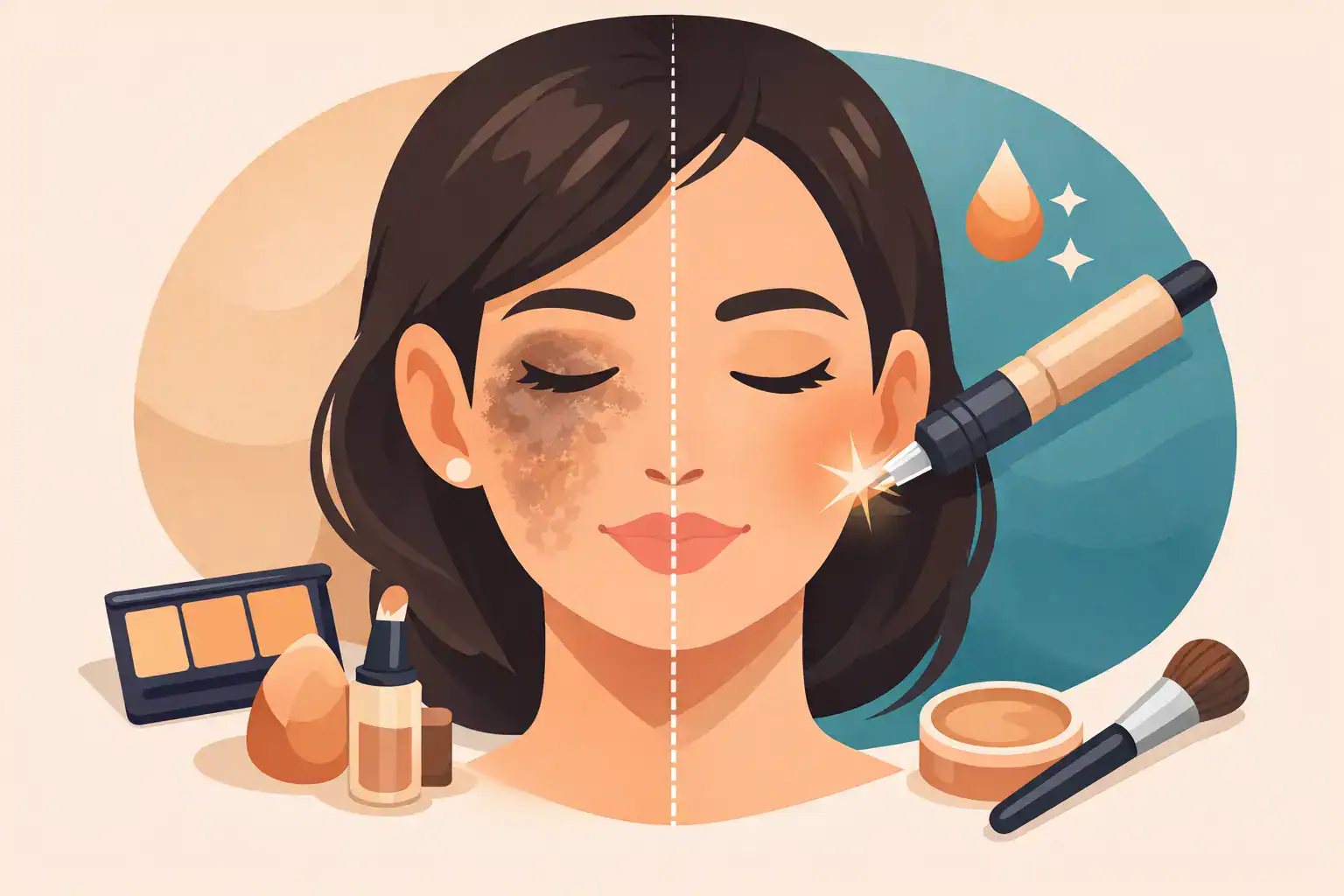
A faded brow that turned gray. Lip liner that now sits outside the natural border. Eyeliner that looks heavier every year instead of softer. This is exactly why tattoo camouflage for old makeup has become such a sought-after corrective procedure. When previous permanent makeup no longer matches your features, skin tone, or aesthetic, camouflage can be the difference between living with an obvious cosmetic tattoo and reclaiming a look that feels refined again.
Old permanent makeup rarely ages gracefully on its own. Pigment can migrate, oxidize, blur, or shift into unwanted tones over time. What once looked crisp may now appear flat, ashy, too dark, or misplaced. For many clients, the issue is not simply that the makeup is old. It is that the color, shape, and saturation now compete with the face instead of enhancing it.
What tattoo camouflage for old makeup actually means
Tattoo camouflage for old makeup is a corrective technique designed to reduce the visual impact of previous cosmetic tattooing by blending unwanted pigment with customized tones that better match the surrounding skin or natural feature. It is not a generic cover-up. Done properly, it is highly specific color correction paired with precise placement.
This distinction matters. Traditional permanent makeup often focused on depositing a bold, lasting color with less concern for how that color would evolve. Camouflage work requires a far more advanced approach. The practitioner has to assess undertone, depth, pigment history, scar tissue if present, and how the skin now reflects light. A correction that looks acceptable on day one but heals too warm, too cool, or too opaque is not a true correction.
The goal is not to stack more obvious tattooing on top of old tattooing. The goal is to make the old work far less detectable.
Why old cosmetic tattooing becomes visible
There are several reasons old permanent makeup starts to announce itself. Some are technical, and some are simply the result of time.
Pigments can break down unevenly, especially if the original formula was carbon-heavy or poorly matched to the skin. Sun exposure can alter how the color reads. Skin texture changes with age, which affects the edges and saturation of the tattoo. Placement that once felt fashionable can also become visually dated. A sharply drawn brow from ten years ago often looks very different against a face that now benefits from a softer, more dimensional finish.
There is also the issue of contrast. As natural hair color, skin tone, and personal style evolve, old makeup may stay visually frozen. That disconnect is often what clients notice first. The tattoo may not be terrible, but it no longer belongs.
When camouflage is a better option than removal
Removal gets most of the attention, but it is not always the best first move. In some cases, laser can push cosmetic pigments into unwanted color shifts such as orange, yellow, or chalky tones. Saline removal can help in certain situations, but it may require multiple sessions and may not be ideal for every skin type or every area of the face.
Tattoo camouflage for old makeup is often the better option when the remaining pigment is light to moderate, the shape is close enough to work with, and the priority is visual refinement rather than total erasure. It can also be appealing to clients who want a sophisticated correction without putting the treated area through a more aggressive removal process.
That said, camouflage is not a universal substitute for removal. If the old tattoo is extremely dark, heavily saturated, deeply misplaced, or structurally wrong for the face, partial removal may still be necessary before camouflage can look believable. This is where expertise matters most. Overpromising is common in corrective work. Real specialists evaluate what the skin can realistically support.
Areas where tattoo camouflage for old makeup is most common
Brows are one of the most common correction requests. Old brow tattoos often fade to blue-gray, red, or flat brown. Camouflage can soften hard blocks of color, reduce the look of migration, and create a result that reads more like a natural brow area and less like a stamped shape.
Lips are another frequent concern, especially when old lip liner sits beyond the natural vermilion border or has healed too cool or too dark. Here, camouflage may involve neutralizing unwanted tones and visually restoring a more balanced edge.
Eyeliner is more complex. The skin is delicate, and the eye area leaves little room for error. In some cases, camouflage can help reduce the harshness of old eyeliner, but suitability depends on placement, saturation, and how the skin has healed over time.
What separates advanced camouflage from basic correction
Most failed corrections come down to one problem: adding pigment without fully understanding light, skin tone, and long-term healing.
Advanced camouflage is not about choosing a beige and covering the old tattoo. Skin is not one flat color. It contains warmth, coolness, translucency, and variation across small areas. Matching that convincingly requires custom blending, controlled depth, and equipment precise enough to place pigment without creating additional trauma.
This is why the method matters as much as the pigment. A heavy-handed technique can leave the area thicker, denser, and more obvious after healing. A refined technique is designed to create a softer optical effect. That means the old makeup is not just hidden in theory. It becomes much less noticeable in real life, in daylight, and at conversational distance.
For luxury corrective clients, this is the standard that matters. Not whether a procedure was performed, but whether the result disappears into the face.
The consultation is where the real decision gets made
A proper consultation should feel less like a sales pitch and more like a diagnostic review. The practitioner needs to assess the age of the original work, the pigment tones currently visible, whether prior removal was attempted, the texture of the skin, and the client’s end goal.
Some clients want complete neutrality so they can wear makeup differently. Others want the old tattoo corrected and then aesthetically improved with a softer, more current design. Those are different treatment plans.
Photos are helpful, but in-person assessment is often where important details become clear. Pigment that looks gray in one light may reveal warmth in another. Scar tissue may only be visible at certain angles. A premium clinic will account for these variables instead of treating cosmetic tattoo correction like a routine service.
Healing, maintenance, and realistic expectations
Camouflage work is corrective by nature, which means it often unfolds in stages. One session may produce meaningful improvement, but layered corrections typically require patience. The skin needs time to heal so the true color result can be evaluated before additional work is done.
Healing should be clean and controlled. Excess trauma, heavy scabbing, or obvious color volatility are signs that the approach may be too aggressive. In high-level cosmetic camouflage, the objective is to improve the appearance with as little disruption as possible.
Maintenance also depends on the area, the skin, and lifestyle factors such as sun exposure and skincare use. No ethical provider should position camouflage as a magical one-and-done fix in every case. The better promise is precision, naturalism, and a strategy designed around how your skin actually behaves.
Who is a strong candidate
The best candidates are clients with old cosmetic tattooing that is visible but not beyond correction, and who value subtlety over quick concealment. They understand that natural-looking results require restraint. They are not looking for heavier makeup. They are looking for less evidence of the old work.
This also tends to be the right treatment for clients who feel embarrassed by previous permanent makeup but are not interested in cycling through months of removal if a refined corrective option is available. For them, camouflage offers something very specific: discretion.
At a specialist clinic such as MicroArt, that discretion is the point. Corrective work should not announce itself as corrective work. It should simply restore harmony.
If you are considering tattoo camouflage for old makeup, the smartest next step is not to ask whether it can be done. It is to ask whether it can be done naturally, safely, and in a way that still looks believable months later. That is the standard worth holding.