
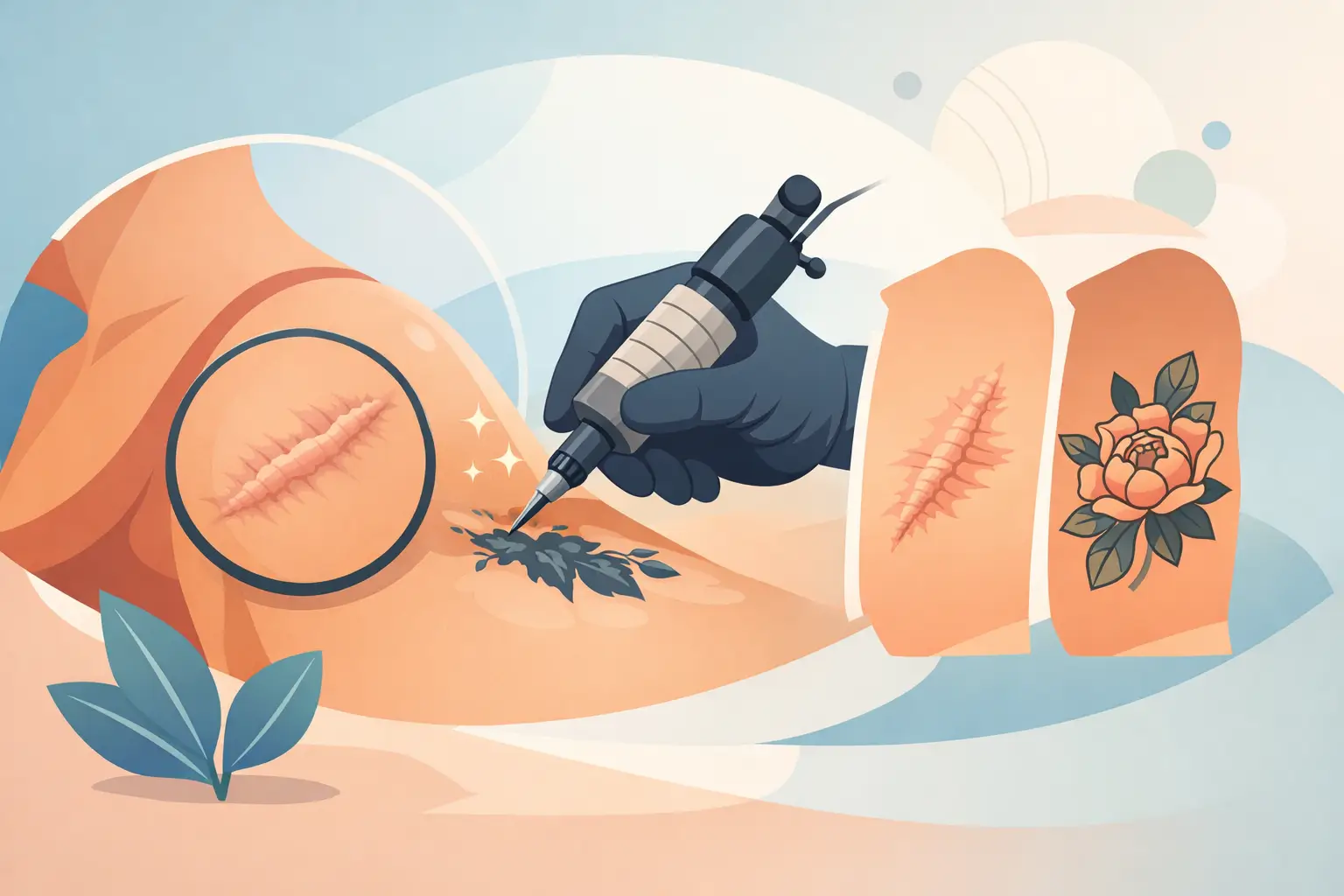
A scar can be fully healed and still command attention every time you look in the mirror. For many clients, the concern is not the scar itself but the contrast: a pale surgical line, a darker mark, an uneven patch of pigment, or a texture that catches light differently than the surrounding skin. This guide to scar tissue tattooing explains what cosmetic camouflage can realistically improve, when treatment is appropriate, and why specialist technique matters more here than it does in conventional tattooing.
Scar camouflage is not about covering skin with a flat, obvious color. At its best, it is a precision cosmetic procedure designed to reduce contrast between a healed scar and the skin around it. The result should look quiet, refined, and difficult to detect at a normal conversational distance.
What Scar Tissue Tattooing Is Designed to Do
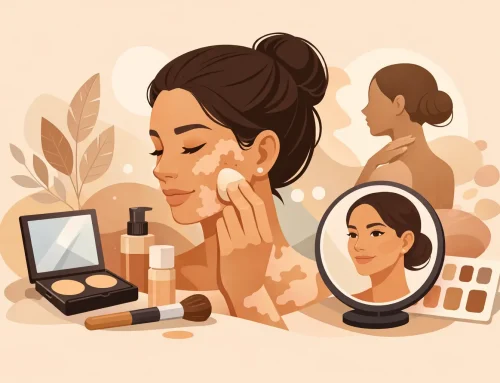
Scar tissue tattooing, often called scar camouflage, uses custom-blended pigment to visually integrate a scar with the surrounding skin tone. It may be considered for surgical scars, injury scars, burn scars, tummy tuck scars, breast surgery scars, C-section scars, facelift scars, and certain self-harm scars once they are fully healed and appropriate for treatment.
The objective is color correction, not surgical revision. Pigment can soften the visual interruption caused by a scar, but it cannot remove raised texture, restore lost hair follicles, erase a deep indentation, or make an active scar disappear. A skilled specialist begins with that distinction because honest expectations lead to better decisions and more natural-looking results.
For some clients, a scar appears lighter than their natural skin. For others, it may be darker, pink, red, or irregularly colored. Each presentation requires a different strategy. A pale scar may need gradual warmth and depth; a darker scar may require a more cautious corrective plan, or it may need to mature further before cosmetic tattooing is advisable.
When a Scar Is Ready for Camouflage
Time is one of the most important variables in scar camouflage. A scar may look closed on the surface while its deeper remodeling process is still underway. Tattooing too early can lead to unpredictable pigment retention, uneven healing, or a result that no longer matches as the scar continues to change.
In most cases, a scar should be fully healed, stable in color, and no longer changing before it is considered for tattoo camouflage. That often means waiting at least 12 months after surgery or injury, though the right timeline varies. Some scars require longer, particularly after major surgery, burns, radiation treatment, complications, or repeated procedures.
A consultation should assess more than the scar’s age. The specialist should consider whether it is flat or raised, whether it is still red or pink, whether it feels firm, whether there is a history of keloid or hypertrophic scarring, and whether the surrounding skin has an even, stable tone. If the scar is itchy, painful, inflamed, actively changing, or prone to excessive raised scarring, treatment may need to be postponed or ruled out.
Medical clearance can be appropriate for clients with a recent cancer history, reconstructive surgery, autoimmune conditions, diabetes, active skin conditions, or medications that affect healing. Cosmetic camouflage is a highly specialized aesthetic service, not a substitute for medical care.
Why Scar Tissue Requires a Different Technique
Healthy skin and scar tissue do not behave the same way. Scar tissue can be denser, thinner, less elastic, or less predictable in how it accepts pigment. That is why a technique that works beautifully for a conventional cosmetic tattoo may be unsuitable for a scar.
The procedure must be performed with controlled depth, low trauma, and a highly calibrated hand. Overworking a scar can create unnecessary irritation and compromise the result. Underworking it may leave insufficient pigment. The goal is not aggressive saturation. It is gradual, precise placement that respects the skin’s condition and allows color to build naturally over sessions when needed.
This is also where traditional tattoo ink and standard permanent makeup approaches can fall short. A one-color formula is rarely convincing against real skin, which contains subtle shifts of warmth, coolness, depth, and translucency. Premium scar camouflage relies on customized mineral-based pigment blends and careful adjustment as the skin heals.
At MicroArt, the philosophy is centered on cosmetic subtlety: a result should blend with the client, not announce the procedure. That standard is especially critical in corrective work, where the best outcome is often the one no one notices.
The Art and Science of Color Matching
Color matching is the heart of scar camouflage. The right pigment is not simply the color of skin seen at the surface. It must account for undertone, the scar’s existing color, the body area, natural tanning patterns, and how pigment settles beneath the skin over time.
A scar on the abdomen may require a different blend than one on the face, breast, or knee. Skin is not uniform across the body, and areas exposed to sun can change seasonally. Clients who tan frequently should understand that camouflage is matched to their baseline skin tone, not to a temporary summer tan.
The most sophisticated approach is often layered rather than literal. Instead of attempting to make the scar identical in one pass, the specialist may begin with a conservative blend, evaluate healed retention, then refine the tone at a later appointment. This process is more exacting, but it reduces the risk of an overcorrected patch that looks more visible than the scar did originally.
Color evolution is another reason to choose a provider carefully. Traditional tattoo pigments can heal too cool, too warm, or visibly unnatural as they age. Proper pigment selection, placement, and maintenance planning are essential for results that remain soft and believable.
What to Expect During the Procedure
A high-level consultation begins with photographs, health history, scar history, and an in-person assessment when appropriate. The specialist evaluates whether camouflage is likely to improve the area and discusses the limits of treatment before proceeding. If expectations are not aligned, the right recommendation may be to wait, seek medical evaluation, or consider another corrective option.
On treatment day, the area is cleansed and the pigment is custom blended to complement the surrounding skin. The procedure is typically performed gradually, with meticulous attention to coverage and transition at the scar edges. Sensation varies by body location and individual sensitivity, but many clients find the experience manageable.
The immediate result can look stronger or warmer than the healed outcome. As the skin settles, the pigment softens and reveals its true relationship to the surrounding tone. Depending on the scar and the desired level of correction, more than one session may be recommended. This is not a deficiency in the process. It is often the most responsible route to a natural finish.
Healing, Aftercare, and Long-Term Maintenance
Aftercare protects the investment in the procedure. Clients are generally advised to keep the area clean, avoid picking or friction, and follow specific instructions regarding exercise, swimming, sun exposure, and topical products. The exact protocol depends on the treatment area and skin condition.
Healing should be discreet, but it is still healing. A premium semi-permanent approach is designed to minimize unnecessary skin trauma, yet every client heals differently. Do not judge the final color immediately after treatment. The skin needs time to settle before a specialist can accurately assess retention and determine whether refinement is needed.
Scar camouflage is also not necessarily permanent in the traditional tattoo sense. Skin changes, sun exposure, natural aging, and lifestyle can affect the appearance of both skin tone and pigment over time. Periodic maintenance may preserve the most undetectable result, especially for areas that receive regular sun exposure.
Choosing a Scar Camouflage Specialist
This is not a procedure to select based on a discount, a generic before-and-after photo, or a provider’s ability to perform ordinary body tattoos. Ask to see healed results on scars similar to yours and on skin tones similar to yours. A portfolio should show close-up work in natural lighting, not only immediate post-procedure images.
Look for a specialist who discusses candidacy openly, explains why a scar may need multiple sessions, and avoids guaranteeing perfect invisibility. You should also expect a detailed conversation about pigment selection, contraindications, healing, and maintenance. The more individualized the assessment, the more likely the plan is built around your skin rather than a standard formula.
A well-executed scar camouflage procedure does not rewrite the history of the skin. It changes how prominently that history appears. When the scar is mature, the color match is expertly built, and the technique is appropriately conservative, the result can bring back a sense of ease – whether that means wearing a swimsuit, choosing a sleeveless dress, or simply seeing yourself without your eyes going first to the mark.