
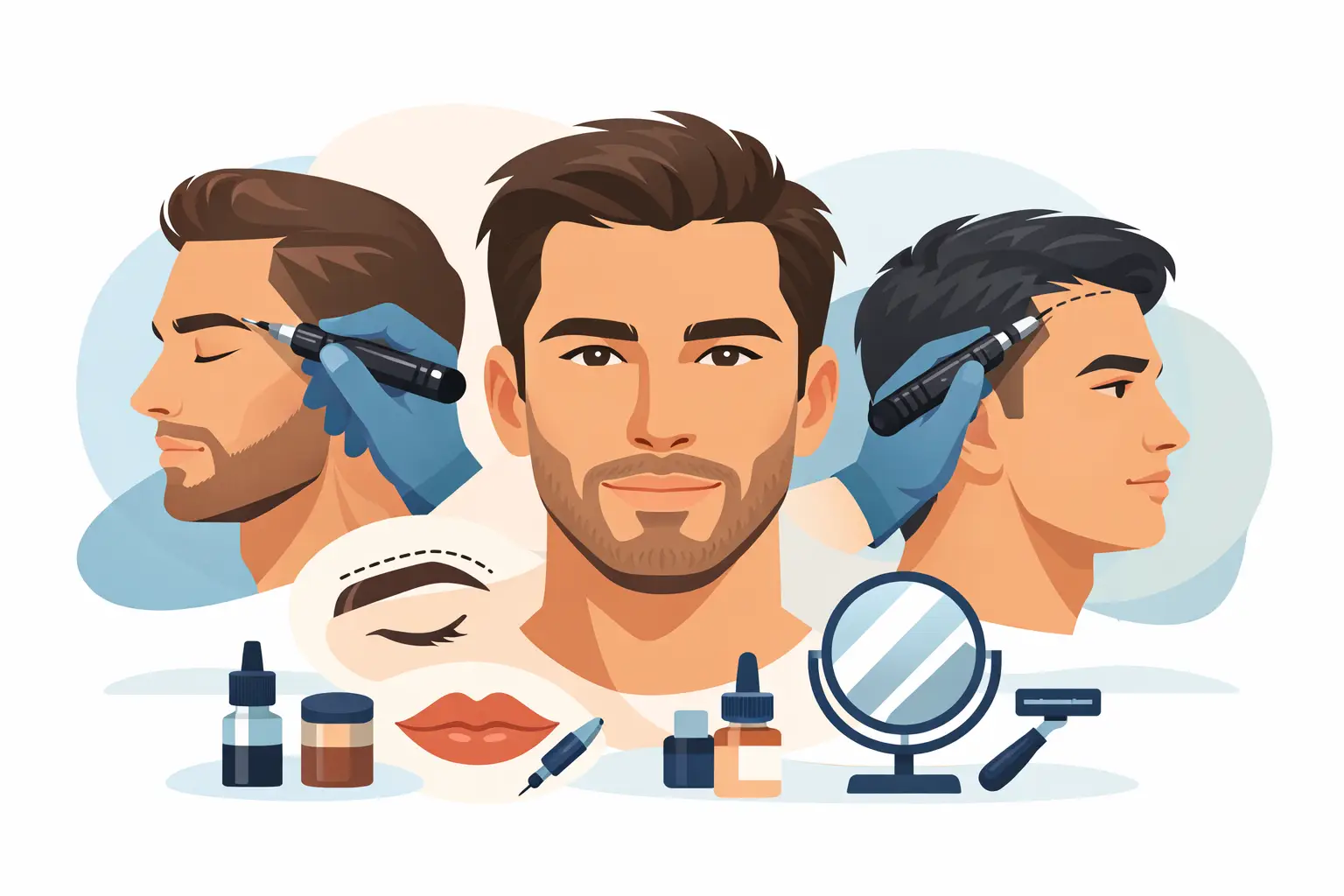
A well-executed cosmetic tattoo for men should not make someone look “done.” It should make him look rested, defined, and more like himself on a very good day. The goal is not a sharper-than-natural hairline, dark outlined lips, or brows that announce their presence across the room. It is precision work designed to correct distractions while preserving the features that make a face recognizable.
For men who value discretion, cosmetic tattooing can solve concerns that daily grooming products, concealers, and temporary solutions rarely address well. Sparse eyebrows, a thinning hairline, surgical scars, uneven lip tone, vitiligo, and old tattoo work can all affect how polished a person feels. The right technique offers a refined answer without the obvious finish associated with conventional permanent makeup.
Why More Men Are Choosing Cosmetic Tattooing
Men are not looking for makeup in the traditional sense. Most are looking for control over a specific concern: an eyebrow that has a visible gap, a scalp that shows through under bright light, a scar that draws attention in photographs, or a lip tone that appears pale or uneven. Cosmetic tattooing addresses these details at the pigment level, creating the appearance of naturally occurring color, density, or definition.
The appeal is practical as much as aesthetic. Results are present at the gym, in the pool, during travel, and under high-definition cameras. There is no daily application to manage and no concern about product transferring to clothing or wiping away during the day.
Still, not every cosmetic tattoo technique is appropriate for men. Traditional methods can create harsh borders, oversaturated color, or a result that looks increasingly artificial as pigment ages. That is why the provider’s approach, equipment, pigment selection, and restraint matter more than the procedure name alone.
Cosmetic Tattoo for Men Is About Subtle Correction
A natural result begins with a realistic standard: skin is not perfectly uniform, eyebrows are not identical, and a mature hairline should not resemble one drawn onto a teenager. The strongest work respects those realities.
Rather than applying a single flat shade, an advanced cosmetic tattoo approach uses custom-blended mineral-based pigments selected for the client’s skin tone, undertone, existing hair color, and the area being treated. The pigment is placed gradually and strategically. This allows the provider to create soft transitions instead of abrupt edges.
For many men, less pigment is the better choice. A first treatment may intentionally look understated because pigment can be adjusted during follow-up sessions. Starting too dark or too dense is difficult to disguise. Building toward the correct level of definition is the more sophisticated path.
Eyebrow Enhancement Without a Groomed Look
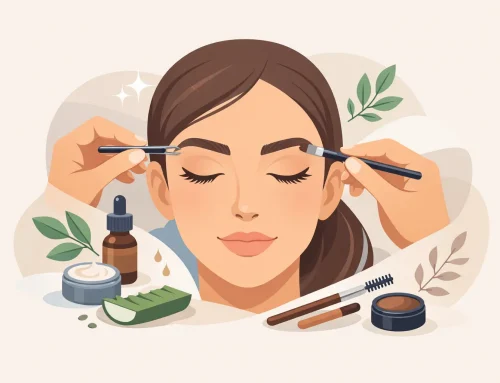
Male brow restoration is often about replacing the impression of density, not creating a perfectly shaped brow. The shape should follow the client’s natural bone structure and existing growth pattern. Small gaps, thinning tails, asymmetry from injury, and hair loss can be softened with carefully placed pigment.
The difference between enhancement and an obvious cosmetic result often comes down to the front of the brow. A hard, boxed beginning can look unnatural on anyone, but especially on men who typically want an undetectable finish. Softly diffused pigment, conservative structure, and a shade that does not turn warm or ashy against the skin are essential.
Scalp Shading for Thinning Hair and Alopecia
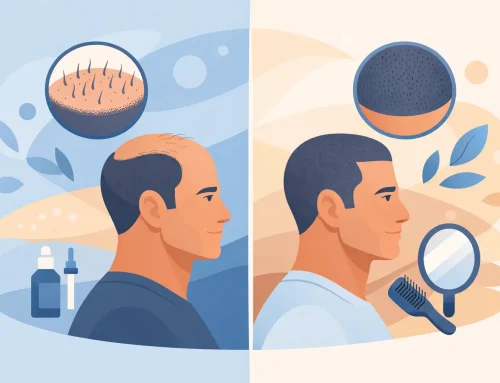
Scalp shading can create the appearance of fuller hair by reducing contrast between the scalp and existing follicles. It is not a hair transplant and does not grow hair. It is a cosmetic density solution that can be useful for diffuse thinning, receding hairlines, transplant scars, alopecia, or clients who prefer a closely cropped style.
The most convincing scalp work accounts for the hairline a man has now, not the one he had at 18. A natural hairline has irregularity, soft recession, and gradual density. Results can look exceptionally realistic when the pigment placement is scaled correctly and the treatment plan reflects the client’s age, hair color, skin tone, and anticipated future hair loss.
Scalp shading is also not one-size-fits-all. A client with longer thinning hair may need a different density strategy than someone with a shaved head. Men with darker skin tones require particular expertise in pigment selection, as the wrong formula can heal with unwanted undertones or insufficient contrast.
Scar, Vitiligo, and Skin Camouflage
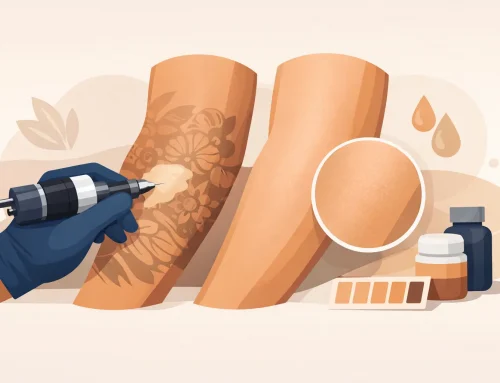
Cosmetic camouflage can reduce the visual contrast of scars, stable vitiligo, birthmarks, and areas affected by previous procedures. For many clients, this is less about vanity than freedom from constantly noticing the area in mirrors, photos, and social settings.
Camouflage requires patience and clinical judgment. Scar tissue may accept pigment differently from surrounding skin, and no two areas heal the same way. The objective is typically to blend and soften, not to promise that a scar will disappear. Raised, active, inflamed, or recently formed scars may not be appropriate for treatment, while unstable vitiligo generally requires medical clearance and a careful assessment before cosmetic work begins.
When performed properly, color is mixed to relate to the skin around the area rather than copied from a pigment chart. That distinction is what separates true camouflage from a patch of color that becomes more visible over time.
Lip Tone Correction for a Healthy, Natural Finish
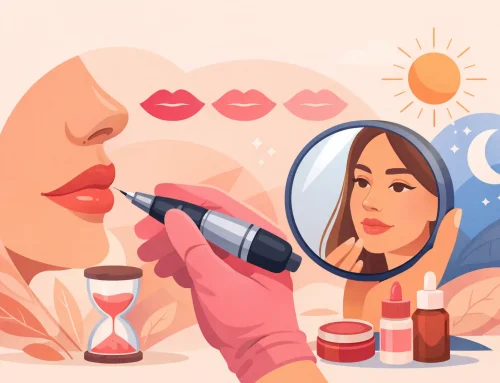
Lip enhancement for men is not about creating lipstick. It can be used to restore a healthier-looking tone where lips appear pale, cool, uneven, or less defined after sun exposure, aging, or scarring. The best result is often one people read as improved circulation, not cosmetic color.
A provider should assess the natural lip color, skin undertone, and lip texture before recommending treatment. In some cases, a subtle neutralization process is needed before the desired tone can be achieved. This is particularly relevant for clients with deeper pigmentation, where an overly simple color choice can heal differently than expected.
What Separates Advanced Treatments From Traditional Permanent Makeup
The phrase “cosmetic tattoo” can describe a wide range of practices. Quality varies significantly. Traditional permanent makeup and microblading may involve more trauma to the skin, longer recovery, scabbing, bruising, and pigments that can shift into blue, gray, red, or orange tones over time.
MicroArt’s proprietary method was developed to offer a more refined alternative for clients who do not want those trade-offs. Precision equipment and custom-blended mineral pigments are used to place color with a light, controlled approach intended to produce an exceptionally natural, semi-permanent result. The experience is designed around minimal disruption to normal life, with no expected scabbing or extended downtime.
Semi-permanent does not mean temporary after a few weeks, nor does it mean permanent forever. Longevity depends on the treatment area, skin type, sun exposure, skincare ingredients, lifestyle, and the depth and tone of pigment used. Maintenance is part of protecting a polished result. For a man who wants subtlety, this can be an advantage: his look can evolve gradually rather than remaining fixed as his face, hair, and style change.
Choosing a Provider: What Men Should Ask
Before booking, look beyond before-and-after photos that are taken in flattering light or immediately after treatment. Ask to see healed work on men with similar skin tone, age, hair color, and concern. Fresh pigment can look more defined than healed pigment, so healed examples are the more meaningful standard.
A serious consultation should cover medical history, prior tattooing or permanent makeup, medications, skin conditions, scar maturity, and realistic expectations. It should also include a candid conversation about whether cosmetic tattooing is the right solution. For example, scalp shading may not be ideal for someone planning a major hair transplant in the immediate future, and active acne or irritated skin may require treatment to be postponed.
Be wary of anyone promising exact symmetry, one-session perfection, or an invisible result regardless of skin condition. Natural skin changes, pigment healing is individual, and precision requires room for refinement. The most trustworthy providers explain what is possible, what requires maintenance, and what may limit the outcome.
Preparing for a Natural Result
The best preparation is simple: arrive with a clear idea of what you want corrected, not a demand for a dramatic redesign. Bring reference photos only if they help communicate your goal, but remember that another person’s brow, hairline, or lip color may not belong on your face.
Follow the clinic’s pre-treatment guidance regarding sun exposure, alcohol, certain supplements, skincare actives, shaving near the treatment area, and any medications that may affect healing. Do not stop prescribed medication without direction from your physician. After treatment, protect the area as instructed and avoid judging the final result too early. Healing and color settling are part of the process.
The most successful cosmetic tattoo for men is often the one no one can identify. If people notice that you look healthier, more rested, or somehow more put together without asking what changed, the work has done exactly what it should.