
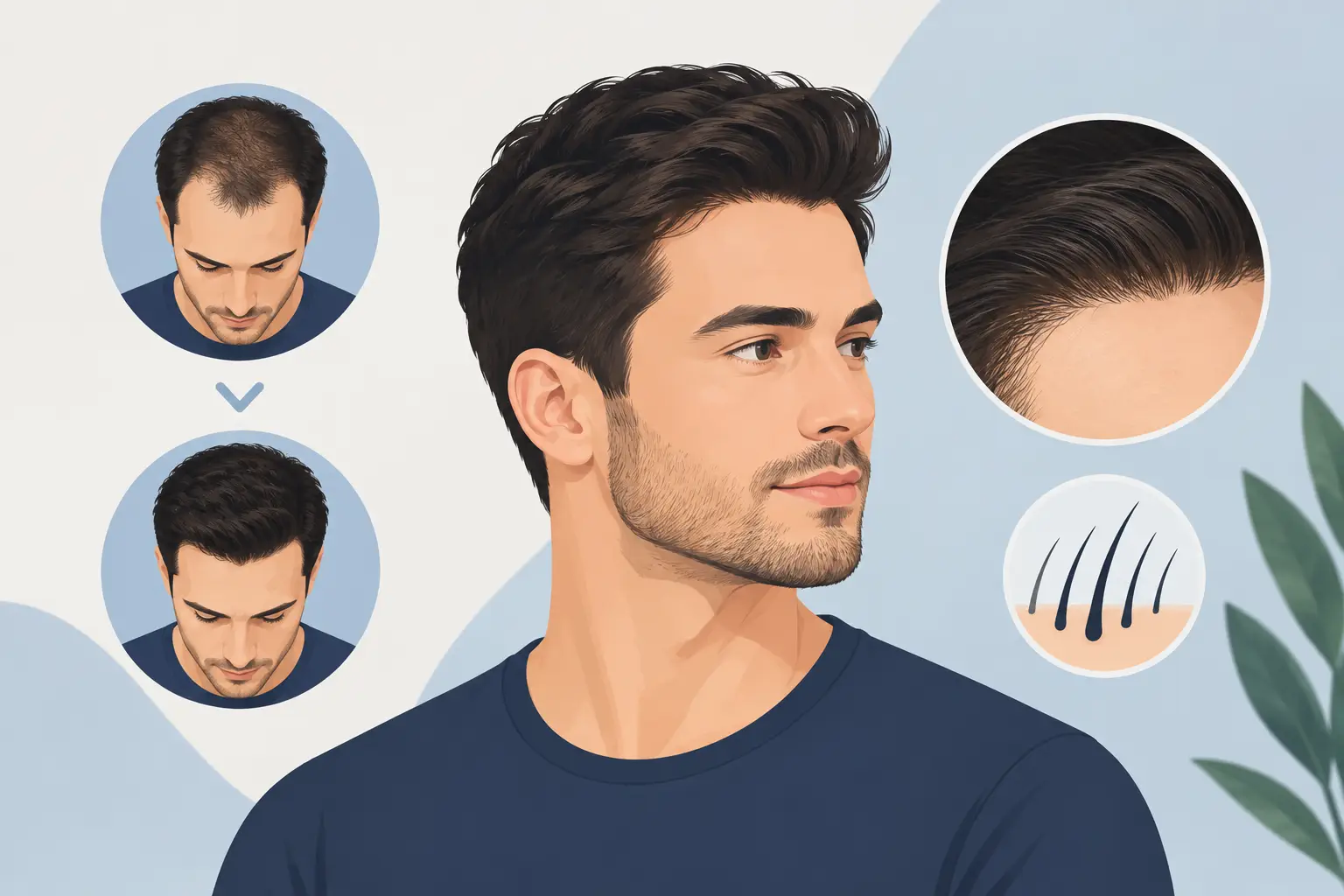
A hairline can change the entire balance of the face. It can make the forehead appear longer, soften the temples, or make thinning hair far more visible under direct light. This guide to non surgical hairlines is for people who want a stronger, more youthful-looking frame without committing to hair transplant surgery, a visible recovery period, or a result that looks artificially drawn on.
The right option is not simply the one that adds the most density. It is the one that respects your skin tone, hair color, age, pattern of loss, and existing hairline. A convincing result should look like it belongs to you from every distance.
A Guide to Non Surgical Hairlines: Your Main Options
Non-surgical hairline solutions fall into a few distinct categories. Some create the visual impression of follicles; others add actual hair coverage. Some are appropriate for a receding hairline, while others work best for diffuse thinning or a temporary event-ready change.
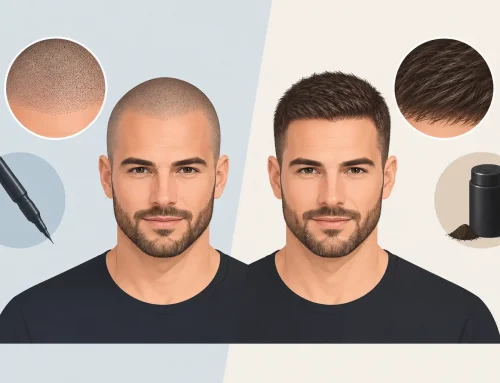
Scalp shading, often called scalp micropigmentation, places thousands of precise pigment impressions in the scalp to replicate the look of closely cropped follicles. It does not grow hair or stop hair loss. Instead, it reduces the contrast between the scalp and existing hair, creating the appearance of greater density or a carefully restored hairline.
Hair systems use a custom base with real or synthetic hair attached. They can create length, volume, and a more dramatic transformation than pigment alone. A well-fitted system can be highly convincing, but it requires regular maintenance, replacement, adhesive management, and a willingness to adapt your grooming routine.
Topical fibers, powders, and root concealers offer the fastest temporary correction. They can be useful for special occasions or mild thinning, but they depend on enough existing hair for grip and can transfer with sweat, water, or frequent touching. Styling changes, such as a shorter cut or a directional blow-dry, may also make a meaningful difference when hair loss is early.
Medication can be part of a broader hair-loss plan, but it is not a cosmetic hairline procedure and is best discussed with a qualified medical provider. It may help preserve existing follicles for the right candidate, yet results vary and treatment is ongoing.
Why Scalp Shading Appeals to Discerning Clients
For men who keep their hair short, scalp shading can restore the visual structure that recession has taken away. For women with thinning along the part or temples, it can make the scalp less visible between strands. It may also complement a hair transplant by making transplanted density appear more complete.
Its appeal is discretion. A strategically designed hairline does not announce that anything has been done. It creates a soft transition from skin to hair, with irregularity and subtle variation where nature would place it. The goal is not a solid, inked border. It is a believable optical effect.
This is where technique matters more than the category name. Traditional tattoo equipment, generic black ink, and a rigid template can produce a hairline that is too dark, too blue-toned, or too sharply defined as it ages. Cosmetic scalp pigmentation requires controlled placement, calibrated depth, and pigments selected for the client rather than a one-color approach.
At MicroArt, the emphasis is on proprietary precision equipment and custom-blended mineral-based pigments designed to produce a refined, natural-looking result. For a visible area such as the hairline, that level of control is not an extra. It is the standard that protects the realism of the outcome.
The Most Important Decision Is Hairline Design
A lower hairline is not automatically a better hairline. In fact, placing it too low is one of the most common reasons a non-surgical result can look unnatural. A mature hairline should suit the proportions of the face and allow for the possibility that natural hair loss may continue over time.
The temples deserve the same care. Rebuilding them aggressively may look appealing in a filtered photo, but can appear out of place in person if the density behind them is limited. A skilled specialist evaluates the recession pattern, the strength of the remaining hair, and the way the profile reads from the side.
Age is also part of the design conversation. A soft, conservative restoration can be more flattering and more durable than recreating a teenage hairline on a client whose facial features and hair-loss pattern have evolved. Premium work is not about chasing a generic ideal. It is about creating proportion.
Softness is what makes a hairline believable
Natural hairlines are imperfect. They have slight asymmetry, scattered lighter points, and a gradual density transition. A cosmetic solution should mirror those details. The frontal edge is typically lighter and more diffused, then becomes denser farther back.
This is especially relevant for clients with darker skin tones, gray hair, naturally light hair, or a tendency toward contrast in the scalp. Pigment selection and density must be individualized. What looks natural on one person can look overly pronounced on another.
What to Expect From a Professional Consultation
A serious consultation should feel more like a design assessment than a quick appointment booking. The specialist should review your goals, scalp condition, prior procedures, medications, hair-loss pattern, and lifestyle. They should also ask how you normally wear your hair, because a result designed for a closely shaved scalp is different from one intended to support longer hair.
Photos are useful, but they should not be the sole basis for design. Indoor lighting, flash, and filters can change how hair density appears. Whenever possible, the plan should account for how the scalp looks in daylight, overhead lighting, and close conversation distance.
You should also receive a direct discussion of realistic outcomes. Scalp shading can reduce the appearance of thinning, add the illusion of a hairline, and improve the look of transplant scars. It cannot create physical hair length, conceal every scalp condition, or promise that future hair loss will stop. A provider who explains these boundaries is protecting your result.
Safety, Healing, and Maintenance Considerations
Non-surgical does not mean one-size-fits-all. Active scalp irritation, certain skin conditions, recent sunburn, or an unstable medical issue may require postponement or medical clearance. Clients with a history of cosmetic tattooing should disclose it, particularly if the existing pigment has changed color or been placed too deeply.
The treatment experience and recovery can vary by method. Hair systems require ongoing maintenance visits. Topical products require frequent application. Cosmetic scalp pigmentation is generally completed over a series of sessions, allowing the design and density to build gradually rather than appearing heavy all at once.
Maintenance is also part of thoughtful planning. Semi-permanent pigment may soften over time and can need periodic refreshing. That is often an advantage: as your hair color, style, or natural pattern changes, the look can be adjusted. The key is choosing a provider who plans for the long view rather than delivering an overly dense first result.
How to Choose Between Scalp Shading and a Hair System
Choose scalp shading when you want the appearance of follicles, favor a short hairstyle, want to reduce scalp contrast, or prefer not to manage adhesives and daily placement. It can be particularly effective for a receding hairline, a shaved-head look, diffuse thinning, or scar camouflage.
Choose a hair system when your priority is visible length and volume. It can provide a major change for someone with extensive loss, but it asks more of the client in terms of upkeep. There is no inferior choice here. There is only a method that aligns better with your desired look and maintenance tolerance.
Some clients benefit from a combined approach. A hair system may provide coverage while scalp shading can soften the visible edge, reduce contrast around the sides, or make a shorter style look more complete. These decisions should be made conservatively and with a clear understanding of what each technique contributes.
A successful hairline should never compete with your features or demand attention. It should quietly restore the confidence of seeing a more balanced version of yourself in the mirror, in daylight, and in every unplanned photograph.