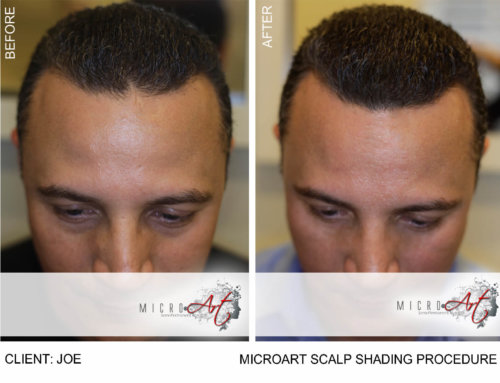

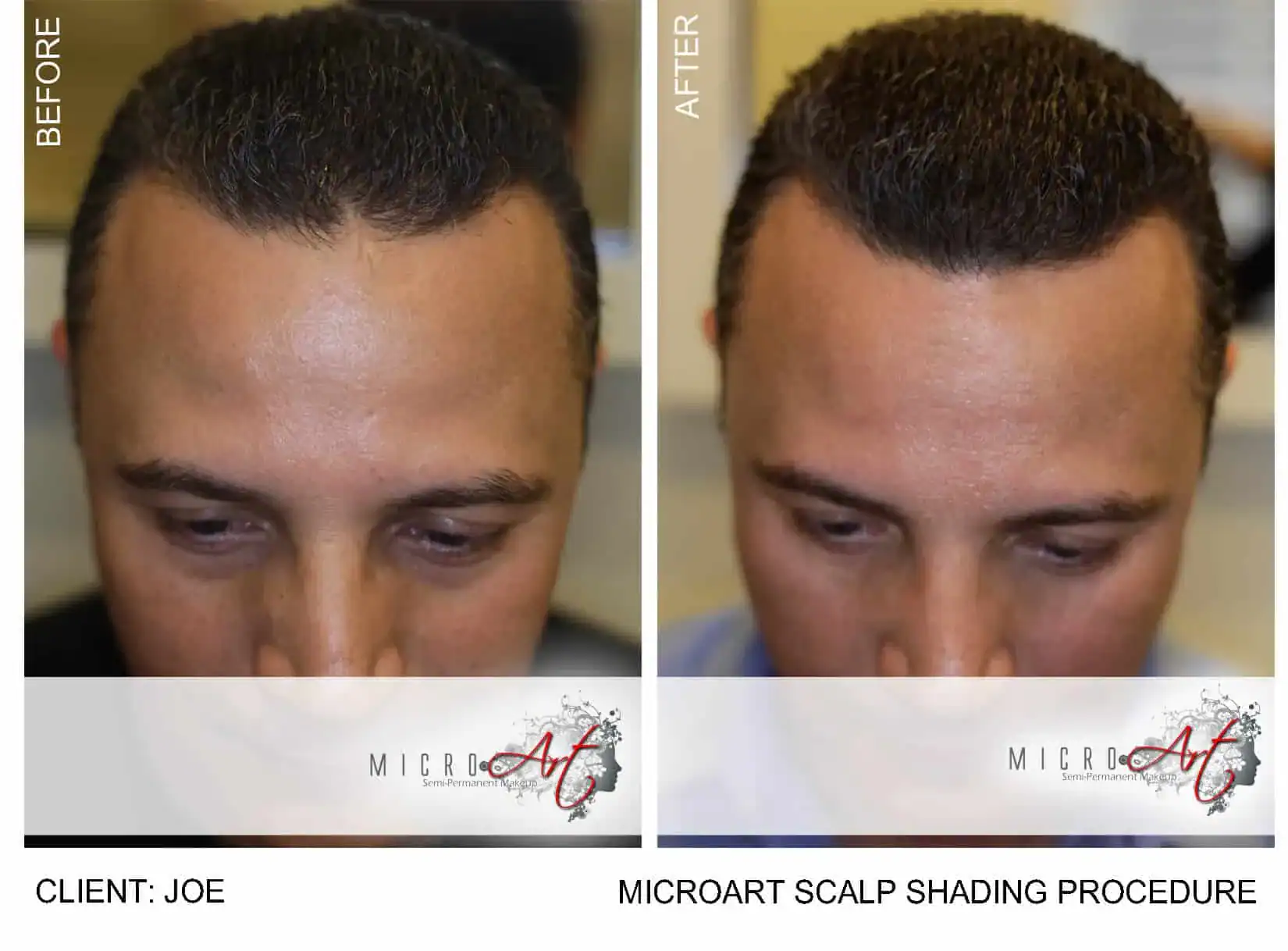
Scalp micropigmentation can remain visible for years, but its appearance and the point when someone wants maintenance vary from person to person. If you are asking how long does scalp micropigmentation last, MicroArt describes results as lasting up to three years without maintenance; that is a general expectation, not a guarantee or an expiration date for every client. Scalp micropigmentation (SMP), also called scalp shading, uses pigment to create the appearance of closely cropped hair or a more even-looking hairline. For the larger picture, start with our complete guide to scalp micropigmentation and hair loss solutions.
How Long Do Scalp Micropigmentation Results Typically Last?
Scalp micropigmentation is not a one-time result with the same expiration date for every client. MicroArt describes its results as lasting up to three years without maintenance. “Up to” is an upper expectation, not a promise that every result will look unchanged for that period. The length of time a particular result looks the way a client wants depends on the individual, the treatment plan, and how the appearance changes over time.
It helps to separate two questions that are often treated as one:
- Is pigment still visible? Pigment may remain visible even as its color or definition changes.
- Does the appearance still meet my preference? A client may consider a review because the look no longer matches their goals, even if pigment remains.
These questions have different answers. A person may still see the original effect but want to discuss how it fits a changed hairstyle. Another person may notice a difference but remain satisfied and choose not to pursue maintenance. “Lasting” can therefore mean that pigment remains visible, that the result still looks as intended, or that the client remains content. Be specific about which meaning matters to you when you ask about longevity.
Neither question has a calendar-based answer that works for everyone. A consultation should address the client’s scalp, hair pattern, desired appearance, and expectations. MicroArt’s scalp shading information can help you prepare questions, but it cannot predict the timeline for an individual result.
Q: Does scalp micropigmentation disappear after three years?
A: Not necessarily. Three years is MicroArt’s stated “up to” timeframe without maintenance, not a date when every person’s result disappears or must be redone. Pigment may remain visible, and the appearance and any desire for a touch-up are individual.
It is also useful to avoid turning an approximate timeframe into a maintenance appointment booked years in advance. A sensible plan is to understand the studio’s general expectation, then review your own result and preferences over time. You can ask at the outset what changes may be worth discussing, how to contact the studio later, and whether a follow-up assessment is appropriate. A provider’s answer should relate to your case rather than a universal schedule.
What Affects the Longevity of SMP Results?
Longevity is better understood as a combination of pigment visibility and how satisfied you remain with the look. The following considerations can shape the discussion, but they should not be treated as a formula for predicting an exact number of months or years.
- Your starting point and goals: A person seeking a subtle, closely cropped appearance may assess the result differently from someone whose priority is a defined hairline or visual coverage across a larger area. The consultation should clarify what “lasting well” means to you.
- Individual skin and healing: People do not all respond in the same way. An individualized assessment is more useful than relying on another client’s timeline or a general online claim.
- Design and color choices: A natural-looking plan is tailored to the client rather than chosen from a universal template. MicroArt describes its approach as using custom-blended mineral-based pigments and proprietary equipment; ask the team how it plans a particular case.
- How the appearance evolves: Color and definition may change over time. The point at which a change matters enough to consider follow-up is personal, not a universal trigger.
- Hair and style changes: If your hair length, hairline preference, or overall look changes, you may evaluate the result differently. Consider the appearance you are likely to want over time when discussing a plan.
- Expectations about maintenance: Some clients may be content without maintenance, while others may ask whether a touch-up could help. Discuss the possibilities in advance rather than assuming everyone needs the same schedule.
These factors are useful for organizing a conversation, not for self-diagnosing a change. For example, if your hairline preference has become softer or more defined, that is a design preference to discuss; it does not automatically mean pigment has faded. If the appearance seems different in one photograph, lighting, angle, hair length, and camera exposure may also affect what you perceive. A consistent comparison over time can help you explain your concern, but it cannot determine the cause.
Published research does not provide a simple personal countdown. One study on scalp micro-pigmentation examined pigment-based microdots in a skin model, including pig cadaver skin, over a 28-day period; that setup is not a long-term forecast for a person’s cosmetic result (study on scalp micro-pigmentation via transcutaneous implantation). A separate journal article addresses revision in cases with unsatisfactory scalp micropigmentation outcomes (journal article on revision for unsatisfactory SMP outcomes). These studies address specific research questions. They do not establish how long a particular client’s result will last or how often that client should schedule maintenance.
When reading research or online accounts, check what question a source actually examines. A laboratory or skin-model study is not the same as a long-term follow-up of cosmetic clients. An article about revision cases focuses on people seeking correction, not necessarily everyone who has had SMP. Neither type of evidence can substitute for an assessment of your own goals and result. For a broader overview of what the procedure is intended to change, see MicroArt’s scalp micropigmentation overview.
There is another practical distinction: pigment visibility and visual balance are related, but not identical. Someone with a closely shaved style may assess the overall pattern and hairline as a unified look. Someone whose hair is longer may focus on how the treated area blends with surrounding hair. If hair density or styling changes, expectations can change along with it. Explain your typical hairstyle and likely preferences during planning so the conversation addresses the appearance you actually want to maintain.
How the Multi-Session Process Builds Long-Lasting Results
A multi-session plan gives the artist and client more than one point to assess the appearance. MicroArt’s general model for cosmetic procedures includes an initial session and a later touch-up. The exact plan, timing, and suitability should be discussed in consultation; this is not a promise that a fixed number of sessions will create the same outcome for everyone.
In broad terms, the process is planned around the following considerations:
- Discuss the desired appearance. Talk through the preferred hairline, the look you want at your usual hair length, and how subtle or defined you want the result to appear. Reference photos can help explain preferences, while another person’s result cannot predict yours. Describe what you want to avoid as well as what you hope to achieve.
- Assess the scalp and candidacy. A consultation is a chance to review your circumstances and ask what is realistic for your goals. If you are considering SMP alongside another hair-loss approach, mention it rather than assuming the treatments can be planned independently. Bring up prior treatment or procedures that may be relevant.
- Plan the initial session. The artist can explain the proposed approach and what to expect for your specific case. MicroArt describes its method as using custom equipment and custom-blended mineral-based pigments; ask the team to explain the details that apply to your treatment.
- Review before any follow-up. A later visit gives you an opportunity to discuss how the appearance has settled and whether the plan calls for a touch-up. The purpose is individualized review, not automatic repetition on a fixed schedule.
Each point in that process answers a different question. The initial discussion helps establish the desired look. The assessment considers whether that goal is suitable to explore. The session plan describes the approach. A later review gives both client and provider a chance to consider the appearance and decide whether any follow-up is appropriate. Keeping those steps distinct helps avoid the expectation that simply completing a certain number of visits guarantees a particular lifespan.
For a useful consultation, explain the details that could shape the design. Examples include whether you keep your hair shaved, how often you expect to change its length, whether you prefer a conservative hairline, and whether you want the effect to be discreet in everyday settings. Men who want an understated result can describe the short-hair look they are aiming for; the discussion should focus on the individual’s preference, not assumptions about what a man’s hairline should look like. MicroArt’s page about semi-permanent makeup for men offers related context.
Because clients may travel to Beverly Hills, it is sensible to discuss the possible number and spacing of visits before booking travel. Do not assume an online general timeline is your treatment schedule. For remote planning questions, review the remote customer service information and ask what is feasible for your circumstances. If travel is involved, consider what you would do if a later review were recommended and whether your itinerary can accommodate the studio’s plan.
A simple planning checklist can make that conversation more concrete:
- Ask how the studio expects the process to be staged in your particular case.
- Clarify what the later appointment is intended to assess, rather than assuming it is identical to the first visit.
- Discuss how much flexibility you should leave between travel commitments and appointments.
- Ask how to share questions or observations if you are not in Beverly Hills between visits.
- Confirm what instructions apply to your own treatment rather than relying on another person’s account.
People considering SMP after a hair transplant or another hair-loss treatment should describe that history during assessment. The question is not simply how long pigment lasts; it is also whether the proposed appearance fits the client’s current and anticipated hair pattern. If you have a future plan that could change the hairline or surrounding density, bring it up before design decisions are made. MicroArt’s frequently asked questions can be a starting point, but personal planning belongs in a consultation.
The same principle applies if your goals are still evolving. You do not need to arrive with a perfectly defined plan, but it helps to say what is uncertain. You might be weighing a shaved look against keeping some hair length, or comparing SMP with another hair-loss option. A candidacy discussion can clarify what questions are within the studio’s scope and what expectations need more individualized guidance.
Signs Your SMP May Need a Touch-Up
There is no single visual sign that means every client needs maintenance. Instead, a follow-up conversation may be worthwhile if you notice a change that affects your satisfaction or if your preferences have shifted.
- The result appears less defined to you than it did after it settled.
- You feel the color or overall look no longer fits your current hair or style.
- Your hairline preference has changed, or you want to discuss a different visual balance.
- You are unsure whether what you see is an expected change or something worth reviewing.
- You have a new question because of a change in hair length, styling, or another treatment plan.
These are reasons to ask a qualified provider for an assessment, not self-diagnosis or a guarantee that additional pigment is appropriate. Photos taken in similar lighting and from similar angles can help you describe what you are noticing, but they cannot replace a professional review. Avoid making a decision based only on close-up photos, social media examples, or comparisons with another person.
If you choose to document an observation, make the comparison useful rather than dramatic. Use a similar distance and angle, keep the lighting as consistent as practical, and note when the images were taken. Write down what you see in plain terms: for example, “I am less sure about the definition at the front,” or “My current hair length makes the contrast more noticeable to me.” This gives the consultation a specific starting point. It does not prove what caused the change or determine whether a touch-up should be performed.
It is also important not to mistake “still visible” for “must be maintained.” If you are comfortable with the appearance, you may not want a touch-up. If something concerns you, ask what options are appropriate and what limitations apply. MicroArt’s page about safety and procedure considerations provides background on the studio’s approach. Individual questions about suitability or follow-up should be discussed with the provider.
Before deciding, separate an appearance concern from a change in preference. For instance, a client may have originally wanted a more noticeable hairline, then later decide that a subtler look better suits them. That is not necessarily a maintenance problem. Conversely, a client may be satisfied with the design but want advice because the result appears different to them. Describing which of these applies helps the studio respond to the actual concern.
A touch-up conversation should include what the client hopes to change, what the provider observes, and whether additional work is appropriate. Ask about the intended effect, the limits of what can be adjusted, and whether the plan accounts for your current hair pattern. Do not treat more pigment as an automatic solution to every concern. An individualized review is the best way to understand whether a change is a matter of design preference, appearance, or something else.
What Maintenance Looks Like Over Time
Maintenance starts with realistic expectations, not with booking repeat sessions on a preset timetable. A helpful plan includes knowing who to contact, what changes to discuss, and how a provider will assess whether a touch-up makes sense.
| What you notice | What it may mean | Practical next step |
|---|---|---|
| The look still suits you and you are satisfied | There may be no reason to pursue maintenance now | Keep your expectations flexible and reassess if your preferences change |
| Subtle changes in definition or color concern you | An individual review can help clarify whether anything needs attention | Document what you notice and ask for a candidacy or follow-up assessment |
| Your hairline, hair length, or desired style has changed | Your original goals may no longer match your current preference | Discuss the change before deciding on a touch-up |
| You are considering another procedure or correction | Prior treatment history may matter to planning | Share your history and ask for individualized guidance before proceeding |
| You are unsure what you see in a photo or mirror | Lighting, angle, and personal preference can affect how you judge the result | Explain the concern and ask whether an assessment would be useful |
This table is a conversation guide, not a diagnostic tool or maintenance schedule. Avoid assuming that a particular interval, product, or aftercare routine is appropriate for every person. Ask the provider who assesses your case what care instructions and follow-up plan apply to you. MicroArt’s team information offers context about the studio, while an individual consultation is the place to discuss your scalp and goals.
In practice, an ongoing maintenance decision can be approached in a few manageable steps:
- Notice what has changed. Is it your preference, the hairstyle you wear, or a visual detail that concerns you?
- Describe the change clearly. Note what you observe and, if useful, compare images made under similar conditions.
- Review your goal. Decide whether the original look still feels right or whether your desired balance has changed.
- Ask for an assessment. Share relevant history and ask what options, if any, fit your situation.
- Decide without assuming. A review can inform a decision; it does not obligate you to pursue more treatment.
This staged approach is especially useful when a client lives far from Beverly Hills. A remote conversation may help identify questions to address, but the studio should explain what it can and cannot assess remotely. Do not make travel plans on the assumption that a touch-up is automatically needed, or that remote photos alone can establish a treatment plan. Discuss the options and logistics first.
Q: How often should I schedule an SMP touch-up?
A: There is no universal interval that applies to every client. MicroArt describes results as lasting up to three years without maintenance, but whether and when to return depends on the individual result, preferences, and assessment. Ask for a personal recommendation instead of scheduling from a general online timeline.
MicroArt positions its work as a premium, consultation-led approach that differs from traditional permanent makeup and microblading. If you are comparing methods, review the studio’s explanation of MicroArt and microblading, then ask focused questions about how the method relates to your goals. The aim is an informed decision, not an assumption that different techniques or providers deliver identical results.
How to Get a Personalized Assessment
A useful consultation turns the broad question “How long does scalp micropigmentation last?” into questions about your own expectations. Before speaking with the studio, consider writing down:
- What you want the result to change—and what you do not want it to change.
- Your usual hair length and the style you expect to maintain.
- Any previous scalp micropigmentation, hair transplant, or other relevant treatment.
- Whether you are traveling and how you would manage a possible later appointment.
- What you would consider a successful result over the years, including your comfort with possible follow-up.
- Whether you prefer a very subtle effect or a more defined visual balance, and what makes that preference important to you.
Ask what is realistic for your situation, what the proposed session plan includes, how the studio evaluates a possible touch-up, and what factors could affect your result. If you are comparing providers, ask each one to explain its process and expectations in plain language. Do not base a decision on a promised universal lifespan.
You can make the conversation more productive by asking questions in groups:
- Design: How will my current hair pattern and preferred style inform the plan? What should I consider if my style changes?
- Process: What does the initial session involve in my case, and what is the purpose of a later review?
- Expectations: What does “up to three years without maintenance” mean as a general description, and what can’t you predict for me?
- Follow-up: What changes should prompt me to get in touch, and how can I request an assessment if I am traveling?
- Alternatives and limits: What should I understand about the approach compared with other options I am considering?
Listen for answers that distinguish general information from an individualized prediction. A useful response should explain what is known about the studio’s process, what depends on your circumstances, and what cannot be promised. If something is unclear, ask for it in simpler terms. You should understand the proposed plan and its limitations before deciding whether to proceed.
MicroArt is a Beverly Hills studio serving clients who may travel from elsewhere. The studio describes its approach as built around proprietary equipment, custom-blended mineral-based pigments, and natural-looking results. Its development draws on Tanya York’s Hollywood special-effects makeup background and multidisciplinary work with electronic engineers and cosmetic biochemists. These are the studio’s stated differentiators; your consultation should still focus on your individual candidacy and the limits of any prediction. The Tanya York background page offers additional context about the founder.
Some clients arrive with an established plan; others are still exploring whether scalp micropigmentation fits their goals. Either is a reasonable place to begin. Share the questions you have, including any concerns about how the appearance may fit a future hairstyle or travel schedule. A consultation is an opportunity to consider those details before making a decision, not a promise that a procedure or specific result is right for everyone.
Request a free consultation and candidacy assessment
Frequently Asked Questions
Can scalp micropigmentation last longer than three years?
MicroArt describes its results as lasting up to three years without maintenance. Individual results and preferences differ, so that description should not be read as a fixed maximum or a guarantee for every client. Discuss your expectations with the studio.
Will I definitely need a touch-up?
No single maintenance plan applies to everyone. Some clients may want to discuss a touch-up as the appearance changes or their preferences evolve; others may be satisfied without one. An assessment can help clarify what is appropriate for your case.
Does a touch-up restart the longevity timeline?
There is no universal timeline to reset. Ask the provider to explain how any proposed follow-up relates to your existing result and what expectations are reasonable for you.
Can I plan travel around a standard SMP schedule?
It is better to discuss your likely visit plan before arranging travel. MicroArt’s process is consultation-led, and session needs can differ. Contact the studio about your circumstances rather than assuming a standard schedule.
How can I tell whether a change is fading or a change in preference?
You may not be able to determine that on your own. Note what looks different to you, consider whether your hairstyle or goals have changed, and ask the provider to review your concern. A photograph can support the conversation but is not a diagnosis.
Scalp micropigmentation can remain visible for years, but its appearance and maintenance needs are individual. A personalized assessment is the most useful way to understand what to expect for your goals.