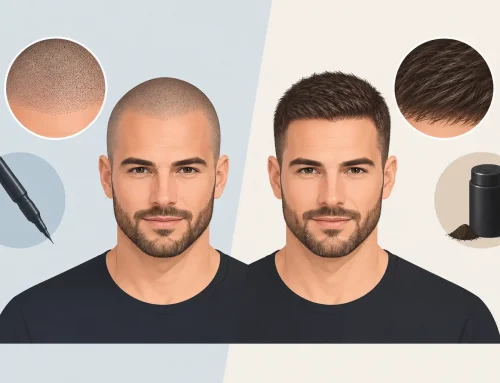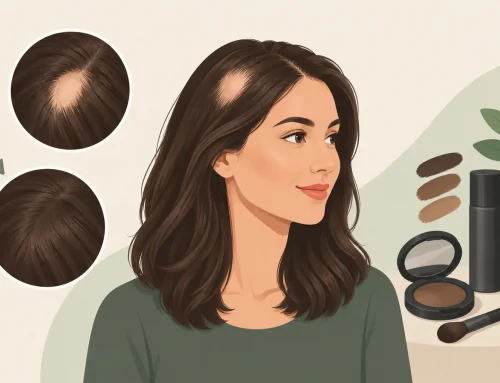

Hair loss can change how evenly the scalp appears, especially around the hairline, crown, or areas where remaining hair is thinning. For some people, the goal is not to recreate biological growth, but to create a more balanced, natural-looking appearance that fits their features and daily style.
Ready to explore whether this approach fits your goals? Request a free consultation or submit a photo candidacy assessment.
Scalp micropigmentation is a cosmetic camouflage technique that places carefully controlled pigment in small stippled impressions to suggest the look of closely cut hair and fuller coverage. It changes visual contrast, not hair growth, and the design must be customized to the individual scalp. Published medical literature describes this distinction clearly.
MicroArt describes its scalp shading service as a proprietary, consultation-led form of semi-permanent makeup rather than surgery or hair restoration. Understanding what the technique changes, where it may be considered, and how expectations are set begins with the method itself.
What Is Scalp Micropigmentation and What Does It Change?
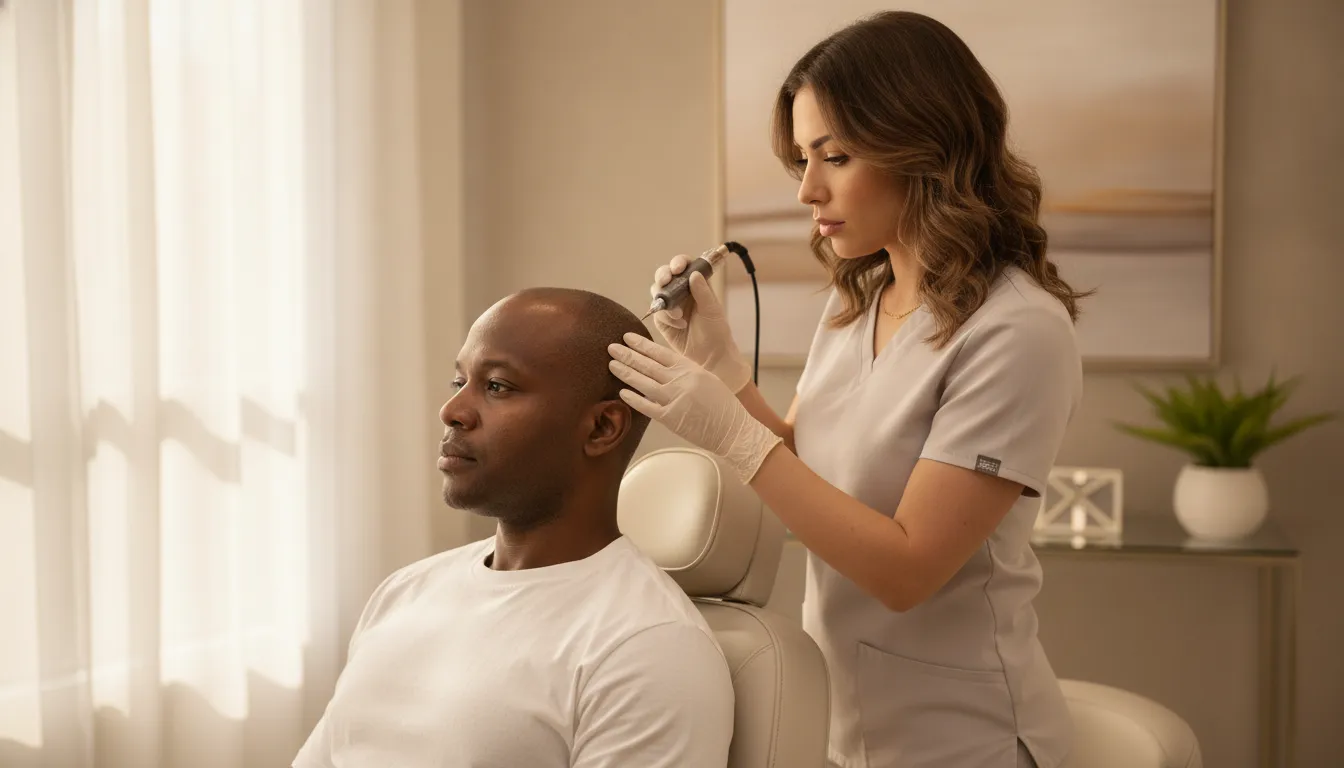
Scalp micropigmentation is a cosmetic technique that places carefully controlled deposits of pigment into the scalp. Using a stippling pattern, the practitioner creates small points that can resemble closely cut hair and suggest the presence of follicles. The visual effect can make areas of thinning or hair loss appear more even and defined, depending on the person’s hair pattern, skin, and treatment goals.
The important distinction is that scalp micropigmentation changes appearance, not biological hair growth. It does not regenerate follicles, reverse hair loss, or make existing hair grow. Academic literature describes the technique as creating the illusion of thicker hair rather than restoring hair biologically. It is therefore best understood as cosmetic camouflage, not a hair-growth treatment or surgical replacement for one. Read the published overview of scalp micropigmentation for additional context on its nonsurgical use.
How the visual effect works
Natural-looking results depend on more than placing pigment on a scalp. The size, spacing, direction, and tone of the deposits need to work with the surrounding hair and the amount of scalp being blended. When the pattern is appropriate, the points can suggest the look of short, closely cropped hair. When it is not well matched to the person, the result may appear too dense, too dark, or disconnected from the remaining hair.
MicroArt describes its scalp shading service as a proprietary semi-permanent makeup approach intended to create the illusion of real hair without surgery. Its stated approach includes customizing pigment color to existing hair and blending treated areas with the hair that remains. Those are studio-described features, not guarantees of a particular result for every client. The scalp can respond differently from person to person, so individualized planning matters.
To explore how this cosmetic approach may apply to a specific area, review MicroArt scalp shading. A consultation or photo assessment can help clarify what appearance changes may be realistic for the hairline, crown, or another area of concern.
How Scalp Shading Creates a More Even Appearance
Scalp shading works by adding carefully placed pigment where changes in density, the crown, or the hairline make the scalp look more visible. The goal is not to recreate growing hair. It is to reduce visual contrast between the scalp and surrounding hair so the overall appearance can look more balanced.
Stippling creates the impression of closely cut hair
The technique uses small deposits of pigment in a stippling pattern. In published descriptions of scalp micropigmentation, these dots are arranged to resemble the visual effect of closely cut hair and to suggest the presence of follicles. At an appropriate viewing distance, a controlled field of dots can therefore read as short stubble rather than as isolated marks. Research on scalp micropigmentation technique describes this follicle-like approach in more detail.
Placement matters as much as the pigment itself. A practitioner may assess how the hairline transitions into the forehead, where the crown becomes more visible, and how remaining hair frames an area of thinning. MicroArt describes scalp shading as potentially extending from the crown to the hairline, but the appropriate treatment area depends on the individual design and consultation. The aim is a gradual, believable visual transition, not a sharp shape that looks separate from the person’s existing hair.
Color and density are customized
Pigment is not selected from a universal shade that works for everyone. MicroArt says its scalp shading colors are customized to existing hair color and blended with remaining hair. That blending can help a treated area relate to the surrounding hair instead of appearing like a contrasting patch. The density and distribution of dots also influence whether the result looks soft and natural or overly uniform.
Individual skin and scalp characteristics matter as well. Published literature notes that scalps can differ in how they hold tattoo dye, which is one reason customization and realistic planning are important. Results are not guaranteed to look identical across clients. To explore what makes scalp shading look natural, consider how hair pattern, color, skin tone, and the desired level of coverage work together rather than evaluating the technique by pigment alone.
Who May Consider Scalp Micropigmentation?
Scalp micropigmentation may be worth exploring for men and women who want to create a more even, defined-looking scalp without pursuing hair surgery. It is a cosmetic approach, not a treatment that restores biological hair growth, so the right question is whether the expected visual change matches your goals.
Thinning hair and visible scalp areas
Some people consider treatment when thinning makes the crown, hairline, part, or another area of the scalp more noticeable. MicroArt describes scalp shading as an option for potential treatment areas ranging from the crown to the hairline. The studio also describes pigment as being customized to existing hair color and blended with remaining hair. That can be relevant for someone who wants a discreet transition rather than a dramatic change in appearance.
A shaved or closely cropped look may also be part of the goal. Published literature describes stippled pigment dots as resembling closely cut hair when viewed from a distance. The visual effect depends on design, pigment selection, existing hair, skin characteristics, and the way the individual scalp holds pigment. It should therefore be discussed as an appearance goal, not a guaranteed result.
Alopecia and scalp scars
People with alopecia may ask whether scalp micropigmentation can help visually blend areas where hair is absent or less dense. The service is described for both men and women, including people experiencing thinning hair or alopecia. However, alopecia includes different patterns and causes, and a general description cannot determine whether a particular area is suitable.
Scars may be another reason to seek an assessment. In a 43-patient study, participants included people with female-pattern hair loss, male-pattern baldness, and scalp scars. The authors reported that micropigmentation appeared useful for camouflaging hair loss and scalp scars. A separate review also lists scalp scars and several forms of alopecia among possible camouflage applications. These findings provide context, not a promise that every scar, condition, or skin type will respond in the same way. Sources: the 43-patient study and the clinical review.
Why an individual assessment matters
A consultation helps connect the desired look with the scalp area, remaining hair, skin, pigment considerations, and realistic expectations. A photo assessment can be a practical first step, but it does not replace an individualized discussion. If you are comparing approaches, you can also compare scalp micropigmentation options before deciding what questions to bring to a consultation.
What Does a Candidacy Assessment Consider?
A candidacy assessment is a conversation about whether the desired visual change is realistic for your hair-loss pattern, remaining hair, scalp, and goals. MicroArt uses a consultation-led process, and a photo assessment can help begin that discussion before you plan treatment. You can see if you are a candidate by sharing the information and images requested through the studio’s assessment form.
Your goals and preferred appearance
The starting point is what you want to see when you look in the mirror. Some people want a more even-looking crown, while others want to blend a thinning hairline or create a discreet, closely cropped appearance. If hair remains in the area. The assessment can focus on how a cosmetic scalp treatment might blend with it rather than treating the scalp as an isolated surface. The conversation should also clarify how subtle or defined you want the result to appear in everyday settings.
The pattern and extent of hair loss
Hair loss can affect the crown, hairline, or other areas, and patterns differ among men and women. Alopecia and scalp scars may also be part of the discussion. A published 43-patient study included participants with female-pattern hair loss, male-pattern baldness, and scalp scars, and reported that micropigmentation appeared useful for camouflage in those situations. That study does not establish that every pattern or individual is suitable. It supports the importance of assessing each person rather than applying one design to everyone.
Remaining hair, scalp variables, and pigment response
Color and density decisions depend on the hair that remains and the way the scalp holds pigment. MicroArt describes customizing pigment color to existing hair and blending the appearance with remaining hair. Academic literature likewise emphasizes customization because individual scalps can differ in how they react to and retain tattoo dye. The assessment can therefore help identify a suitable color direction and design approach. Without assuming that a shade or density that works for one person will translate directly to another.
Expectations, not promises
A useful assessment also makes room for an honest discussion of what you may or may not notice. In the same 43-patient study, one participant was dissatisfied because she did not see a remarkable change even though the physician considered the result satisfactory. That example is a reminder that perceived improvement and clinical assessment are not always identical. A consultation can help align the planned appearance with your priorities and explain the limits of a cosmetic camouflage approach before you make a decision.
Want to discuss your goals before making a decision? Request a free consultation or submit a photo candidacy assessment.
What Does the Consultation and Treatment Planning Process Cover?
The process begins with an inquiry and an opportunity to share photos of the areas you would like to address. Photos help establish an initial understanding of your hair pattern, remaining hair, scalp areas, and the appearance you hope to create. MicroArt uses this information as part of a consultation-led discussion, not as a substitute for individualized assessment.
The design conversation focuses on your goals and the way you normally wear your hair. Some clients want a subtle blend through thinning areas, while others are exploring a more closely shaved appearance. The hairline, crown, and other areas are considered in relation to the surrounding hair so the proposed design can look intentional rather than sharply outlined. Expectations matter here because scalp micropigmentation changes visual contrast and density; it does not restore biological hair growth.
Color is another individualized part of planning. MicroArt describes customizing pigment colors to existing hair color and blending the treated area with remaining hair. The studio also describes using custom equipment and mineral-based pigments as features of its proprietary approach. Those company-described features should be discussed in context during consultation, rather than treated as independent proof of a particular outcome.
The consultation can also clarify preparation and practical logistics. Before making plans, review guidance on how to prepare for scalp micropigmentation, then bring any questions about your current scalp care, timing, or personal circumstances to the consultation. If you are comparing nonsurgical camouflage with another approach, you can also compare scalp micropigmentation options before deciding what discussion is most relevant to you.
Session details vary because the work is labor intensive and may involve multiple treatments or layered application. Published literature describes this variability, while the appropriate plan depends on the intended appearance, treatment area, existing hair, and how an individual scalp responds to pigment. A consultation helps replace assumptions with a clearer, personalized plan.
What Scalp Micropigmentation Can and Cannot Do
Scalp micropigmentation is designed to change the way thinning or hairless areas appear, not to restart biological hair growth. Published literature describes it as a cosmetic cover-up that can create the illusion of thicker hair. MicroArt describes its scalp shading approach in similar terms: semi-permanent makeup intended to create the appearance of real hair without surgery. The distinction matters when you are comparing options and setting expectations.
| It can help with | It cannot do |
|---|---|
| Create a visual impression of greater density by adding carefully placed pigment to selected scalp areas. | Regrow hair, restore inactive follicles, or biologically reverse the cause of hair loss. |
| Support a more even appearance at areas such as the crown or hairline when those locations are appropriate for the individual. | Guarantee that every pattern of hair loss, scalp condition, or treatment goal will be suitable. |
| Be customized in color and blended with remaining hair. MicroArt reports using custom equipment and mineral-based pigments as part of its proprietary approach. | Provide independent proof that a particular pigment, technique, or outcome is superior or appropriate for everyone. |
| Give a consultation team a basis for discussing a design that fits your existing hair, desired appearance, and priorities. | Replace an individualized assessment, realistic planning, or medical advice when an underlying scalp or hair-loss concern needs evaluation. |
The goal is therefore visual camouflage, with the result shaped by factors such as remaining hair, scalp characteristics, color selection, and the design discussed during consultation. MicroArt’s description of scalp shading is a company statement, not a guarantee of a particular result. A photo assessment or consultation can help determine whether the approach aligns with your goals before treatment is planned.
How Should You Think About Appearance, Longevity, and Maintenance?
The most useful expectation is a visual one: scalp micropigmentation can create the appearance of denser, more defined hair, but it does not restart biological hair growth. The finished effect depends on the design, pigment placement, existing hair, scalp characteristics, and the way your result settles over time.
Appearance should be judged in context
A well-planned result is intended to look natural with your hairstyle, hair density, and coloring. It may soften the contrast between scalp and hair in a thinning area, define a hairline, or help blend a treated area with remaining hair. That does not mean every viewer will see the same change. A 43-patient study found high satisfaction among most participants, while one participant and the physician had different perceptions of how noticeable the change was. This is a useful reminder that technical completion and personal satisfaction are related, but not identical outcomes. Read the published study.
For that reason, the consultation should address the look you want in ordinary conditions, not only an idealized photograph. Discuss how visible you want the change to be, how you wear your hair, and whether you are seeking a closely cropped appearance or subtle blending. A consultation-led plan can also help clarify what the procedure can and cannot reasonably camouflage in your situation.
Longevity is not a universal promise
Scalp pigment is not permanent in the sense of an unchanging result. Color and definition can soften as time passes, and the rate of change may vary with individual skin characteristics, exposure, pigment choice, technique, and other factors. Current literature does not establish a universal long-term retention timeline. A recent case series specifically identified long-term pigment retention as an area requiring further study. Review the evidence and its limitations.
Maintenance therefore should be discussed as an individualized possibility rather than a fixed calendar appointment. Some clients may eventually explore a refresh as the appearance changes, while others may have different priorities or need a revised plan if their hair pattern changes. The consultation is the right place to ask how your goals, scalp, and existing hair may affect future upkeep.
Focus on a realistic, personalized plan
Before deciding, bring clear questions about the intended appearance, how fading would be handled, and what signs would prompt a follow-up discussion. MicroArt uses photo assessment and consultation to discuss suitability and expectations. If you are considering treatment, you can see if you are a candidate before making assumptions about longevity, maintenance, or the final level of coverage.
How Do You Choose a Natural-Looking, Consultation-Led Approach?
A thoughtful decision starts with the appearance you want to create, not with a promise that one technique will suit everyone. Scalp micropigmentation is highly visual, so the right approach should account for your existing hair. The areas you want to blend, and how you want the result to look in everyday settings.
Use these questions to guide the conversation:
- Does the design respect your natural hair pattern? Ask how the hairline, crown, or other areas would be shaped to complement your features. A discreet, softly blended design may be more appropriate than a sharply defined one, depending on your remaining hair and personal preference.
- How will color be selected? MicroArt says its pigment colors are customized to match existing hair color and blended with remaining hair. Ask how changes in your current hair color, density, or shaving style may affect the proposed design. Learn more about MicroArt scalp shading.
- What can be evaluated before treatment? A photo assessment and consultation can help discuss individualized suitability and expectations. Share clear photographs and explain your goals, including whether you want to blend thinning areas. Soften the appearance of a scar, or create a consistent look with closely cut hair. MicroArt’s candidacy form provides a starting point for that discussion.
- Are your expectations realistic and specific? The goal is an appearance change, not biological hair regrowth. Ask which aspects can reasonably be addressed and which may remain visible. A consultation should leave you with a clearer understanding of the proposed design, customization, and factors that could affect your individual experience.
- Have you planned for the consultation practically? Local clients can discuss their goals in person at the Beverly Hills studio. If you are traveling, ask about the consultation process, timing, and information needed before arranging a visit. This allows the planning conversation to begin before travel decisions are made.
MicroArt offers several micropigmentation services beyond scalp shading, but each has its own purpose and candidacy considerations. Keep the discussion focused on the area you want to address, then request a free consultation to review your goals with the studio.
If you are weighing scalp micropigmentation for your own situation, request a free consultation or submit a photo candidacy assessment before planning treatment.
Frequently Asked Questions
What are the downsides of scalp micropigmentation?
It creates a visual effect rather than biological hair growth, and the result may not meet every person’s expectations. Pigment response, color matching, scalp characteristics, and hair-loss pattern vary, so candidacy and design should be assessed individually. The process can also be labor intensive and may involve multiple sessions. Published literature describes customization and potentially multiple sessions.
How long does micropigmentation last on the scalp?
There is no single duration that applies to every scalp. Retention and appearance can vary with skin, pigment, exposure, hair-loss changes, and the original design. A recent case series observed a modest decline in visual density at six months, while its authors noted that long-term pigment retention requires further study. Read the study findings.
How does scalp micropigmentation look after 10 years?
It is not possible to promise how any individual’s result will look that far into the future. Pigment may soften or change in appearance, and evolving hair loss can affect how well the design blends. A consultation should address realistic expectations and whether future maintenance or design adjustments may be appropriate.
What is the average cost of scalp micropigmentation?
There is no reliable one-size-fits-all average for a customized service. Scope depends on the areas being addressed, the amount of remaining hair, the design, and the treatment plan. MicroArt discusses pricing during the consultation rather than publishing a fixed rate card, so a photo assessment can help establish the next step.
Who may be a candidate for scalp micropigmentation?
Men and women with thinning hair, alopecia, certain scalp scars, or areas of loss may wish to explore it. Potential treatment areas can include the crown and hairline, but suitability is individual. A photo assessment and consultation help evaluate your goals, existing hair, scalp characteristics, and expectations before a plan is considered.
Schedule a Scalp Micropigmentation Consultation
A consultation can help you discuss your goals, review your scalp and hair pattern, and understand whether scalp micropigmentation may be a suitable option for you. You can also submit photos for an initial candidacy assessment before planning next steps. Request a free consultation and share the details that will help guide a thoughtful conversation.