
A thinning crown can look completely different under bathroom lighting, sunlight, and a camera flash. That is why scalp shading vs hair fibers is not simply a question of which option creates more coverage. The right choice depends on your pattern of hair loss, daily routine, desired level of discretion, and whether you want a temporary cosmetic fix or a refined, longer-lasting solution.
Hair fibers can be useful for an immediate boost in density. Scalp shading, when performed with advanced technique and custom color work, can create the visual impression of fuller hair without relying on a daily application. Neither approach is right for every person. The difference is in how each method works, how it wears, and what it asks of you over time.
Scalp Shading vs Hair Fibers: The Core Difference
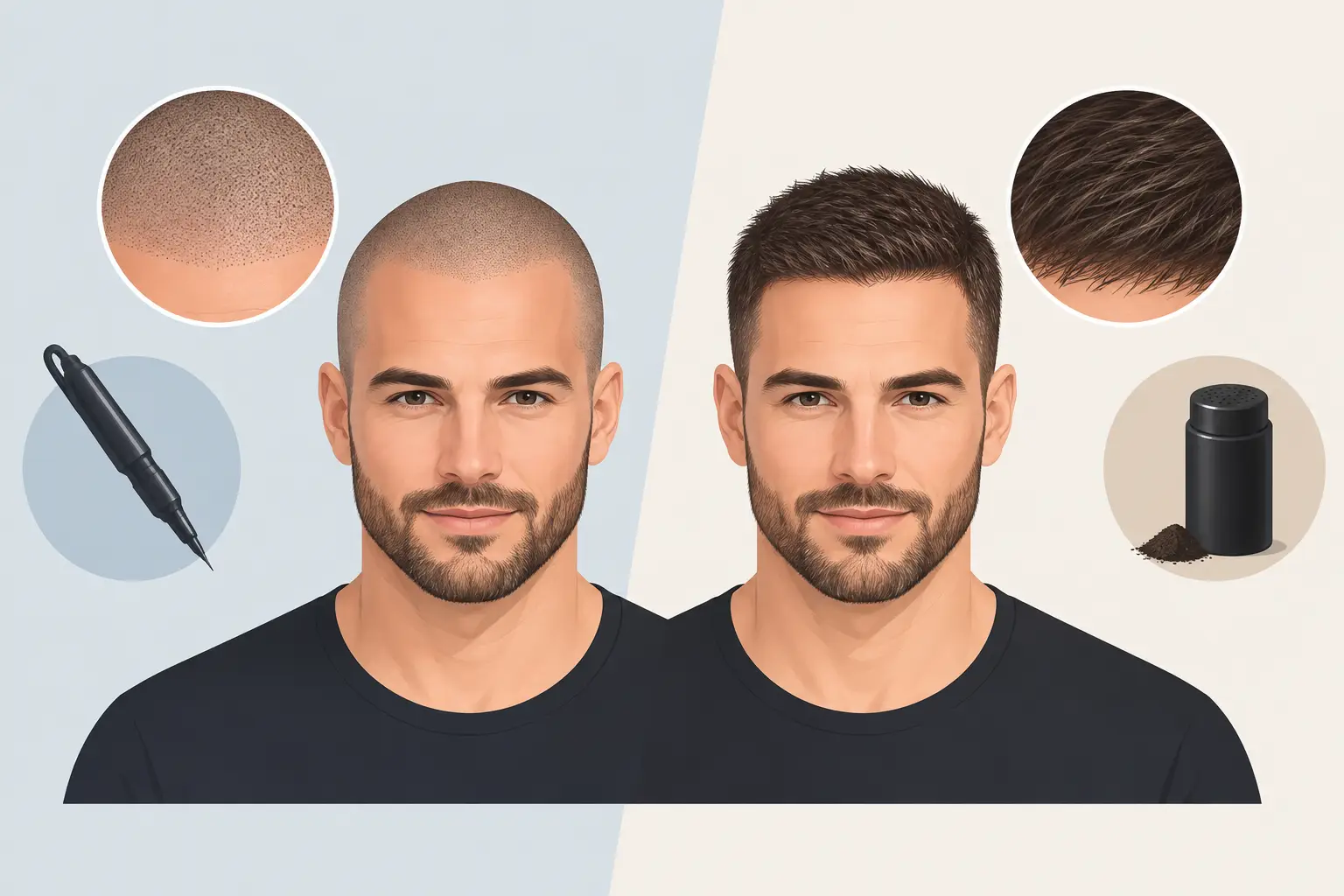
Hair fibers are tiny, colored particles that cling to existing hair. They are applied to areas of thinning to reduce contrast between the scalp and hair, making the hair appear denser. The effect is temporary and depends on having enough existing hair for the fibers to attach to.
Scalp shading is a specialized form of cosmetic pigmentation. Carefully placed, layered impressions of pigment reduce the visibility of the scalp and create a soft density effect. On closely cropped hair, it can resemble the natural shadow of follicles. On longer hair, it can make a widening part, sparse crown, or diffuse thinning appear more balanced.
The distinction matters. Fibers sit on top of the hair and scalp until removed. Scalp shading is placed within the upper skin layers using precision equipment and a customized pigment strategy. For clients who want to stop planning around rain, workouts, travel, or pillowcases, that difference can be significant.
The Look: Density Boost or Undetectable Definition?
Hair fibers can create dramatic volume in seconds, particularly for mild thinning at the crown or along a part line. They tend to photograph well in controlled conditions and can be adjusted daily. If you have a full schedule, an event, or an early-stage concern, they offer a fast cosmetic answer.
Their limitation is that the effect can become obvious when the application is too heavy, the color match is off, or the scalp becomes exposed. Bright overhead lighting, wind, swimming, perspiration, and close contact can reveal the product. Fibers can also settle unevenly around the hairline, where an overly dense application may look less convincing than natural variation.
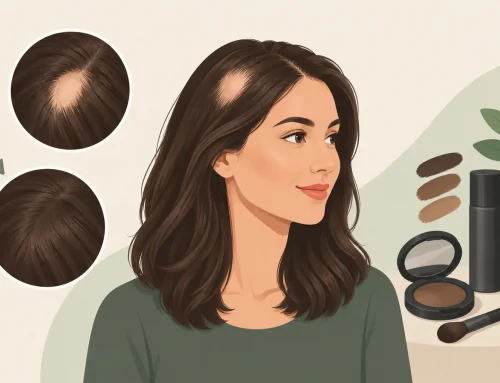
High-quality scalp shading is designed around variation, not a stamped-on pattern. The placement should account for your complexion, hair color, remaining hair density, hairline shape, and the way your thinning presents from different angles. A soft, dimensional result does not try to create a solid field of color. It recreates the gentle contrast that makes hair appear denser.
For men who wear their hair short, scalp shading often offers the more convincing finish because it can frame the hairline and reduce the contrast of sparse areas. For women and men with longer hair, it can be especially effective at disguising scalp show-through at the part and crown. Results depend on proper assessment. A sophisticated treatment plan should enhance the hair you have, not compete with it.
Why pigment selection changes everything
A generic dark pigment can look harsh against the skin, especially as it settles. Natural scalp work requires custom-blended mineral-based pigments selected for the client’s undertone, hair color, and intended density. The goal is not to make the scalp look painted. It is to make thinning less visible.
Technique also determines whether results remain elegant at close range. Precise placement, controlled depth, and a restrained approach are essential. A provider should be willing to build density gradually rather than chasing maximum darkness in a single appointment.
Maintenance: Daily Camouflage vs Long-Term Convenience
Hair fibers need to be applied whenever you want coverage. The process may take only a few minutes, but it becomes part of the routine: apply, style, set with spray if desired, and take care while changing clothes or exercising. Many users also modify their shampoo schedule, avoid touching the scalp, and keep a product supply on hand for travel.
This level of maintenance is perfectly acceptable for someone who likes flexibility. Hair fibers are easy to stop using, and they allow you to change the amount of coverage based on the day. They may also be a sensible bridge while you are deciding whether a more lasting cosmetic procedure is right for you.
Scalp shading requires a greater upfront investment of planning and treatment, followed by periodic maintenance as the semi-permanent pigment gradually softens. The benefit is freedom from daily camouflage. You can shower, exercise, travel, and wake up with the density effect already in place.
The exact longevity varies with skin type, lifestyle, sun exposure, skincare products, immune response, and the shade selected. A reputable provider will discuss maintenance honestly rather than presenting scalp shading as permanent or maintenance-free. Refined results are maintained deliberately, so they continue to look soft and appropriate as your hair changes.
Who Is a Better Candidate for Hair Fibers?
Hair fibers are usually most successful when there is enough existing hair for the particles to grip. They can work well for diffuse thinning, a slightly wider part, or a crown that needs occasional reinforcement. They are also useful for clients who want to test the visual impact of added density before committing to a procedure.
They are less reliable in areas that are completely smooth or very sparsely populated. Without enough hair, fibers have little to anchor to and may look powdery or unstable. People with active scalp irritation, heavy sweating, or an active lifestyle that includes swimming may find the upkeep frustrating.
Color matching deserves more attention than most people expect. A fiber color that looks correct under warm indoor lighting can appear too dark, too red, or too matte in daylight. Layering shades can improve realism, but the process remains cosmetic coverage that must be repeated.
Who Is a Better Candidate for Scalp Shading?
Scalp shading can be an excellent option for people with receding hairlines, alopecia-related thinning, diffuse loss, visible scars, or thinning that makes the scalp noticeably reflective. It is also valuable for clients who have undergone hair restoration and want to create a more cohesive appearance of density around transplanted areas.
It is not a hair-growth treatment, and it should never be presented as one. It does not create hair or change the underlying cause of shedding. What it can do is minimize contrast, strengthen the appearance of existing density, and help the scalp recede visually so the eye focuses on the hair rather than the spaces between it.
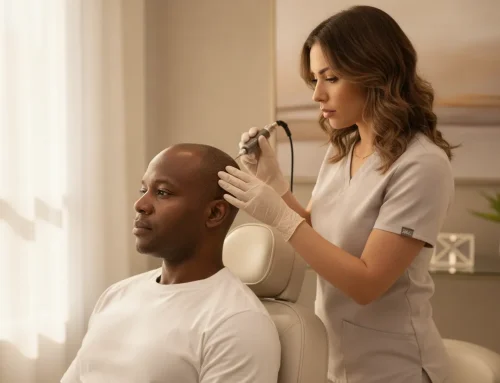
A consultation should review your hair-loss pattern, skin condition, medications, previous scalp treatments, lifestyle, and aesthetic goals. If hair loss is sudden, patchy, or unexplained, seeking medical evaluation first is sensible. Cosmetic camouflage works best when it is part of an informed plan.
At MicroArt, scalp shading is approached as corrective cosmetic artistry, not a one-size-fits-all tattoo. The focus is a customized, natural-looking density effect using proprietary precision methods and carefully selected pigments, with an emphasis on a polished result that remains believable in real life.
Cost Should Be Measured Beyond the First Appointment
Hair fibers generally cost less at the beginning. However, recurring purchases add up, particularly when you use them daily or need multiple shades, setting products, and travel-size backups. The more meaningful cost is often time: the repeated application, the worry about transfer, and the mental calculation before a workout, vacation, or unexpected overnight stay.
Scalp shading costs more upfront because it is a specialized service requiring consultation, technical skill, multiple considerations in color design, and treatment time. For the right candidate, the value is not just in the visual result. It is in reducing dependence on a daily concealment ritual.
The most economical option is not automatically the least expensive one. It is the option that fits your lifestyle without making you feel like you are constantly managing your appearance.
Choosing With Confidence
If you want occasional coverage, have adequate existing hair, and prefer a fully reversible option, hair fibers can be a practical choice. If you want a consistent appearance that does not wash away at night, and you value a carefully customized density effect, scalp shading may offer the more elevated solution.
Start by looking at your scalp in unforgiving light, not just a flattering mirror. Consider how you want to feel after a workout, on a flight, at the pool, and during a close conversation. The best choice is the one that gives you confidence without requiring you to think about it all day.