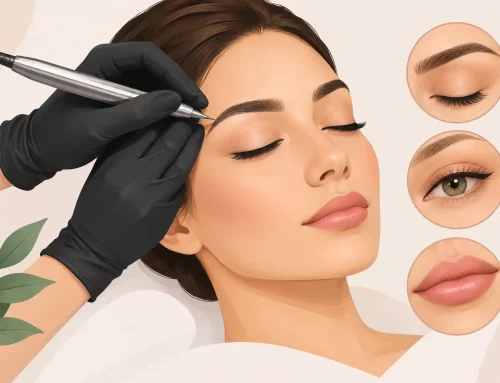

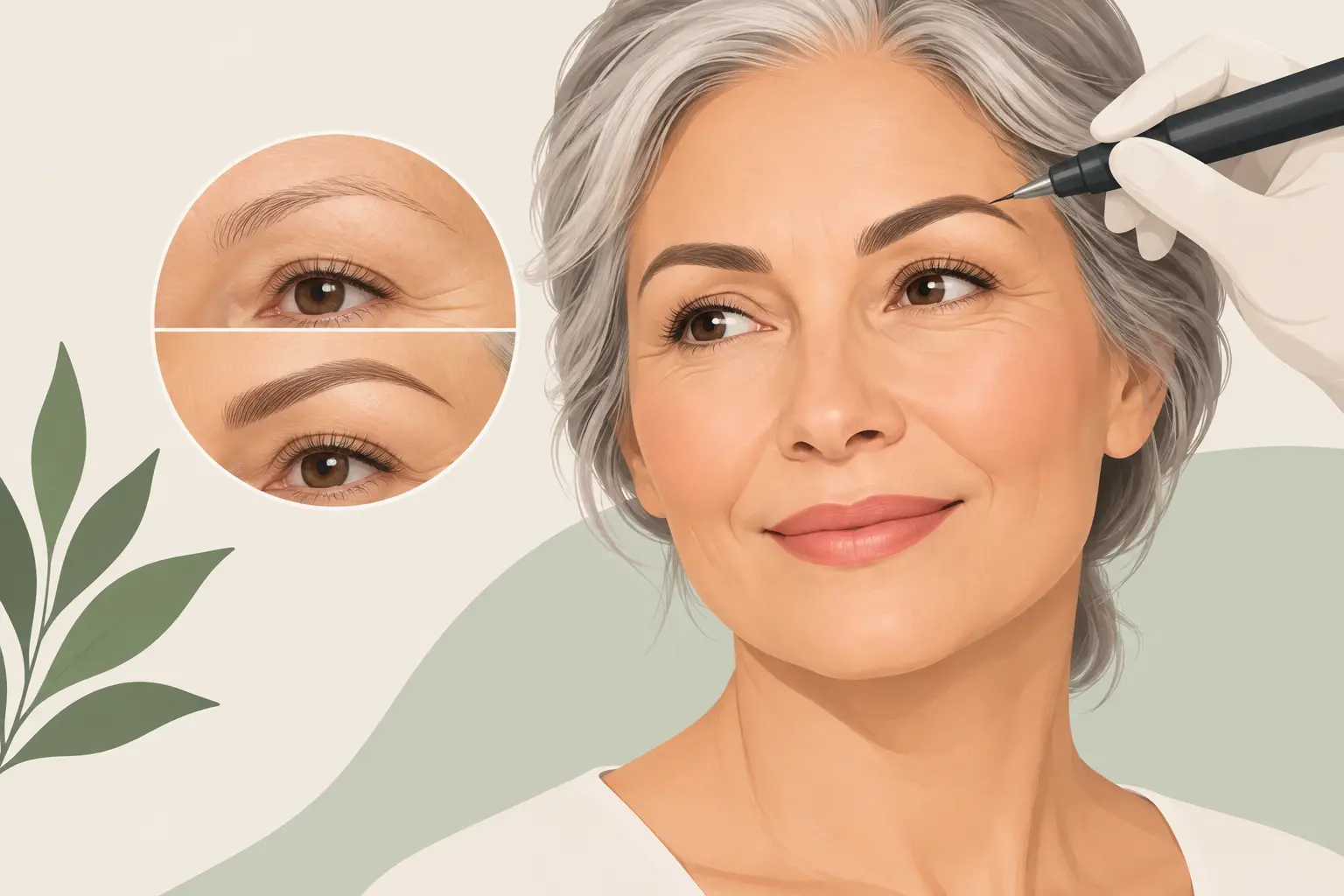
A brow that looked beautiful at 35 can feel too sharp, too dark, or simply unlike you at 55. That is why an eyebrow tattoo for mature skin cannot be approached as a standard permanent makeup appointment. Skin texture, elasticity, pigment retention, and the natural position of the brow all require a more refined plan.
The goal is not to create a dramatic new brow. It is to restore definition where hairs have become sparse, uneven, gray, or nearly invisible – while preserving the softness that makes the result believable at close range. Done well, a cosmetic brow enhancement can make the eyes look more rested and the face more balanced without announcing that anything was done.
Why Mature Skin Needs a Different Brow Strategy
As skin matures, it often becomes thinner, drier, less elastic, and more delicate. Sun exposure, skincare ingredients, hormonal changes, and previous cosmetic treatments can add further variation. These factors influence how the skin responds to pigment placement and how a healed brow will appear.
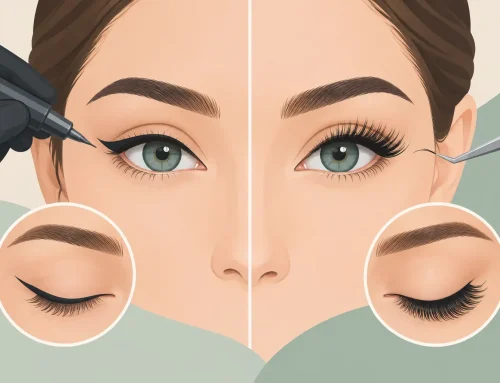
A technique that creates crisp, hairlike strokes on younger, firmer skin may heal less predictably on mature skin. Individual strokes can blur, spread, or appear uneven when the skin has a looser texture. This is one reason traditional microblading is not automatically the best choice for every mature client. Its blade-based cuts can place unnecessary stress on fragile skin, and the finished result may not retain the fine, airy quality seen immediately after treatment.
The most successful approach is usually one built around softness, controlled density, and realistic placement. Instead of chasing perfectly symmetrical, highly defined arches, an experienced specialist assesses facial movement, bone structure, natural hair growth, and how the brows sit when the face is relaxed.
The Best Eyebrow Tattoo Techniques for Mature Skin
There is no single brow technique that suits every client over 50. The right choice depends on skin quality, existing brow hair, desired depth of color, and whether the client has prior permanent makeup. Still, several principles consistently lead to more elegant results.
Soft shading often creates the most believable finish
A delicate powder or pixelated shading technique can be exceptionally flattering for mature skin. Rather than mimicking every individual hair, it creates a diffused foundation of color behind the natural brow hairs. The effect can resemble a softly applied brow pencil or powder – polished, but never blocky.
This approach is especially useful when brows are sparse throughout, when the tail has faded, or when the skin has visible texture. Density can be concentrated in bare areas and kept lighter at the front of the brow, avoiding the stamped-on look that ages the face.
Hair strokes require careful judgment
Fine hair strokes can be beautiful when the skin is firm enough and the client still has a meaningful amount of natural hair to blend with them. On mature skin, however, they should be placed selectively rather than used to build an entire brow from scratch.
A specialist may combine a few subtle strokes with gentle shading to create dimension without relying on rows of uniform lines. This hybrid approach often looks more natural as it heals because it respects the skin rather than forcing it to hold a technique it may not support well.
Pigment selection matters as much as shape
The wrong color can make a brow look severe before anyone notices its shape. Mature clients frequently benefit from pigment that is softer and more neutral than the shade they use in a makeup pencil. A custom blend should account for skin undertone, existing brow hair, hair color, and any previous tattoo color beneath the skin.
Very dark brown or black pigment can harden facial features, particularly when brow hairs have lightened over time. Conversely, a color that is too warm may turn orange as it fades, while an overly cool tone can heal ashy. Mineral-based pigments, placed with restraint and selected for the individual complexion, allow for a more sophisticated result.
Brow Shape Should Lift, Not Overcorrect
Mature brows are often affected by changes in facial volume and skin laxity. A tail that naturally sits lower can make the eyes look tired, yet raising it too aggressively can create an expression that feels surprised or artificial. The answer is not a dramatic new arch. It is thoughtful visual balance.
The strongest designs tend to follow the client’s own brow structure while restoring proportion. Often, a slightly fuller body and a gently refined tail are enough to frame the eyes. The front of the brow should remain soft and feathered. A solid, square beginning is one of the quickest ways to make cosmetic tattooing look obvious.
Facial asymmetry also deserves respect. Nearly every face has some degree of natural imbalance, and trying to make brows mathematically identical can lead to an unnatural result. A skilled artist designs brows to look balanced in motion and at conversational distance, not merely identical in a close-up photograph.
What to Expect During Healing
The immediate color can look deeper and more defined than the healed result. As the skin recovers, the brows soften and settle. Mature skin may retain pigment differently from one area to another, which is why a planned follow-up appointment is a valuable part of the process.
Healing should be handled with the same care as the procedure itself. Clients should follow their provider’s aftercare instructions closely and avoid treating brows casually as though they were ordinary makeup. Retinoids, exfoliating acids, certain anti-aging treatments, sun exposure, and some clinical procedures can affect retention or alter the appearance of pigment over time.
There is also a practical distinction between semi-permanent cosmetic tattooing and traditional permanent makeup. A refined, modern method should be designed to fade softly over time, making future adjustments possible as facial features, hair color, and style preferences change. This flexibility is particularly valuable for mature clients who want enhancement without a lifelong commitment to one intense brow shape.
When a Previous Brow Tattoo Needs Correction First
Many clients seeking brow enhancement already have faded permanent makeup. Old pigment may appear gray, blue, red, or orange, and it can complicate a new design. Covering it immediately with darker color is rarely the premium solution. It may conceal the problem briefly while creating an even heavier result later.
A proper consultation should determine whether the existing pigment can be neutralized, blended, softened, or removed before new work begins. The condition of the skin matters just as much as the existing color. Scar tissue, repeated treatments, and overly saturated areas need a conservative plan.
At MicroArt, this type of assessment is treated as precision work, not a quick cover-up. The most natural correction begins with an honest evaluation of what the skin can realistically support.
Questions Worth Asking Before You Commit
Before choosing a provider, ask to see healed results on clients with mature skin, not only fresh procedure photos. Fresh brows can look impressively crisp on anyone. Healed work reveals whether the artist understands pigment behavior, density, and restraint.
Ask which technique is recommended for your skin and why. A confident professional should be able to explain why shading, strokes, or a combination will serve your features best. You should also discuss your medical history, current skincare regimen, previous tattooing, medications, and any tendency toward delayed healing or sensitivity.
Avoid choosing solely by price or by a social media image of a highly sculpted brow. Mature skin benefits from specialized judgment, advanced equipment, and a provider willing to say no to an unsuitable technique. The right result should look less like a tattoo and more like the brows you would have chosen for yourself on your best day.
A beautiful brow enhancement does not need to turn back time or change your face. It should simply give your features the definition they have been missing – softly, intelligently, and with enough restraint that the compliment you hear most is, “You look so well.”