
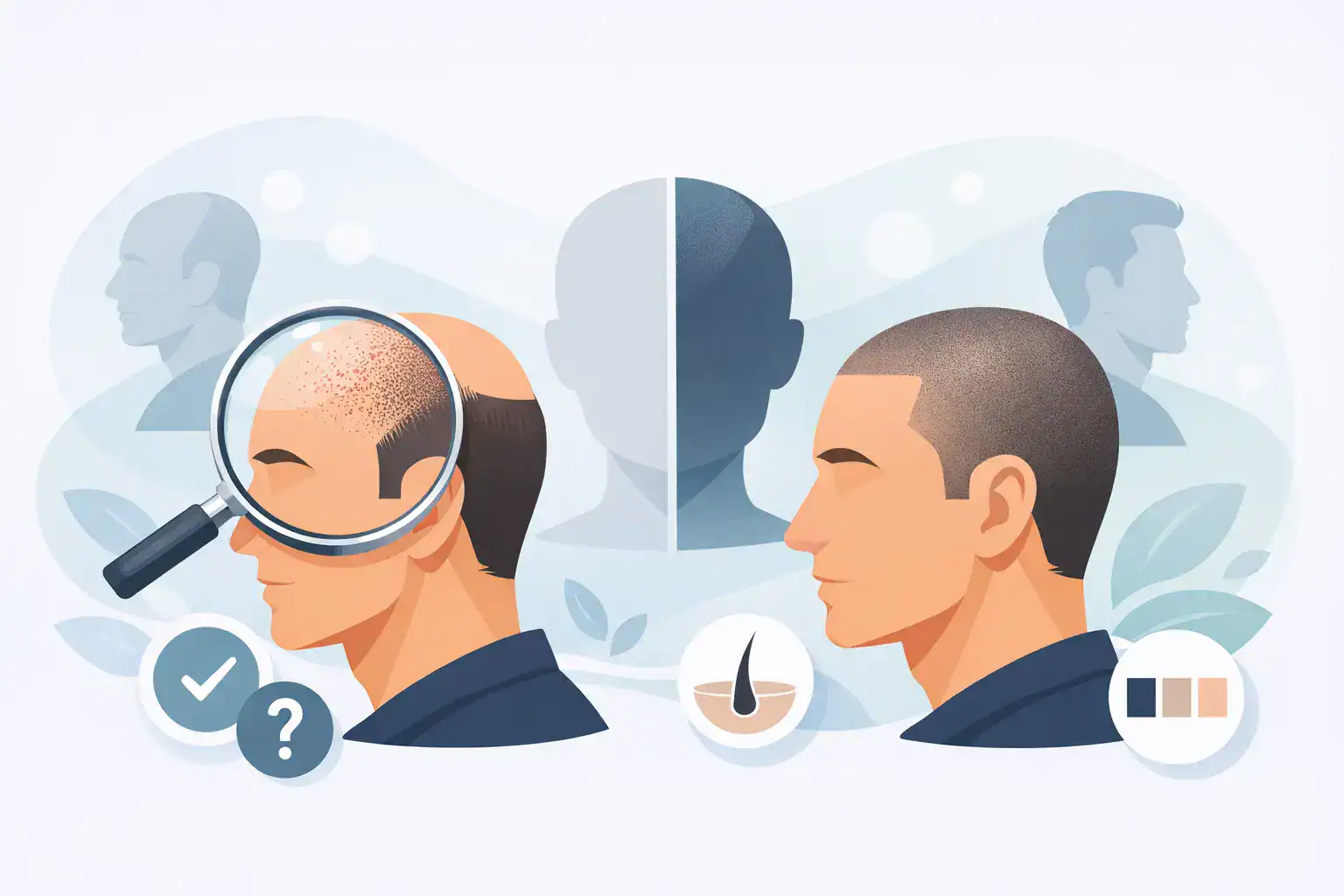
A closely cropped haircut can expose every change in density: a widening part, a softer temple, a scar that catches the light, or an area affected by alopecia. That is why the first question clients ask is direct: does scalp shading look natural? When it is performed with advanced technique, custom color matching, and restraint, scalp shading can create the appearance of naturally fuller density without looking painted on, stamped, or overly dark.
The distinction matters. Scalp shading is not about creating a dramatic new hairline or pretending that pigment is hair. It is about using subtle, layered impressions to reduce the contrast between the scalp and existing hair. The result should read as density from a normal conversational distance, not as a cosmetic procedure.
What Natural Scalp Shading Is Designed to Do
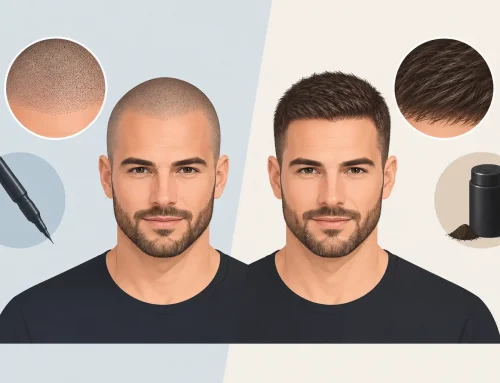
Scalp shading, often called scalp micropigmentation, uses tiny deposits of pigment to replicate the visual effect of hair follicles or density beneath longer hair. For men with closely shaved hair, it can create the appearance of a fuller buzz cut and restore definition to a receding hairline. For women and men with thinning hair, it can soften the visibility of the scalp along a part, crown, or diffuse thinning area.
A natural result works with what is already there. It respects the client’s age, facial proportions, hair color, skin tone, and pattern of hair loss. It does not place a dense, sharply outlined band of pigment across the forehead. It does not use a one-color approach for every client. And it should never compete with the hair itself for attention.
The most successful work is often the least noticeable. People may think a client changed their haircut, looks more rested, or simply has thicker hair. They should not immediately identify scalp shading as the reason.
Does Scalp Shading Look Natural on Every Client?
It can look natural across a wide range of clients, but the right technique depends on the concern being treated. A shaved scalp requires a different approach than a woman with long hair and diffuse thinning. A scar requires different pigment placement than a naturally sparse crown. Skin undertone, sun exposure, texture, existing hair color, and the degree of contrast between hair and scalp all influence the treatment plan.
For clients with a shaved or very short hairstyle, natural-looking scalp shading relies on irregularity. Real follicles are not arranged in perfect rows, and a believable hairline is not ruler-straight. The front should be soft and graduated, with a density pattern that becomes fuller as it moves behind the hairline. This avoids the harsh, artificial “helmet” effect associated with poorly performed work.
For longer hair, the goal is typically camouflage rather than follicle replication. Carefully placed shading can reduce the brightness of the exposed scalp, making hair appear denser at the part, temples, or crown. The pigment must be subtle enough to support the existing hair without creating a visible shadow that appears too uniform.
There are limits. Scalp shading does not regrow hair, alter hair texture, or stop progressive hair loss. If someone’s hair loss is actively changing, the design needs enough flexibility to continue looking balanced over time. An experienced specialist will discuss this honestly before treatment begins.
The Details That Separate Believable From Obvious
Natural results come from a series of precise decisions, not one treatment setting. Four elements have the greatest effect on how scalp shading appears after it heals.
Hairline design
A natural hairline should fit the person, not an idealized image. A lower, perfectly symmetrical hairline may look striking immediately after treatment, but it can appear unnatural as the client ages or if surrounding hair continues to recede. A refined design accounts for facial structure and creates measured asymmetry, softness, and recession where appropriate.
For many clients, the best hairline is one that looks as though it has always belonged to them. That may mean preserving mature temples rather than creating an aggressive, youthful shape.
Pigment selection
Pigment must be selected for the client’s skin undertone and existing hair color, not simply matched to the darkest strands of hair. Pigment that is too black can look flat or bluish against the skin. Pigment that is too warm, too cool, or too light can become visible for the wrong reasons.
Custom-blended mineral-based pigments allow for greater control, particularly when treating clients with darker skin tones, gray hair, warm undertones, or hair that changes color through the year. The goal is dimensionality. Natural hair and skin are never one flat shade, and the pigment should be planned accordingly.
Placement, size, and density
Each impression must be appropriately sized for the area being treated. Oversized marks can resemble dots of ink rather than follicles, while inconsistent placement can create a patchy or patterned appearance. The density also needs to build gradually. When pigment is placed too densely too soon, the result can look heavy before there is an opportunity to assess how the skin heals.
A premium approach treats scalp shading as a layering process. Conservative early sessions establish the foundation, then later sessions refine density and blend. This protects the realism of the result and gives the specialist room to make intelligent adjustments.
Healing and long-term color behavior
Fresh scalp shading can look darker immediately after a session. As the skin settles, the appearance typically softens. That healing process is one reason it is unwise to judge the final result on the first day.
Long-term naturalness also depends on the quality of pigments, equipment, depth control, and maintenance. Traditional tattoo methods may carry a greater risk of color shifting, harsh saturation, or placement that is too deep for a refined cosmetic result. Precision-based semi-permanent techniques are designed to prioritize soft, controlled color evolution rather than permanent-looking ink.
Why Technique Matters More Than the Procedure Name
Not all scalp shading is performed to the same standard. The phrase may describe a range of services, from basic scalp micropigmentation to highly customized cosmetic camouflage. A procedure can use the same general concept while producing completely different outcomes based on the provider’s equipment, training, artistic judgment, and understanding of skin.
The most concerning results tend to come from predictable mistakes: hairlines that are too low or too square, pigment that is too dark, dot patterns that are too large, and density that begins abruptly. These errors are difficult to conceal because the scalp is a highly visible area, especially under direct lighting.
At MicroArt, scalp shading is approached as precision cosmetic camouflage, not standard tattooing. The treatment is designed around custom pigment selection, controlled application, and a realistic density pattern that complements the client’s existing hair and lifestyle. This is particularly valuable for clients who want a result that remains discreet in close conversation, on camera, and under the bright California sun.
Scalp Shading for Scars, Alopecia, and Thinning Hair
Scalp shading can be especially transformative when the concern is not simply a receding hairline. Hair transplant scars, surgical scars, and areas of alopecia often reflect light differently from the surrounding scalp. Pigment can help reduce that contrast, but camouflage work requires additional care.
Scar tissue may retain pigment differently than healthy skin. Its texture, circulation, age, and location can affect both application and healing. A responsible provider assesses whether the scar is fully healed and suitable for treatment rather than promising an identical outcome for every type of scar.
With alopecia, the design must also account for unpredictability. If hair loss expands, a narrowly targeted treatment can eventually look disconnected from the changing pattern. A thoughtful plan considers the present concern while allowing for future adjustment. This is another reason consultations matter: a natural result begins with an accurate assessment, not a one-size-fits-all pattern.
How to Tell Whether a Result Will Look Natural
Before committing, look beyond heavily filtered before-and-after photographs. Ask to see healed results in varied lighting, including close-ups of hairlines and density work. Pay attention to whether the pigment appears integrated with the skin or sits on top of it as a dark block.
The consultation should be detailed. A qualified specialist should ask about your hair loss history, styling habits, sun exposure, medical considerations, and desired level of definition. They should explain why a conservative first session may be the right choice. If a provider promises an extremely dense result, a perfectly straight hairline, or a dramatic transformation in one pass, caution is warranted.
Natural scalp shading is not about making the scalp disappear. It is about restoring balance so your reflection feels more like you, with less effort and far less attention drawn to the areas you would prefer to keep private.