
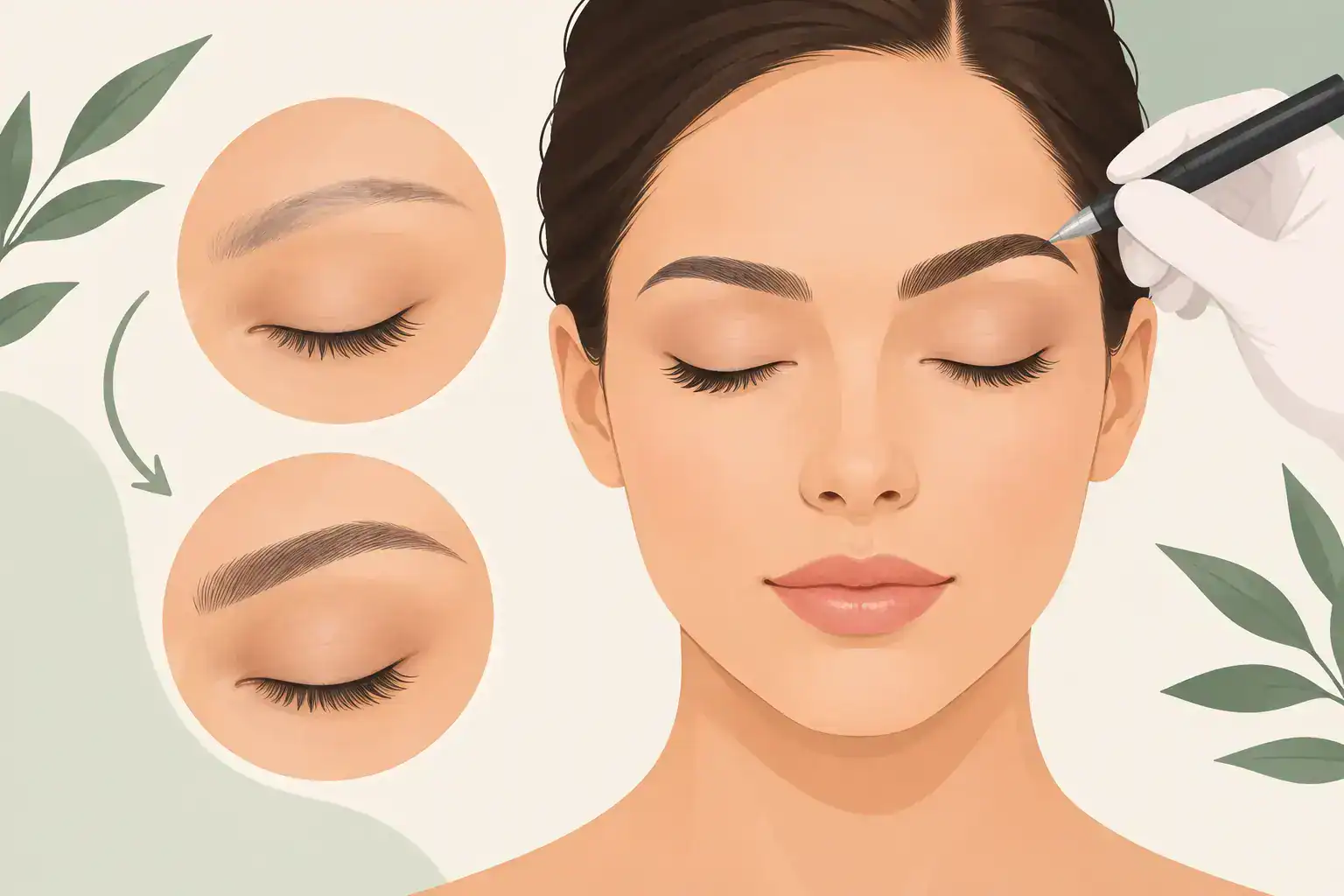
A faded brow tattoo is not always a simple maintenance appointment. When strokes have softened into haze, shifted warm or cool, or settled beyond the shape you want, faded microblading correction requires a more sophisticated plan than adding another layer of pigment. The goal is not to make old work darker. It is to restore believable dimension, balanced color, and brows that look naturally yours.
For clients accustomed to the polished standards of Beverly Hills, correction should be discreet and highly customized. A successful result considers what remains in the skin, how your skin has changed, and whether the existing pigment can be refined or needs to be addressed before new work begins.
Why Faded Microblading Can Look Unnatural
Microblading is created with manual blade-like strokes that place pigment into the skin. It is often presented as semi-permanent, but the way it fades varies substantially from person to person. Sun exposure, skincare acids, retinoids, immune response, oil production, pigment quality, and previous touch-ups all influence what remains.
Ideally, microblading fades softly and evenly. In reality, many clients are left with a gray cast, orange or reddish undertones, disconnected strokes, or a blurred block of color where individual hair strokes once appeared. A brow may also fade unevenly, leaving one side stronger than the other or creating a shape that no longer complements the face.
This is why a conventional touch-up can be the wrong answer. Adding new strokes over a saturated or discolored foundation may compound the issue. Instead of creating airy, hair-like definition, it can make the brow appear denser, darker, and increasingly tattooed over time.
Correction Starts With What Is Still in the Skin
The most important part of correction happens before pigment is placed. A specialist evaluates the existing brow under proper lighting, reviewing its tone, depth, density, shape, and symmetry. Photos can be useful for an initial assessment, but an in-person consultation is where a precise treatment strategy is established.
A faded brow with a light, neutral residual tone may be suitable for color correction and refinement. A brow that is heavily saturated, blue-gray, red, or poorly shaped may require a staged approach. In some cases, the safest and most beautiful choice is to allow additional fading or pursue removal before introducing new pigment.
There is no universal correction formula. Skin that is thin, mature, oily, scarred, or frequently treated with active skincare ingredients behaves differently from untreated skin. The same pigment selection that looks refined on one client can heal too warm, too cool, or too visible on another. Correction should always be planned around the individual canvas, not a trend or a one-size-fits-all brow map.
Color Is More Complex Than It Looks
Residual microblading can appear one color on the surface while holding a different underlying tone in the skin. For example, a brow that looks ash-gray may contain a warm base, while a faded orange brow may be the result of pigment components fading at different rates.
A correction specialist considers color theory, but correction is not simply a matter of placing an opposite color over an unwanted one. Skin tone, skin depth, and existing pigment all affect the healed outcome. The objective is a soft, skin-compatible brow tone that harmonizes with natural hair color and complexion, not a temporary surface-level cover-up.
When a Touch-Up Is Appropriate and When It Is Not
A maintenance session may be appropriate when the original brow has faded evenly, the shape remains flattering, and there is enough clear skin to add subtle definition without crowding existing pigment. This is generally the best-case scenario: the brows need restoration, not rescue.
Correction is more likely needed when the old work has changed color, become blurry, migrated outside the intended shape, or no longer reflects your facial proportions. It is also appropriate for clients who have accumulated multiple layers of microblading and powder brow touch-ups over several years.
The distinction matters because more pigment is not always more correction. An ethical provider will explain if the existing tattoo limits what can be achieved in one session. Promising a complete transformation over dense, discolored old work without acknowledging those limits is not precision. It is wishful thinking.
A More Refined Approach to Brow Correction
Traditional microblading relies on incisions and can create visible trauma for some skin types, particularly when repeated over the same area. For corrective work, this can be a concern. Previously tattooed skin may already be sensitized, textured, or less predictable in how it accepts pigment.
MicroArt approaches cosmetic tattoo correction with precision equipment and custom-blended mineral-based pigments designed for soft, natural-looking results. Rather than attempting to recreate every individual hair with deeper manual cuts, the technique focuses on controlled pigment placement and subtle tonal integration. This can be especially valuable when old strokes have blurred and a literal stroke-for-stroke cover-up would look artificial.
The ideal result is not a brow that announces it has been corrected. It is a brow that restores facial balance at conversational distance and remains elegant in close-up photographs, daylight, and makeup-free moments.
Shape Must Respect the Existing Work
Many correction clients arrive hoping to completely change their brow shape. Sometimes that is possible, but it depends on the location and darkness of the prior tattoo. New shape can only be extended or adjusted so far before old pigment becomes visible outside the redesigned brow.
A skilled plan may use strategic density, soft shading, and carefully adjusted arches to create the appearance of a more balanced shape. Yet the best approach may be conservative at first, especially if removal or further fading will create a better long-term canvas. A staged strategy is often a sign of expertise, not a compromise in quality.
Preparing for a Faded Microblading Correction Consultation
Bring clarity to your consultation by sharing your brow history. If possible, provide photos of your brows before microblading, immediately after treatment, and as they faded. Mention the approximate date of every procedure, whether the work was microblading, shading, ombré, or a combination, and any previous removal attempts.
Be candid about skincare and lifestyle factors. Retinoids, chemical exfoliants, laser treatments, frequent sun exposure, and certain medications can influence candidacy and healing. Your specialist should also know whether you have a history of keloid scarring, pigment allergies, autoimmune conditions, or skin sensitivity.
Most importantly, communicate what you dislike about your current brows. Is the concern color, density, shape, symmetry, or the way the tattoo looks without makeup? Specific feedback allows the treatment plan to prioritize the change that will make the greatest visual difference.
What to Expect After Correction
Corrective brow work should be treated as a process, not an instant makeover. The initial appearance may look more defined than the healed result, and the color will settle as the skin recovers. Follow the aftercare protocol exactly, particularly around sun exposure, moisture, exfoliation, and picking at the treated area.
The number of sessions depends on the condition of the old tattoo and the desired result. Lightly faded brows may need only refinement and periodic maintenance. More complex corrections can require multiple carefully spaced sessions, especially when color adjustment, old pigment management, and shape restoration are all involved.
The investment is not only in pigment placement. It is in judgment: knowing when to proceed, when to soften, and when not to add more.
A faded brow does not have to define your face or limit how natural your makeup-free appearance can look. With a correction plan built around your skin, your residual pigment, and your true facial proportions, the next step can be far more refined than the first.