

A surgical scar can be medically healed and still feel visually unfinished. Whether it sits along the abdomen, breast, face, knee, or hairline, the goal is rarely to make skin look artificially perfect. The more sophisticated objective is to conceal surgical scars by reducing the contrast that makes them immediately noticeable, while preserving the texture and character of real skin.
For many clients, concealer provides a temporary answer but requires daily effort, can transfer onto clothing, and often catches in uneven scar tissue. Advanced scar camouflage offers a more refined path: carefully deposited pigment that brings a light, pale, or discolored scar closer to the surrounding skin tone. Done with precision, the effect is discreet enough that people see you first, not the area you have been trying to cover.
What Scar Camouflage Can and Cannot Do
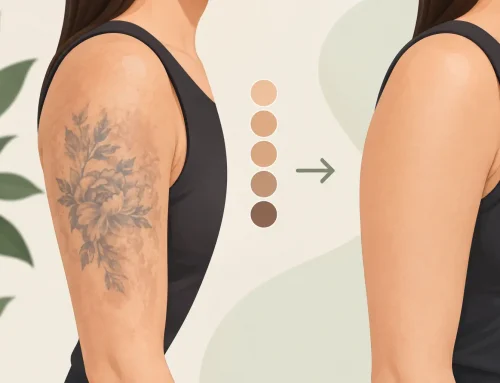
Scar camouflage is a specialized cosmetic tattooing technique. Rather than drawing attention to a scar with a flat, obvious color, an experienced practitioner custom-blends mineral pigments to soften the difference between the scar and the surrounding skin. This is especially valuable when a scar has healed lighter than the natural complexion.
The procedure does not remove scar tissue, flatten a raised scar, or change a scar’s underlying structure. It is a color-correction treatment, not a surgical or dermatologic revision. That distinction matters because the best candidates have realistic expectations: pigment can make a stable scar far less visible, but it should not be sold as an eraser.
Results also depend on the scar itself. A flat, mature, light-colored scar with healthy surrounding skin generally offers a very different canvas than a thick, red, keloid-prone, depressed, or actively changing scar. Texture may remain visible up close, even when color contrast is dramatically reduced. In high-quality work, that honesty is part of the result.
When You Can Conceal Surgical Scars Safely
Timing is one of the most consequential decisions in scar camouflage. A scar should be fully closed, medically healed, and stable in color before it is evaluated for pigmentation. Fresh scars are still changing as the body remodels collagen, and placing pigment too early can compromise predictability.
Many clients are advised to wait at least 6 to 12 months after surgery, although healing varies considerably by procedure, skin type, scar location, and personal history. Your surgeon or treating physician should clear any cosmetic procedure, particularly after reconstructive surgery, cancer-related treatment, or a surgery involving ongoing medical care.
A consultation should also consider whether you have a history of keloids, hypertrophic scarring, pigment changes after inflammation, autoimmune concerns, active skin irritation, or medications that affect healing. These factors do not automatically rule out treatment, but they may alter candidacy, timing, or the desired approach. A premium service should never force a standard protocol onto individual skin.
The Scar Must Be Stable, Not Just Closed
A scar that looks closed can still be actively healing beneath the surface. Persistent redness, tenderness, itching, thickening, or rapid color shifts are signs that patience may produce a better outcome than immediate camouflage. This is where clinical judgment protects both the skin and the aesthetic result.
Sun exposure matters as well. Tanned surrounding skin can make color matching unreliable, while UV exposure may darken the skin around a lighter scar and increase contrast later. Keeping the area protected helps maintain a more consistent foundation for pigment selection.
Why Custom Color Matching Changes the Result
The visible color of skin is never just beige, brown, or pink. It reflects undertone, warmth, depth, translucency, and the way light moves across the area. A scar on the chest may require a different blend than one on the abdomen, even on the same person. The surrounding skin can also shift slightly with seasonal sun exposure, hormones, and natural aging.
That is why generic flesh-toned inks are a poor shortcut. A shade that looks acceptable in a bottle can heal too warm, too cool, too opaque, or too light against living skin. Effective scar camouflage starts with custom pigment blending and a controlled application technique designed to build color gradually.
At MicroArt, the approach centers on proprietary precision technology and mineral-based pigments selected for subtle, natural-looking correction rather than conventional tattoo coverage. The objective is not to blanket the scar with a heavy cosmetic layer. It is to create a believable transition between scar tissue and surrounding skin, often through carefully layered sessions.
This is particularly relevant for deeper skin tones, where undertone mistakes can become more apparent. An experienced specialist evaluates how the skin carries gold, red, olive, or neutral tones before selecting pigment. Corrective work should be inclusive by design, not adapted as an afterthought.
The Difference Between Camouflage and Conventional Tattooing
Traditional body tattooing and scar camouflage are not interchangeable. Conventional tattoo methods are designed for saturated, long-lasting artwork. Scar camouflage requires a far lighter touch, nuanced pigment selection, and a technique that accounts for skin with altered texture and healing behavior.
The goal is also different. A decorative tattoo intentionally creates contrast. Cosmetic camouflage seeks to reduce contrast without leaving a visible outline, harsh color shift, or opaque patch. When camouflage is overworked or applied with pigment that is too dense, the treatment can become more noticeable than the scar it was meant to soften.
For this reason, a test area may be appropriate for certain scars and skin types. It gives the client and specialist a chance to observe healing before committing to a larger area. This slower approach can feel less immediate, but it is often the more exacting and responsible choice.
What to Expect During the Process
The process begins with an assessment of the scar’s age, texture, color, location, and likely response to pigment. Photographs can be useful for an initial review, but an in-person assessment provides a clearer understanding of skin tone and scar maturity.
At the appointment, pigment is blended to work with the skin immediately surrounding the scar. The specialist then places color with controlled, light passes. A refined technique prioritizes comfort and precision while avoiding the aggressive approach associated with traditional tattooing.
Color develops as the area heals. The first session is not always the final result, because scar tissue may absorb and retain pigment differently from normal skin. A follow-up session can refine depth, warmth, and coverage after the healed color is visible. This measured progression is not a compromise. It is how natural-looking results are built.
Aftercare is equally relevant. Clients should follow their specialist’s instructions, avoid picking or friction, and protect the area from unnecessary sun exposure during healing. A beautifully matched pigment can only perform as intended when the skin is allowed to recover properly.
Choosing the Right Specialist for Surgical Scar Camouflage
A portfolio of flawless-looking images is not enough. Ask whether the provider works specifically with surgical scars, how they assess scar maturity, what type of pigments they use, and whether they can explain the limitations of camouflage clearly. A trustworthy answer includes candidacy, not just promises.
Look closely at healed results, not only photographs taken immediately after a procedure. Freshly treated skin can appear temporarily more blended because of redness, lighting, or product application. Healed work shows whether the color settled naturally and whether the scar still looks like skin rather than cosmetic tattooing.
The best result is often quiet. It does not announce itself as a treatment, and it does not ask you to defend a dramatic change. It simply makes getting dressed, standing in bright light, swimming, or looking in the mirror feel less complicated. When a scar is medically ready and the technique is genuinely customized, camouflage can offer that kind of freedom with remarkable restraint.