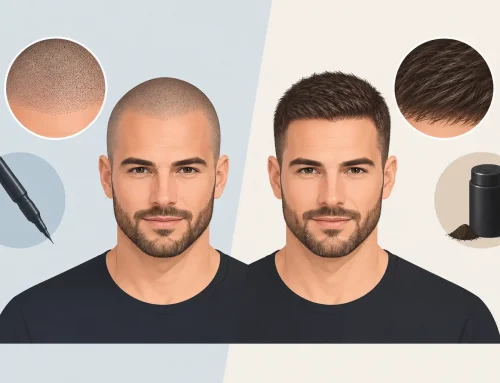

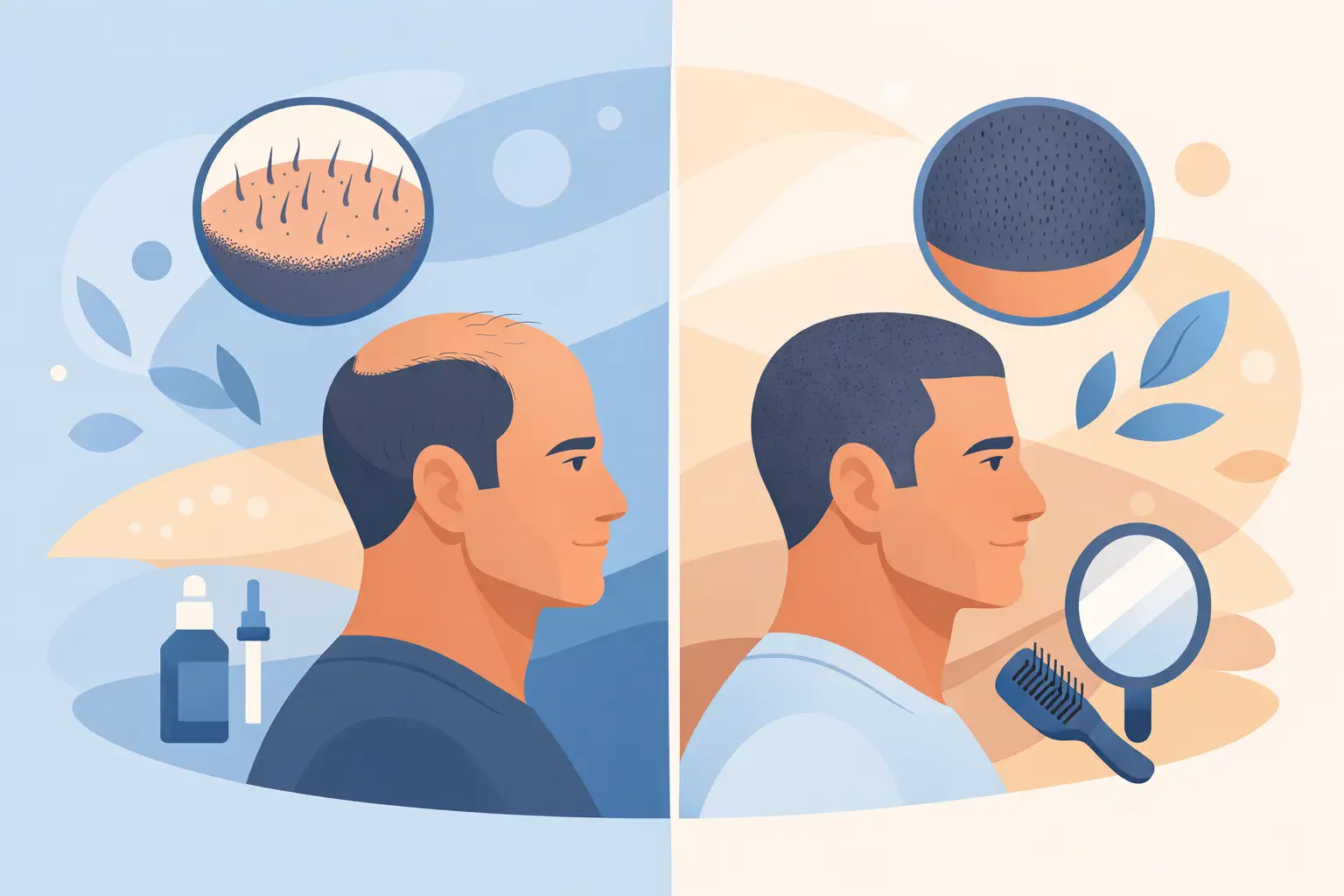
A scalp camouflage transformation is not about creating the look of an obvious tattoo. It is about changing the visual relationship between your hair, scalp, and facial features so thinning areas no longer command attention. When the work is precise, customized, and placed with restraint, the result reads as greater density, a more balanced hairline, and a cleaner overall appearance – not cosmetic pigment.
For men and women dealing with thinning hair, alopecia, visible scalp contrast, or the aftermath of a hair restoration procedure, that difference can be significant. The goal is discretion. You should look like yourself on a very good hair day, whether your hair is styled, closely cropped, or viewed under bright Beverly Hills sunlight.
Why Hair Loss Changes More Than Hair
Hair loss is often described in clinical terms: receding hairline, diffuse thinning, patchy loss, or reduced density at the crown. But the concern clients see in the mirror is usually contrast. Light scalp showing through darker hair can make fine hair look even finer. A widening part can alter the proportions of the face. Scar tissue may interrupt an otherwise natural hairline.
A well-executed scalp treatment addresses that contrast. Custom-blended pigment is placed in a pattern that visually softens the gap between existing hair and exposed scalp. The treatment does not grow hair or replace a medical hair-loss plan. It changes what is visible, which is often the most immediate concern for someone who wants to feel polished without relying on fibers, sprays, hats, or a strategic hairstyle.
This is why candidacy depends on more than the amount of hair present. Hair color, skin tone, hair texture, the pattern of thinning, lifestyle, and desired grooming style all influence the approach. A client with salt-and-pepper hair and diffuse thinning needs a different pigment strategy than someone with a shaved head and a receding hairline.
What a Scalp Camouflage Transformation Actually Does
Scalp camouflage uses carefully layered, mineral-based pigment to create the appearance of follicles, density, or reduced scalp visibility. The application can be concentrated at the hairline and temples, blended through a thin crown, or used to soften the appearance of a scar. It may also be an effective cosmetic option for clients with certain forms of alopecia when the scalp is stable and the treatment plan is appropriately designed.
The most refined work is built gradually. It does not rely on one flat color or a uniform field of dots. Natural hair density has variation. Hairlines have softness. A realistic result considers the transition from denser areas to thinner ones, the warmth or coolness in the client’s skin, and how the area will appear at conversational distance.
For women, camouflage commonly focuses on a widening part, diffuse thinning near the crown, or visibility along the front hairline. For men, it may create the look of a closely shaved, fuller scalp or reinforce the impression of density between existing hairs. Neither approach should look stamped on. The best result is calibrated to the way that individual already wears their hair.
Density enhancement versus a recreated hairline
These are related but distinct goals. Density enhancement works with existing hair, reducing the contrast of visible scalp beneath it. A recreated hairline is more architectural, requiring careful decisions about age appropriateness, facial balance, recession patterns, and long-term maintenance.
A lower or sharper hairline is not automatically better. An overly aggressive design can look unnatural as a client ages or if hair loss progresses. Conservative, well-blended placement usually creates the most convincing result because it respects the client’s natural pattern rather than chasing an unrealistic version of it.
Scar camouflage requires a different standard
Scars from FUT hair transplants, accidents, surgery, or previous procedures can be difficult to conceal because scar tissue may hold pigment differently than healthy skin. Texture, color, and healing history matter. The treatment is designed to reduce contrast, not promise that textured scar tissue will become invisible.
That distinction is part of responsible cosmetic camouflage. A skilled provider evaluates whether the scar is mature, stable, and suitable for treatment before proceeding. When appropriate, careful shading can make a scar substantially less noticeable against surrounding hair.
The Difference Is in the Design and Technology
Scalp shading is often grouped with traditional tattooing, but the quality of the outcome depends heavily on technique, pigment selection, equipment, depth, and artistic judgment. Poorly placed pigment can appear blue, green, too dark, too large, or too uniform. It can also create a harsh hairline that draws more attention than the thinning it was meant to address.
A premium approach begins with analysis, not application. The provider should study the client’s skin tone, current hair color, density pattern, and future hair-loss considerations. Pigment must be custom blended rather than selected from a generic dark palette. The placement should be controlled enough to create softness, particularly at the frontal hairline where small errors are highly visible.
MicroArt approaches scalp shading with proprietary precision technology and a semi-permanent philosophy designed for natural evolution. This matters because appearance is not static. Hair color changes, hairstyles change, and personal preferences change. A treatment plan should preserve the ability to adjust rather than lock a client into an inflexible result.
What the Appointment Experience Should Feel Like
A high-level scalp camouflage appointment is measured and collaborative. Before any pigment is placed, the practitioner should discuss your goals honestly: Are you trying to reduce scalp show-through? Blend a transplant scar? Create the appearance of a tighter buzz cut? Restore visual balance after alopecia?
Photos can be useful during the consultation because they reveal how the scalp reflects light from different angles. A plan that looks convincing in a treatment room should also hold up in a car, outdoors, on video, and in high-resolution photographs. This is especially relevant for executives, performers, public-facing professionals, and anyone who values a result that remains private.
The treatment itself should be comfortable and controlled, with no expectation of a dramatic recovery period. Unlike procedures that can involve obvious scabbing, bruising, or prolonged social downtime, advanced cosmetic camouflage is designed around a polished client experience. Follow the provider’s aftercare instructions closely, especially regarding washing, workouts, sun exposure, and any recommended short-term restrictions.
Most sophisticated results are developed in sessions. Building gradually allows the practitioner to assess how the pigment settles and how much additional density is truly needed. Trying to create maximum darkness immediately is one of the fastest ways to lose a natural finish.
Results Depend on the Right Expectations
The strongest candidates understand both the power and the limits of scalp camouflage. It can make thinning appear less visible. It can frame the face more effectively. It can reduce the visual distraction of a scar and create the appearance of a fuller, more intentional grooming style.
It cannot stop active hair loss, change the physical texture of a scar, or replicate long hair where no hair exists. If hair loss is sudden, patchy, inflamed, or medically unexplained, speak with a qualified medical professional first. Cosmetic camouflage works best when it complements a clear understanding of what is happening with the scalp.
Maintenance is also part of the decision. Semi-permanent pigment is intended to soften over time, and longevity varies with skin type, sun exposure, skincare habits, immune response, and the treatment area. A client who spends significant time outdoors or uses active exfoliating products may require a different maintenance schedule than someone with minimal sun exposure.
Choosing Natural Over Noticeable
The temptation to ask for more density, a darker shade, or a lower hairline is understandable. Yet the most successful scalp camouflage transformations are rarely the boldest. They are the ones that look completely plausible in ordinary life.
Look for a provider who can explain how they prevent harsh color shifts, why a particular hairline design suits your face, and how the treatment will be adjusted over time. Ask to see examples that resemble your hair color, skin tone, and degree of thinning. A polished portfolio should demonstrate subtle transitions, not just dramatic before-and-after contrast.
A scalp camouflage transformation can offer something more valuable than a quick cosmetic fix: the freedom to stop calculating lighting, camera angles, and which hairstyle best hides the scalp. The right next step is a private, detailed consultation where your existing hair, skin, and long-term goals are treated as the foundation of the design.